How hybrid agricultural drones work for you
Hybrid drones blend the hover control of multirotors with the efficient cruise of fixed-wing aircraft, so you get both precision and range. Think of them as a Swiss Army knife: lift off and hover to spray a tight patch, then convert to forward flight to cross acres without burning battery fast. This mix cuts time and fuel for large fields while keeping the fine control you need near fences, trees, and irrigation lines.
You’ll control takeoff and landing like a multirotor, then let the drone glide like a plane once it gains speed. That transition is the magic. On a single mission you can do close-up spraying, spot checks with multispectral cameras, and long transects for mapping—without swapping aircraft or pilots. For your operations, that means fewer machines to buy and less downtime.
When you pick a hybrid model, focus on flight profiles and payload limits. Some hybrids lean heavier toward hovering; others favor endurance. Match the drone to the work: short, precise spray jobs call for more lift and stability; broad surveying calls for longer wings and cruise efficiency. The goal is to make your fieldwork faster, cheaper, and simpler—this is the promise of Hybrid Drones for Agriculture: The Revolution Between Multirotors and Fixed-Wing.
VTOL basics
VTOL stands for Vertical Take-Off and Landing. That means no runway and easy launches from a truck or a field. The drone uses vertical lift motors to rise, then pivots motors or shifts control surfaces to move into forward flight. You’ll appreciate this when you need to start in tight spots or land on uneven ground.
The switch from hover to cruise is handled by the flight controller and automated transition sequences. Set the mission, and the system modulates thrust and control surfaces to change modes smoothly. That keeps spray lines steady and images sharp. In short: VTOL gives you the flexibility of a helicopter with the range of a plane.
Multirotor vs fixed-wing roles
Multirotors are your go-to for precision work: spot spraying, close-up inspections, and hovering for detailed imaging. They shine where you need slow, steady control and frequent changes of direction. Fixed-wing drones are the pick for speed and coverage: mapping whole fields, long survey lines, and low cost per acre.
| Role | Multirotor | Fixed-wing | Hybrid (best of both) |
|---|---|---|---|
| Takeoff/Landing | Vertical; small space | Runway or catapult | VTOL; small space |
| Hover & Precision | Excellent | Poor | Excellent |
| Speed & Range | Short range | Long range | Long range after transition |
| Payload | Moderate | High for given speed | Moderate to High |
| Best use | Spraying rows, inspections | Large-area mapping | Combined spray mapping missions |
If your fields are patchy or have lots of obstacles, lean toward multirotor capability. If you cover many acres in straight lines, fixed-wing traits help. Hybrids let you switch roles mid-flight, so you don’t have to compromise.
Key components overview
Your hybrid drone is built from a few critical parts: the airframe/wings, vertical lift motors and rotors, forward-thrust motor(s), a smart flight controller with VTOL transition logic, GNSS (GPS/RTK) for accurate positioning, sensors (RGB, multispectral, LiDAR), and the payload system such as sprayers or cameras. Stronger motors give better lift, precise GNSS tightens spray overlap, and a reliable controller keeps transitions smooth. Treat these components like a team—weak links slow the whole mission.
Use VTOL drones for agriculture to cover acres
VTOL drones give you vertical takeoff and landing like a multirotor, and efficient cruise like a fixed-wing. Use VTOL when you need to launch from tight spots or near fields without a runway, then switch to cruise to sweep long lines and cut flight time. That mix saves batteries, hours on the ground, and reduces the number of machines needed — a core benefit of Hybrid Drones for Agriculture: The Revolution Between Multirotors and Fixed-Wing.
Plan flights by thinking in blocks. Break big fields into flight legs that match battery range and sensor needs. Carry spare batteries and a simple charging kit so you can turn around fast.
Safety and data quality matter more than speed. Do a quick preflight check, watch wind limits, and set conservative altitude margins for your sensors. When you treat data collection like a recipe — right altitude, overlap, and sensor settings — your maps and indices like NDVI will be clean and useful.
When to hover vs cruise
Hover when you need fine detail. If you find a suspicious patch of crop, a hover lets you collect high-resolution images, inspect plant health up close, and capture oblique angles. Use hover for gate areas, irrigation points, and targeted scouting where a close look changes your decision.
Cruise for broad coverage. Set fixed altitude and speed to keep image overlap steady, and let the drone glide over rows. Cruise is your friend for acreage surveys, quick stand checks, and timed inspections where consistency beats detail.
| Condition | Use Hover | Use Cruise |
|---|---|---|
| Spot inspection | ✓ | |
| Whole-field mapping | ✓ | |
| Windy edges | ✓ (short bursts) | |
| Long transects | ✓ | |
| High-res photos | ✓ | |
| Fast coverage | ✓ |
Long-endurance crop monitoring tips
Extend flight time by lightening the load. Choose sensors you actually need and skip heavy lenses unless the job demands them. Swap to efficient sensors, lower payload weight, and use cruise mode for long legs to squeeze more acres per battery.
Schedule smartly. Fly in the calm hours after sunrise or before sunset to avoid thermal lift and strong winds. Stagger flights and rotate batteries so you keep a moving front of coverage. If you treat each sortie like one chapter in a larger story, you’ll finish the book faster.
Survey planning basics
Set your overlap (front and side), pick a GSD that matches your analysis, and lay out waypoints to minimize turns. Keep flight legs within battery range and plan a safe landing spot near the field edge. Include time for battery swaps, quick checks of sensor calibration, and one extra mission buffer in case weather shifts.
Hybrid drone payload capacity for agriculture
You need to know how payload changes what your hybrid drone can do on the farm. A hybrid gives you the lift of a multirotor at takeoff and the efficiency of a fixed-wing in cruise. That mix affects flight time, payload weight, and mission type. Think of payload like cargo in a truck: more weight means slower speed and less distance before you need to recharge.
Every extra kilogram cuts range and endurance by a predictable amount. Match payload weight to battery size and motor power. For example, adding a 2 kg sprayer tank might cut a hybrid’s loiter time by 30–50%, while a 1 kg camera package often has a much smaller effect.
Plan missions around what the drone can carry. Use heavier payloads for short, high-impact tasks like spot spraying and lighter setups for wide surveys. Keep the center of gravity, quick-swap mounts, and legal weight limits in mind to get the most out of each flight.
Cameras, LiDAR, sprayers
Pick sensors that match the job. For visual scouting, a lightweight RGB or multispectral camera gives great data with little penalty to range. For terrain or canopy structure, LiDAR is heavier and needs more power but delivers dense 3D maps. When you add a sprayer, expect a jump in weight plus liquid slosh and plumbing that can shift balance in flight.
Think about data rate and mount needs. Cameras usually need a gimbal and wiring for video; LiDAR needs a rigid mount and power rail; sprayers need pumps, valves, and flow control. Each add-on changes prep time, flight duration, and hectares covered per sortie.
Match payload to range
Match your payload to the mission range before you head to the field. A heavy sensor or full tank will reduce cruise speed and battery life. Run a quick estimate: if your hybrid lists 60 minutes empty, a 2–3 kg payload could drop that to 25–40 minutes depending on wind and climb profile.
Use simple tradeoffs: choose lighter sensors for large fields and heavier tools for precise, local jobs. If you need both reach and heavy payload, consider swapping batteries, using auxiliary packs, or flying two drones.
| Payload type | Typical added weight | Typical range effect |
|---|---|---|
| Light camera (RGB/multispectral) | 0.5–1.0 kg | Small reduction (10–25%) |
| LiDAR unit | 1.5–4.0 kg | Moderate reduction (25–50%) |
| Sprayer with liquid | 2–8 kg | Large reduction (30–70%) |
Mounting and balance tips
Keep the center of gravity low and centered. Mount cameras on a gimbal near the drone’s centerline. For sprayers, place tanks so liquid sits over the CG and use baffles to limit slosh. Tighten fasteners, secure wiring, and test with the payload before each mission to avoid surprises.
Map fields with survey mapping hybrid drones agriculture
You want fast, reliable field maps that tell you where to act. With Hybrid Drones for Agriculture: The Revolution Between Multirotors and Fixed-Wing you get vertical lift for takeoff and landing, and efficient cruise for long transects. Plan flights by sketching the field, marking obstacles, and choosing a flight altitude that balances detail and coverage.
Set up your mission to match the crop and the question. If you’re scouting for plant stress, fly lower for higher detail. If you’re mapping acres for biomass, fly higher to save battery and time. Use the flight-planning app to draw the polygon, set lanes, and pick camera settings — shutter, ISO, and shutter speed matter when light changes at dawn or dusk.
Run a pre-flight checklist every time. Check battery health, prop condition, and firmware. Walk the perimeter to mark hazards and note sun angle. When you press go, monitor for wind shifts and GPS drops. A short, calm test run over a corner can save a long, costly redo.
Set GSD and overlap
You control the level of detail by setting GSD (Ground Sample Distance) and overlap. Small GSD (2–5 cm) gives crisp plant detail. Larger GSD (10–20 cm) covers more ground faster but hides fine issues. Overlap determines how well images stitch: frontlap keeps flight-to-flight continuity; sidelap ties adjacent swaths together.
Match GSD and overlap to your goal and sensor.
| Use case | Recommended GSD | Frontlap | Sidelap |
|---|---|---|---|
| Leaf-level scouting | 2–5 cm | 80–90% | 70–80% |
| Vegetation indices / NDVI | 5–10 cm | 75–85% | 65–75% |
| Large-area biomass / acreage | 10–20 cm | 70–80% | 60–70% |
Use RTK and ground control
For pinpoint accuracy, use RTK or PPK with ground control points (GCPs). RTK gives real-time centimeter-level positions when the drone links to a base or network, reducing the need for many GCPs and speeding processing. Use RTK when you must place inputs precisely, like variable-rate seeding or targeted spraying.
GCPs still matter for backup and legal records. Place clear, well-distributed targets and record coordinates with a survey-grade receiver. In rough terrain or under canopy, add more GCPs.
Export maps and reports
When maps finish processing, export files your team can use: orthomosaic (GeoTIFF), DEM/DTM for elevation, and shapefiles/KML for boundaries and zones. Include a short PDF report with flight logs, GSD, overlap, and accuracy statements. Label files with farm name, date, and field ID so a neighbor or agronomist can open them without a phone call.
Achieve precision farming with precision agriculture hybrid UAVs
Treat hybrid UAVs as a Swiss Army knife for your fields: they lift straight up like a multirotor, then cruise like a fixed-wing. That mix gives vertical takeoff, long endurance, and the ability to carry useful payloads — multispectral cameras or medium-sized spray tanks. With that combo you cover more acres per flight and still drop into tight spots without a runway.
Start by matching payload to the job. Use multispectral or thermal sensors for mapping, or a spray system sized for your field. Plan a clear flight plan that balances altitude and speed so your sensor resolution and spray swath meet the prescription. A smart setup saves time and cuts input waste.
Data is where you win. Feed maps into your farm software, tie them to field boundaries, and run missions that create actionable layers — prescription, anomaly, and treatment zones. Remember: Hybrid Drones for Agriculture: The Revolution Between Multirotors and Fixed-Wing gives you both pinpoint work and broad coverage, so you can act faster and smarter.
| Platform | Takeoff/Landing | Endurance | Best Use | Strength |
|---|---|---|---|---|
| Multirotor | Vertical | Short | Spot spraying, tight fields | Hover precision |
| Fixed-wing | Runway/launcher | Long | Large-area scouting | High coverage |
| Hybrid | Vertical | Medium–Long | Scouting medium spraying | VTOL range |
Variable rate application
Variable rate application means you apply the right amount of seed, fertilizer, or pesticide where it’s needed. Build a prescription map from yield history, soil tests, and drone imagery, then run missions that change spray or spread rates on the fly. That cuts waste and keeps stressed patches from getting ignored.
With a hybrid drone you can cover more acres than a multirotor while keeping VTOL access for tight entries. Set flight altitude and speed so the spray swath matches the prescription. Calibrate flow rate and choose nozzle size before you launch. Small tests on a corner of the field tell you if your rate and swath match the map.
Crop health indices
Read plant health with indices like NDVI, NDRE, and GNDVI. These use reflectance in red and near-infrared bands to flag stress, vigor, or nutrient problems. Collect images at the same altitude and lighting window for consistent maps, then convert values into action zones. A regular flight cadence—weekly or biweekly in key growth stages—lets you spot issues early and act before yield slips.
Field calibration steps
Start with a white reference for radiometric sensor calibration, run a water-only spray test to measure flow rate and swath width, collect ground-truth tissue or soil samples at flagged spots, set RTK or GNSS corrections, then perform a short test flight to verify prescription delivery and adjust pressure or speed before full application.
Spray crops safely with hybrid UAVs for pesticide spraying
You pick a hybrid UAV because it mixes the speed of a fixed-wing with the hover control of a multirotor. That gives fast coverage and precise drops. With Hybrid Drones for Agriculture: The Revolution Between Multirotors and Fixed-Wing, you can cover acres fast and treat tricky spots carefully.
Before you fly, plan like a short map. Check wind, temperature, and no-fly zones. Fill tanks with the right mix, balance weight, and lock fittings. Keep notes on payload and flight time so you don’t surprise yourself mid-flight.
In the field, fly with a routine. Use steady swaths, overlap by a small percent for even coverage, and keep flight logs. If wind picks up, slow down or wait. A calm, repeatable pattern is the difference between a good spray job and drift complaints from neighbors.
Nozzle choice and flow rates
Pick a nozzle by what you want the droplet to do. Flat-fan nozzles give wide, even coverage. Hollow-cone nozzles make finer droplets for canopy penetration. Air-induction nozzles make larger, air-filled drops that resist drift. Match nozzle type to crop height, target, and weather.
Calibrate for the spray volume you need. Measure flow at working pressure, then match drone speed and swath width. If you want a certain litres-per-hectare rate, adjust pump or nozzle count. A quick practice run with water saves headaches and keeps you legal.
| Nozzle type | Typical droplet size (µm) | Typical flow rate (L/min) | Best use |
|---|---|---|---|
| Flat-fan | 200–400 | 0.5–2.0 | Low crops, even coverage |
| Hollow-cone | 150–300 | 0.3–1.5 | Canopy penetration |
| Air-induction | 300–600 | 0.5–2.5 | Windy days, drift reduction |
Reduce drift and contamination
Cut drift by using larger droplets, flying lower, and avoiding gusty hours. Wind under about 8 km/h is a safer window, and avoid temperature inversions at dawn and dusk. Use buffer zones near water, homes, and sensitive crops. Rinse your tank and lines between products and label each container. Keep spray gear and PPE separate from food and drink. Small habits like clean hoses and a spill kit keep you out of trouble.
Pesticide safety checks
Before each mission, read the label and MSDS, confirm PPE (gloves, goggles, respirator), check pump seals and filters, test nozzles for clogging, and have a spill kit and emergency contact list on hand. Log product, rate, wind, and pilot details so you can trace back if anything goes sideways.
Plan autonomous VTOL crop surveying missions
Start by setting clear mission goals: map health, spot stress, or measure biomass. Pick a flight path that covers the field with the right altitude and overlap for your sensor. Balance sensor settings, GSD, and battery planning so you get the data quality you need without cutting the mission short.
Choose the right aircraft for the job. For long rows and big fields, a fixed-wing profile is efficient; for precise spot checks and vertical takeoffs, multirotors shine. If you want both, consider Hybrid Drones for Agriculture: The Revolution Between Multirotors and Fixed-Wing — they give VTOL flexibility with range. Check your flight controller and autopilot features, like route smoothing and failover behaviors.
Plan the operational flow: secure airspace permissions, set a launch and recovery point, and plan for multiple sorties if the field is large. Mark field landmarks to reset GPS fixes and plan for battery swaps or fuel changes. Use a solid ground control app so you can edit missions on the fly and watch telemetry while the drone runs its route.
Preflight mission setup
Run a checklist so you won’t be fixing problems mid-air. Confirm GPS lock, battery state of charge, propeller condition, camera settings, sensor calibrations, and firmware versions. Test telemetry and the remote control link. If anything is off, fix it now—this saves time and risk later.
Compact preflight checklist:
| Item | What to check | Acceptable state |
|---|---|---|
| GPS | Lock and HDOP | >= 6 sats, low HDOP |
| Batteries | Voltage and temp | Full/nominal |
| Sensors | Camera, multispectral, RTK | Calibrated, storage ready |
| Firmware | Autopilot and GCS | Up to date |
| Propellers | No chips or cracks | Intact, secure |
| SD/Storage | Space and file system | Enough free space |
| Telemetry | Link strength | Stable RSSI |
Obstacle and airspace checks
Check airspace rules and short-term restrictions before every mission. Look up NOTAMs, airspace class, and temporary flight restrictions. Scan the field for obstacles: power lines, trees, towers, irrigation pivots, and farm equipment. Plan a buffer distance and set geofence heights. If possible, do a low test pass or walk the edges with a spotter to mark hazards visually and in your mission plan.
Upload mission files
Export or save your waypoints as KML or MAVLink files, then upload them to your ground control station. Run the mission preview in the app and a quick simulator run to confirm turns, altitudes, and camera triggers. Check geofence and failsafe actions, then save a backup copy to your phone or cloud.
Maximize agricultural drone flight efficiency and battery life
Longer flights and fewer surprises start with battery health and flight planning as a single system: plan missions that cut turns, match speed to sensor needs, and keep payload light. Use preflight checks to confirm firmware, prop condition, and clean sensors; small fixes before launch save big battery drains later.
Track what works. Log flight time, wind, payload weight, and battery voltage after each mission. That record turns guesswork into a plan: you’ll know hectares per battery, when to swap chemistries, and which profiles chew energy.
Battery care and charging
Store lithium packs at a storage charge (around 40–60%), in a cool, dry place, and away from metal objects. Charge at the recommended rate, use a balance charger for multi-cell packs, and replace any battery that bulges, smells, or loses capacity quickly.
Charge and discharge between about 5°C and 40°C (41°F–104°F) for most LiPo and Li-ion packs. If you must operate in cold weather, warm batteries slowly to operating temp before heavy use; in heat, keep them shaded. Treat chargers, cables, and ports gently—damaged connectors create resistance and heat that eats cycles.
| Battery Care Tip | Why it matters |
|---|---|
| Store at 40–60% charge | Preserves cycle life |
| Use a balance charger | Keeps cell voltages equal |
| Avoid extreme temps | Prevents capacity loss and safety risks |
| Inspect physically each use | Catches damage before failure |
Use cruise to save energy
You’ll save a lot of power by flying steady. Cruise flight reduces frequent accelerations and decelerations. Plan long, straight legs at a steady speed and altitude so the drone’s motors run efficiently and your camera still gathers consistent data.
Set autopilot waypoints to minimize tight turns and rapid climbs. For inspections, set slower cruise speeds with modest altitude changes; for mapping, keep speed constant and let overlap be handled by camera interval settings. In windy conditions fly into the wind on the outbound leg and use the tailwind to come back.
Optimize flight profiles
Tune flight profiles to match mission goals: lower speed and smaller tilt angles for high-detail imaging, higher cruise speeds and altitudes when coverage matters more than detail. Reduce aggressive maneuvers, optimize climb and descent rates, and limit hover time—each adjustment slices power draw and extends range.
Operate legally and maintain your multirotor–fixed-wing hybrid drones
Think of your hybrid as a Swiss-army tool for the sky: it can hover like a multirotor and cruise like a fixed-wing. That makes it great for fields, but it also means you must treat it like two machines in one. Keep Hybrid Drones for Agriculture: The Revolution Between Multirotors and Fixed-Wing in mind — rules and maintenance matter more than for simple quadcopters. You fly over people, crops, and roads; that brings responsibility.
Keep records, follow rules, and maintain parts. Log every flight, battery swap, and motor change. Update firmware when the maker posts a safe release. If a drone acts weird, your logs help you fix it and back up any claim.
Set a maintenance schedule and stick to it. Do a quick preflight every time and a full service after a set number of flight hours or every season. Keep spare parts and a clean workspace. Your drone will thank you by flying smoother and staying out of trouble.
Keep logs and firmware updates
Keep clear flight logs: date, time, location, pilot name, flight duration, and any odd behavior. Back up logs to the cloud or USB. Make logs simple so you actually use them.
Manage firmware like a tool change. Read release notes before you update. Test new firmware on a short, low-risk flight first. Keep a record of which firmware version each component ran; if an update breaks something, a rollback plan saves the day.
Follow local UAV rules
Start by learning local airspace rules. Know altitude limits, no-fly zones, and where you must get permission. Check the local aviation authority and local ordinances before you launch. Also check NOTAMs, weather, and landowner permission. Respect privacy and crops. If you work near people or roads, get extra clearance or fly at safer times.
Routine inspection checklist
Do a quick sweep before each flight: props, motors, battery, frame, sensors, and payload. Look for cracks, loose screws, swollen batteries, corrosion, or strange noises. Tighten what’s loose, swap damaged parts, and log every fix.
| Item | What to check | Frequency | Action if issue |
|---|---|---|---|
| Propellers | Chips, cracks, balance | Before every flight | Replace immediately |
| Batteries | Swelling, voltage, connectors | Before every flight / after charge | Remove, label, replace |
| Motors & ESCs | Noise, heat, vibration | Weekly / after rough landings | Clean, test, replace if faulty |
| Frame & Arms | Cracks, bends | Monthly / after hard landings | Repair or replace |
| Firmware | Version, release notes | When update posted | Test short flight; log version |
| Sensors & Camera | Calibration, dirt | Before missions | Clean, recalibrate |
| Payload Mounts | Tightness, wiring | Before payload flights | Secure wiring; tighten mounts |
Frequently asked questions
Q: What are Hybrid Drones for Agriculture: The Revolution Between Multirotors and Fixed-Wing and how do they work?
A: They are VTOL platforms that hover like multirotors for precision tasks, then transition to efficient forward flight like fixed-wing aircraft for long coverage.
Q: When should you pick Hybrid Drones for Agriculture: The Revolution Between Multirotors and Fixed-Wing over a pure multirotor or fixed-wing?
A: Choose hybrids when you need both VTOL access and long-range coverage—when you must hover for spot checks but also cover large acres efficiently.
Q: How do you operate Hybrid Drones for Agriculture: The Revolution Between Multirotors and Fixed-Wing safely?
A: Follow preflight checks, monitor weather and batteries, keep line of sight, obey local rules, and maintain thorough logs.
Q: What sensors can you fit on Hybrid Drones for Agriculture: The Revolution Between Multirotors and Fixed-Wing?
A: RGB, multispectral, thermal, and LiDAR are common. Pick sensors to match scouting, crop health, or terrain mapping goals.
Q: How do you measure ROI with Hybrid Drones for Agriculture: The Revolution Between Multirotors and Fixed-Wing?
A: Track time saved, reductions in inputs, and yield gains versus conventional methods. Compare equipment and operating costs to manned surveys and manual scouting to see payback.
Hybrid Drones for Agriculture: The Revolution Between Multirotors and Fixed-Wing is changing how growers scout, spray, and map. Match platforms, payloads, and flight plans to your goals, keep safety and data quality first, and the technology will deliver both precision and scale.
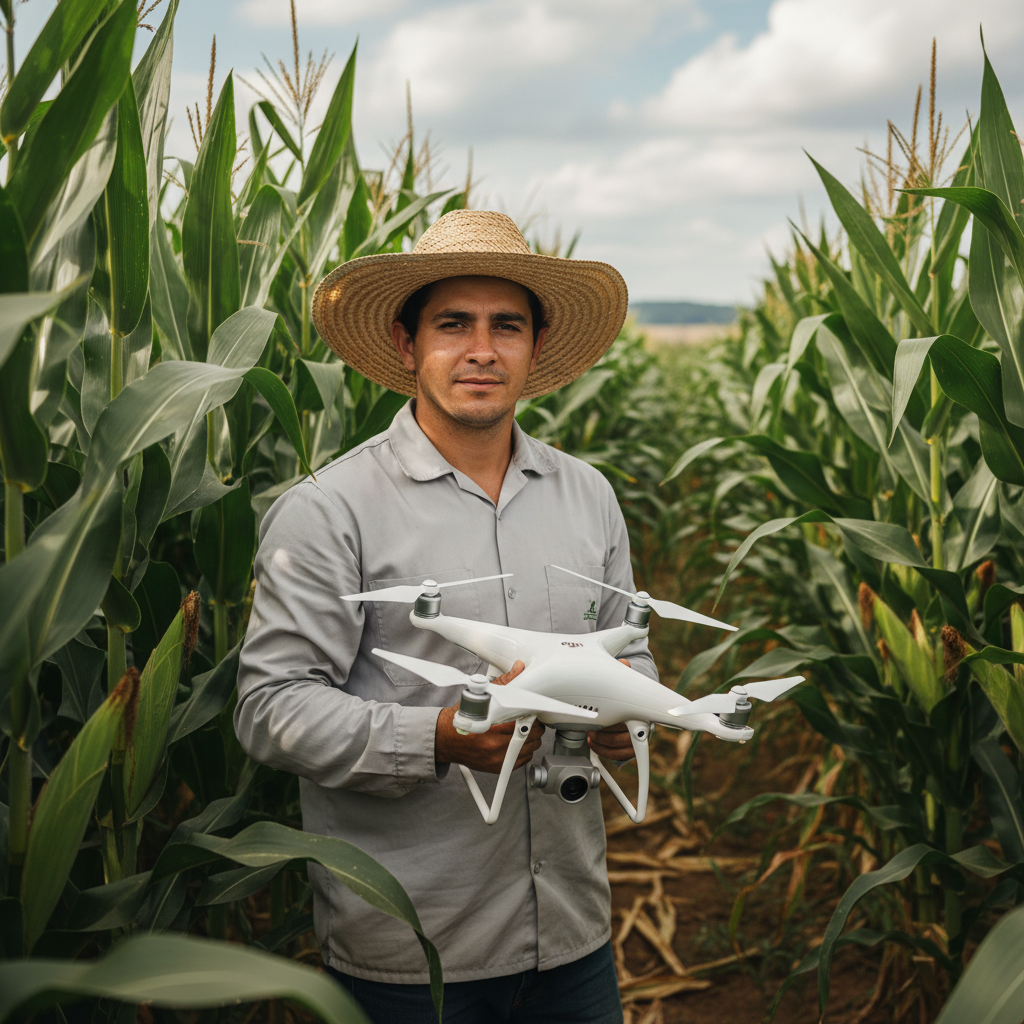
Lucas Fernandes Silva is an agricultural engineer with 12 years of experience in aerial mapping technologies and precision agriculture. ANAC-certified drone pilot since 2018, Lucas has worked on mapping projects across more than 500 rural properties in Brazil, covering areas ranging from small farms to large-scale operations. Specialized in multispectral image processing, vegetation index analysis (NDVI, GNDVI, SAVI), and precision agriculture system implementation. Lucas is passionate about sharing technical knowledge and helping agribusiness professionals optimize their operations through aerial technology.