
How drone thermal sensors work
Thermal sensors detect infrared energy emitted by every object. Mounted on a drone, the sensor reads that energy and converts it into a temperature map so you can see hot and cool spots from above.
On the drone, the sensor records many tiny pixels of temperature. Each pixel covers a small patch on the ground; when you stitch images together you get a full thermal map that shows patterns across fields — a heat fingerprint you can read to find problems.
Several factors change readings: flight height, sun angle, wind, and emissivity of the crop. Set the sensor correctly and fly when conditions are steady. If you want to catch dry spots early, remember that Thermal Sensors in Drones: Detecting Water Stress and Irrigation Problems work best with good planning and consistent settings.
Infrared basics for crops
Plants change heat emission when thirsty or sick. Thermal sensors measure heat in the long-wave infrared (LWIR) band. A stressed plant often runs warmer because it closes stomata and cools less, so hot patches appear in the canopy.
Use simple color scales and temperature thresholds to flag risk areas, but always do ground-truth checks: walk the field or use a handheld thermometer to confirm images. Weather and soil type alter thermal signatures, so verify on the ground.
Sensor resolution and accuracy
Resolution tells you how small a patch the sensor can resolve. Spatial resolution or GSD (ground sample distance) is key: lower GSD (cm) means you can spot small stress areas between rows. Radiometric accuracy and NETD (noise-equivalent temperature difference) tell you how reliably the sensor reads temperature.
Choose sensor specs by crop and flight height. For row crops, aim for GSD ≈ 5–10 cm at your flight altitude and NETD < 50 mK for clear differences. For broad pastures, lower resolution may suffice. Match pixel size to the problem you want to find.
| Sensor level | Typical GSD at 50 m | Typical NETD | Best use |
|---|---|---|---|
| Low | ~30–50 cm | ~100 mK | Large fields, coarse surveys |
| Medium | ~10–20 cm | ~50–80 mK | Row crops, general irrigation checks |
| High | ~5–10 cm | <50 mK | Precise stress mapping, research plots |
Calibration tips
Before each flight: warm up the sensor, set emissivity near plant values (~0.95), and use a field reference like a shaded/sunlit target or a small blackbody if available. Keep records of settings so maps match over time.
Thermal imaging drones for agriculture
Thermal drones give you a new pair of eyes over fields. With a thermal camera mounted on a drone, hot and cold spots jump out on a map. You can spot water stress, blocked emitters, or wet patches from leaks faster than walking rows — a heat map that tells you where plants are struggling and where irrigation is working.
During flights, keep settings consistent: flight height, camera angle, and overlap. Repeatable missions make it easier to compare maps and measure change. One clear, correctly flown mission can save hours of guesswork and a lot of wasted water.
If you need a short descriptor for reports, use: Thermal Sensors in Drones: Detecting Water Stress and Irrigation Problems. It helps growers and technicians understand that these sensors find heat patterns indicating irrigation faults and stressed plants.
What thermal maps show
Thermal maps display surface temperature patterns across a field. Warm areas usually mean less soil water or reduced plant cooling from transpiration. Cool areas can indicate recent irrigation, healthy transpiration, or shade. The map simplifies many data points into colors readable at a glance.
Color bands — red/orange for warmer canopy, blue/green for cooler canopy — flag areas for follow-up. A small hot pocket in a cool block might be a broken dripper; a long warm stripe could be a clogged lateral. Translate colors into actions: inspect, test soil moisture, or check equipment.
| Color / Temperature | What it Often Means | Action to Take |
|---|---|---|
| Red / High | Canopy hotter than neighbors — likely water stress | Inspect irrigation, measure soil moisture, consider targeted watering |
| Orange / Moderate-high | Mild stress or patchy irrigation | Check emitter spacing and pressure |
| Green / Moderate | Healthy transpiration or recent irrigation | Monitor; no immediate action |
| Blue / Low | Wet soil, shade, or over-irrigation | Check drainage; avoid excess water |
Benefits for crop monitoring
Thermal data gives quick, actionable insights. You can find trouble before visual symptoms appear, targeting fixes only where needed. That saves money and boosts yield potential.
Thermal flights also support decision-making over time. By tracking canopy temperatures, you can see trends and measure if a fix worked. Combine thermal maps with yield records to spot repeat problem areas and plan irrigation-layout or crop-choice changes.
Ideal survey times
Aim for surveys when temperature differences are greatest: late morning to early afternoon on clear, low-wind days for many crops. Avoid right after rain or irrigation, as those times mask stress. Fly consistently at the same time so maps compare reliably.
Detecting water stress with drones
Use thermal drones to spot water stress by watching temperature changes, not color alone. When plants lose water, they close stomata and leaves warm. Fly with a clear plan: map at midday on a sunny day, keep altitude steady, and collect thermal images that show hotspots and cooler zones.
Read maps as relative pictures, not absolute truth. Compare a stressed patch to nearby healthy plants. A single hot pixel is likely noise; a band of heat is a signal. Pair thermal flights with an RGB pass when possible: thermal reveals stress early and RGB confirms visible symptoms later.
Turn images into work orders: flag areas for inspection, then decide whether to adjust irrigation, fix blockages, or change schedules. Use Thermal Sensors in Drones: Detecting Water Stress and Irrigation Problems as a guiding search phrase when setting up sensors or looking for guides. Log each flight, temperature patterns, and follow-up actions so you learn what heat means for your field.
Interpreting canopy heat
Think in differences. A delta of 1–2°C between zones can indicate a problem. Check patterns across rows and whether hot spots align with irrigation lines or field edges.
Account for weather and plant stage: wind, sun angle, and growth stage change canopy heat. Use reference targets or known healthy areas as baselines to keep readings consistent.
Stress thresholds and alerts
Set thresholds to avoid chasing noise. Example thresholds:
- Warning: 2°C above healthy baseline
- Action: 4°C above baseline
Use software to send alerts when thresholds trigger, but tune them to avoid alarm fatigue. Start conservative and refine thresholds with ground-truth data.
| Temperature Delta (°C) | Severity | Recommended Action |
|---|---|---|
| 1 to 2°C | Low | Inspect during next routine check; watch trends |
| 2 to 4°C | Moderate | Prioritize spot checks; check emitters and soil moisture |
| > 4°C | High | Immediate inspection; consider targeted irrigation or repair |
Ground-truth checks
Verify thermal alerts with field checks. Walk flagged areas, use a handheld infrared thermometer or soil moisture probe, and note plant condition and irrigation status. Record findings to refine thresholds.
Multispectral and thermal fusion
Multispectral sensors (red, NIR, red edge) measure leaf reflectance and chlorophyll activity (plant vigour); thermal sensors measure canopy temperature (transpiration and water stress). Fusing them gives a fuller picture: vigour from multispectral and stress from thermal.
| Sensor | What it measures | Why it matters |
|---|---|---|
| Multispectral (NIR, Red, Red Edge) | Leaf reflectance, chlorophyll activity | Shows photosynthetic health and vigor |
| Thermal | Canopy temperature | Reveals transpiration and water stress |
| Fused product | Combined maps/indices | Pinpoints areas that are both low vigor and hot — prime targets for irrigation or inspection |
To get reliable fusion, plan flights that match time, altitude, and overlap for each sensor. Align GPS/time and resample so pixels line up. If flights occur at different times or under changing clouds, fusion becomes misleading.
Why you combine sensors
Each sensor tells a different story. Multispectral shows greenness and health; thermal shows heat. Together you can tell if a pale patch is nutrient-limited, dead, or simply dry and hot — making decisions smarter and faster.
When interpreting fused maps, treat thermal spikes plus low NDVI as a red flag and act on those areas first.
Using thermal NDVI for water stress
Combining thermal with NDVI cuts guesswork. NDVI shows biomass; thermal shows canopy temperature. Patches with low NDVI and high temperature are likely irrigation trouble spots.
Workflow: collect multispectral and thermal near-simultaneously, create NDVI, map canopy temperature, then overlay. Watch the same area multiple times: if temperature drops after irrigation but NDVI remains low, you may be facing deeper root damage or nutrient limits rather than short-term drought.
Aligning datasets
Align datasets by matching GPS, time, and resolution: use ground control points, sync timestamps, and resample images so pixels align. Calibrate radiometry for thermal and correct reflectance for multispectral. Small misalignments create big mistakes — check overlays at full zoom and fix shifts before analysis.
Estimating evapotranspiration (ET) from thermal data
You can estimate ET by converting thermal images into canopy temperature maps and then into water-loss estimates. Map canopy temperature with a calibrated sensor, compare to wet/dry references to see where plants are losing more water, and feed that into a model.
Combine thermal maps with weather inputs and crop data (air temperature, solar radiation, wind, crop coefficient) to move from temperature contrasts to ET rates. Consistent workflow (altitude, time of day, camera settings) makes numbers comparable.
Check results against field measurements (lysimeter or soil moisture readings). Use relative ET maps to plan irrigation zones and spot leaks: hot spots mean stressed plants; cool, even canopies mean healthy ET.
Canopy temperature and ET basics
Canopy temperature reflects plant water use because leaves cool via transpiration. When stomata close from water stress, leaves heat up. Those hot pixels correlate with reduced evapotranspiration.
Separate canopy temperature from air temperature and background surfaces. Use shaded references or measure air temperature near the canopy. Beware mixed pixels where soil and leaves blend; a focused thermal image improves ET estimates.
Simple models you can use
- Crop Water Stress Index (CWSI): compares canopy temperature to lower and upper baselines (well-watered vs stressed). Produces an index 0–1 useful for scouting.
- Simplified surface energy balance: estimate net radiation, sensible heat flux from temperature difference, solve for latent heat flux, convert to ET (mm/day). A simplified balance plus a crop coefficient often gives management-useful results.
Needed weather inputs
You typically need air temperature (°C), relative humidity (%), solar radiation (W/m²), wind speed (m/s), and atmospheric pressure (optional). Use on-site weather stations or reliable feeds.
| Input | Unit | Why it matters |
|---|---|---|
| Air temperature | °C | Sets reference for sensible heat and CWSI baselines |
| Relative humidity | % | Affects vapor pressure deficit and evaporation rates |
| Solar radiation | W/m² | Drives available energy for evaporation |
| Wind speed | m/s | Controls turbulent heat transfer from canopy |
| Atmospheric pressure | kPa | Improves vapor pressure calculations (optional) |
Turning thermal data into irrigation schedules
Start by turning thermal mosaics into actionable facts. Fly at the same time of day, create a thermal mosaic, and compare each zone to a baseline temperature. The temperature delta identifies hot zones.
Set simple stress bands (normal, mild, severe) and tie each to watering actions (monitor, short watering, immediate irrigation and follow-up flight). Keep rules simple for fast action.
Finally, build a calendar mapping stress bands to days, durations, and pump settings. Add rules for rain forecasts and safety checks. Using Thermal Sensors in Drones: Detecting Water Stress and Irrigation Problems as a guiding label helps teams remember the system’s purpose.
Making irrigation zone maps
Draw zones from thermal mosaics using consistent boundaries: rows, soil type, or obvious hot patches. Give each zone a name and a primary action. Layer in soil moisture tests, crop type, and yield history to refine zones. Aim for practical zones that match how you can water.
Setting triggers for watering
For each zone, pick a temperature threshold and an action: run sprinklers for X minutes, start drip lines, or alert an operator. Keep triggers binary and testable: above threshold = water; below = hold. Add safety checks like wind speed, tank level, and rain forecasts, and tie triggers to controllers or alerts.
| Temperature delta (°C) vs baseline | Stress level | Recommended action |
|---|---|---|
| 0.0–1.0 | Normal | Monitor; no immediate water |
| 1.1–2.5 | Mild stress | Short irrigation cycle tonight |
| > 2.5 | Severe stress | Immediate watering recheck flight |
How often to fly
Frequency depends on crop stage and weather: weekly during fast growth, every 2–3 days during heat waves, biweekly when dormant. After watering or a storm, fly within 24–72 hours to confirm response. Keep flights regular so triggers remain meaningful.
Using infrared drones to find leaks and anomalies
Infrared drones reveal heat where it shouldn’t be. Warm water, soil, or pipes show as bright spots on thermal video. A steady warm trail along a roofline may indicate a leak; a scattered warm patch in a field can signal stressed plants or irrigation faults. Use Thermal Sensors in Drones: Detecting Water Stress and Irrigation Problems to caption findings and explain results to clients.
Set flight timing and height to get useful thermal data. Early morning or late evening often reduces solar effects and makes temperature differences pop. Fly lower for pipes/roofs and higher for fields. Record metadata (time, altitude, camera angle) so readings are repeatable.
Interpretation mixes art and science: compare thermal images to visual photos, walk the site if safe, and mark anomalies with GPS. A thermal anomaly is a clue — confirm with context like recent repairs or irrigation runs.
Spotting wet spots vs crop stress
Wet soil and irrigated patches usually look cooler due to evaporation. In thermal images, wet spots are smooth, darker shapes matching irrigation lines, ditches, or rainfall patterns.
Crop stress shows as warmer or cooler patches depending on stress type and growth stage. Heat stress shows hotter zones; disease or root problems make small, irregular spots that don’t follow irrigation lines. Ground-truth by checking soil moisture and plant condition.
| Feature | Wet Spots | Crop Stress |
|---|---|---|
| Thermal signature | Cooler, smooth, matches irrigation patterns | Warmer or cooler, irregular, patchy |
| Shape | Geometric or linear | Scattered, irregular |
| Time sensitivity | May change after irrigation | Persists or slowly changes |
| Quick check | Look for wet soil, irrigation lines | Check plant leaves, root health |
Mapping thermal anomalies across crops
Stitch thermal images into an orthomosaic to spot patterns at scale. Plan flights with overlap and consistent altitude so mosaics have accurate temperature alignment. Use software that supports thermal radiometry so pixel values remain meaningful.
Add threshold-based zones to highlight hot/cold areas and export polygons to farm management systems. Always validate with on-the-ground checks before making major changes.
Quick inspection steps
Preflight check camera and battery; choose a calm time; fly a grid with consistent altitude and overlap; capture thermal and visible images; note metadata and GPS points; inspect hot/cold spots in the field, compare to irrigation lines, and mark suspect polygons for ground checks.
Flight planning and best practices for thermal surveys
Good flight planning yields usable thermal maps the first time. Define mission goals (irrigation issues, roof leaks, pipeline survey) — goals drive resolution needs, flight area, and number of passes.
Build a flight grid and plan battery swaps, landing zones, and data handling. Break large areas into smaller blocks to finish each on one battery when possible. Use overlapping flight lines and consistent headings for clean mosaics. Prioritize safety: buffer zones, permissions, and safe launch/recovery spots.
Calibration and reference data matter. Bring a radiometric reference (blackbody or temp strip) for absolute temperatures. Log environmental conditions and do a short calibration flight at the start. Consistent flights over time make Thermal Sensors in Drones: Detecting Water Stress and Irrigation Problems effective.
Altitude, overlap, and speed
Altitude controls GSD and detail. Fly lower for small hot/cold spots; higher altitudes cover more area with fewer passes. For thermal imagery aim for:
| Altitude (m) | Typical use | Forward overlap | Side overlap | Suggested speed (m/s) |
|---|---|---|---|---|
| 30–50 | High-detail inspections | 75–80% | 60–70% | 2–4 |
| 50–120 | Field-level surveys | 65–75% | 50–60% | 3–5 |
| 120–200 | Large-area monitoring | 60–70% | 50–60% | 4–6 |
Slower speeds reduce motion blur. Match speed to camera frame rate and altitude.
Weather and time-of-day rules
Thermal readings need stable conditions. Avoid windy, rainy, foggy, or very humid days. Time of day matters: for many crops, early morning or late afternoon gives strong contrasts; for others midday is better. Pick a consistent time for repeat surveys. Watch for direct sun on shiny surfaces that can create false readings.
Pre-flight checklist
Confirm battery levels, firmware, GPS lock, and a clean thermal lens. Set radiometric settings and emissivity, mount reference targets if needed, load the flight plan, check weather and NOTAMs, verify permissions, and brief recovery. Do a test hover and capture a calibration frame.
Accuracy limits, errors, and regulations
Know practical accuracy limits. Consumer GPS is meter-level; survey-grade GNSS with corrections reaches centimeter-level. Choose the right tool for the job.
Sensors add errors too: camera angle, lens distortion, and thermal drift affect readings. Thermal Sensors in Drones: Detecting Water Stress and Irrigation Problems are powerful, but temperature readings shift with sun angle and flight speed. Plan steady, consistent flights and record conditions.
Regulations matter: flight altitude, line-of-sight, and no-fly zones vary by jurisdiction. Check local rules, keep registration current, log flights, and use geofencing when possible.
Common sources of error
Air and weather: wind gusts cause blur; unstable air affects image alignment. Survey setup: poor ground control points, wrong camera settings, or skipped calibrations introduce errors.
| Error Source | Effect on Output | Quick Field Fix |
|---|---|---|
| GPS drift | Position offsets, poor alignment | Use RTK/PPK or add ground control points |
| Wind / motion blur | Blurred images, mosaic errors | Fly lower speeds, increase shutter speed, wait for calm |
| Thermal sensor drift | Wrong temperature readings | Stabilize sensor, fly consistent time of day |
| Poor overlap | Gaps, reconstruction failures | Increase front/side overlap to ~70%/60% |
| Lens distortion | Geometric errors | Apply lens profile correction in processing |
Data privacy and flight rules
Respect privacy: avoid capturing private property or people without consent. Get written permission when necessary. Store imagery securely and limit access.
Check official maps/apps for temporary flight restrictions. Apply for waivers or coordinate with authorities when operating near crowds or airports.
Validation and reporting steps
After flight, validate data: check control point residuals, compare GNSS logs, and inspect images for blur or anomalies. Create a short report listing conditions, errors found, and fixes applied so results are repeatable and trusted.
Frequently asked questions
- What are Thermal Sensors in Drones: Detecting Water Stress and Irrigation Problems?
You use thermal cameras on drones to spot heat patterns that show dry plants and irrigation faults. Fly, scan, and map. - How do thermal sensors show water stress?
Dry leaves run hotter than healthy ones. The sensor reads temperature differences and you compare frames to find stressed areas. - When should you fly to check irrigation?
Fly at consistent times when contrasts are clear — typically early morning, late morning, or late afternoon depending on crop and local climate. Avoid just after irrigation or rainfall. - What drone setup should you use?
Choose a thermal camera with adequate resolution and NETD for your target, add GPS and mapping software, and keep flight speed slow and steady. - How do you fix irrigation problems the thermal scan finds?
Mark hot spots on your map, inspect lines, valves, and emitters, adjust flows or repair as needed, then re-scan to confirm.
Key takeaways
- Thermal Sensors in Drones: Detecting Water Stress and Irrigation Problems provide rapid, actionable maps of canopy temperature that help find irrigation faults and early plant stress.
- Plan consistent flights (time, altitude, overlap), calibrate sensors, and ground-truth alerts.
- Fuse thermal with multispectral/NDVI for prioritized interventions: low NDVI high temperature = high-priority irrigation or inspection.
- Use simple thresholds and practical irrigation zones to turn thermal maps into schedules and automated triggers.
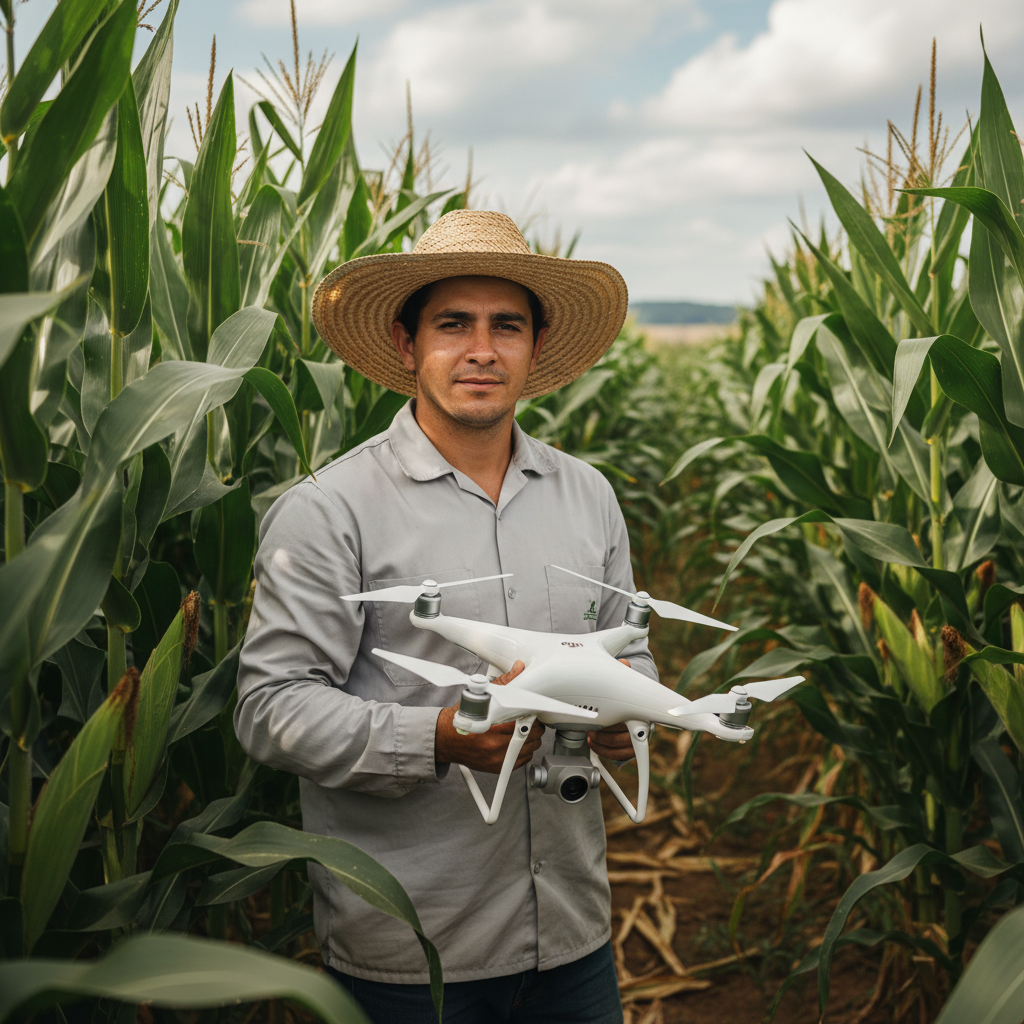
Lucas Fernandes Silva is an agricultural engineer with 12 years of experience in aerial mapping technologies and precision agriculture. ANAC-certified drone pilot since 2018, Lucas has worked on mapping projects across more than 500 rural properties in Brazil, covering areas ranging from small farms to large-scale operations. Specialized in multispectral image processing, vegetation index analysis (NDVI, GNDVI, SAVI), and precision agriculture system implementation. Lucas is passionate about sharing technical knowledge and helping agribusiness professionals optimize their operations through aerial technology.