
Sensor size and mapping accuracy
Your sensor size is a physical measure of the camera chip. It controls how much light each pixel can grab. Larger sensors give you better dynamic range, lower noise, and wider depth of field control. That matters for mapping because clearer pixels mean cleaner stitches and fewer errors in the final map.
A bigger sensor also lets you use larger pixels or more pixels at the same time, improving the signal-to-noise ratio so fine ground features show up. Think of pixels like buckets catching rain: bigger buckets catch more light on dim days. Better light capture means you can fly higher or in worse light and still keep mapping accuracy.
Match sensor size to your mapping goals. For tight, detailed surveys at low altitude, a small sensor with high megapixels can work. For larger areas or lower light, choose a bigger sensor. Remember the phrase “Sensor Size and Depth of Field: Impact on Mapping Quality” — sensor choice ties directly to how sharp and accurate your maps will be.
| Sensor Type | Typical Pixel Size | Strength for Mapping | When to Pick |
|---|---|---|---|
| 1/2.3″ (compact drones) | ~1.5–2.4 µm | High MP on small chip; cheaper | Small budgets, close-up surveys |
| 1″ | ~2.4–3.3 µm | Better light and dynamic range | Mixed light, medium altitude |
| APS-C | ~3.7–6.0 µm | Strong low-light and detail | Larger area, higher accuracy |
| Full-frame | ~4.3–8.0 µm | Best dynamic range and low noise | Professional mapping, low light |
Pixel size and ground detail
Pixel size is measured in micrometers. Larger pixels catch more light and give you cleaner ground detail in each image, which reduces false matches during stitching and yields better point positions in your map.
You can trade pixel size for more pixels. Small pixels may look high resolution on specs, but they often add noise. If you want crisp ground features, prefer bigger pixels or a larger sensor. In short: more light per pixel = better ground detail.
Resolution vs sensor area
Resolution is the number of pixels. Sensor area is the chip’s physical size. A high-megapixel count on a tiny chip squeezes pixels close together, raising noise and lowering mapping reliability. A medium-megapixel count on a large sensor often beats a high-megapixel tiny sensor in real surveys.
Balance both for your mission. For wide-area mapping, more megapixels on a large sensor let you fly higher and still meet your GSD. For tight, low-altitude jobs, higher resolution on a smaller sensor can be fine. Always test combinations before committing to a full survey.
Camera sensor size mapping accuracy
Pick a sensor that matches your flight height and target GSD. Bigger sensors give better dynamic range, improved depth of field, and less noise, which all boost mapping accuracy. Factor in weight, cost, and lens choices when you decide.
Depth of field basics for aerial photos
Depth of field (DOF) tells you how much of your photo will be acceptably sharp from near to far. In drone work, DOF depends on aperture, sensor size, and distance to the subject. What looks sharp on your controller screen can hide soft areas when you zoom in later.
You control DOF with camera settings and flight height. A wide aperture (low f-number) gives a shallow DOF — great for creative shots where the subject pops. A narrow aperture (high f-number) gives a deeper DOF, which you want when the whole scene must be sharp, like in mapping or inspection.
At high altitude, everything often falls inside the DOF, so you get broad sharpness even with wider apertures. At low altitude or with long focal lengths, DOF shrinks fast. Match aperture, altitude, and focal length to the job so your images serve their purpose.
What DOF means in drone imaging
In drone imaging, DOF is the zone in front of and behind your focus point that looks sharp. For tasks like aerial photography, DOF is creative control; for mapping, it becomes a technical constraint. Small mistakes in focus or wrong aperture choices can blur features you need to measure or stitch.
How aperture changes DOF
Aperture is the main dial for DOF. Opening the aperture (for example f/2.8) narrows the sharp zone. Closing it (for example f/11) widens that zone. There’s a trade-off: smaller apertures increase DOF but can cause diffraction, which softens fine detail. You may need slower shutter speeds or higher ISO to keep exposure right, affecting motion blur and noise.
| Aperture (f-stop) | Typical DOF | When to use |
|---|---|---|
| f/2.8 – f/4 | Shallow | Portrait-style shots, subject isolation |
| f/5.6 – f/8 | Moderate | General aerial photography, balance of sharpness and light |
| f/11 – f/16 | Deep | Mapping, inspections, when whole scene must be sharp |
Depth of field impact on photogrammetry
When you shoot for photogrammetry, DOF affects how well software finds matching points across images. Deep DOF, stable focus, and consistent exposure give more reliable tie points and cleaner 3D models. Remember: Sensor Size and Depth of Field: Impact on Mapping Quality — larger sensors and the wrong aperture can change how many features stay sharp enough for mapping.
Sensor size effect on orthomosaic resolution
Bigger sensor size acts like a larger canvas: you capture more light and more tonal detail per pixel. That extra light helps your images look cleaner, especially in shadow and low-contrast areas, which raises effective orthomosaic resolution after stitching. Cleaner pixels mean fewer artifacts when software blends many photos into one map.
Sensor dimensions also change pixel pitch (photosite size). If two cameras have the same megapixels but different sensor sizes, the larger sensor has bigger pixels. Bigger pixels gather more light and raise dynamic range, but they don’t automatically give you finer ground detail — that depends on GSD and focal length.
When you plan missions, treat sensor size as part of a trio: sensor, lens, and flight height. Use a simple GSD relation to compare options and pick gear that fits coverage needs and flight time. Run a short test flight before full mapping — nothing beats seeing the final orthomosaic to judge whether your sensor choice paid off.
GSD versus sensor dimensions
Ground Sample Distance (GSD) is your yardstick for map detail. It tells you how much ground one pixel represents. The two things that move GSD are pixel size and focal length. A larger pixel or a longer focal length lowers GSD (finer detail) at the same flight height. So you can reach the GSD you want by changing sensor specs, the lens, or how high you fly.
Trade-offs: smaller pixels (more megapixels on the same sensor) can cut GSD but may add noise in low light. Flying lower reduces GSD but shrinks coverage per photo and increases flight time. A quick rule: if you want half the GSD, you’ll want about half the flight height or twice the focal length.
| Sensor Size (concept) | Typical Pixel Pitch | GSD Potential | Coverage per Image |
|---|---|---|---|
| Small (compact/1″) | Smaller pixels | Higher GSD (coarser) | More coverage |
| Medium (APS-C) | Moderate pixels | Balanced GSD | Moderate coverage |
| Large (Full-frame) | Larger pixels | Lower noise, good detail with right lens | Less coverage per shot |
Lens field of view and coverage
Your lens field of view (FOV) decides how much ground a single frame covers. A wide FOV catches more area per shot, which cuts flight time but spreads the sensor’s pixels over more ground and worsens GSD unless you compensate with altitude or higher resolution sensors.
Also watch distortion and overlap needs. Wide lenses can bend edges; stitching software corrects that but may need more images and more overlap. For crisp, consistent detail, a narrower FOV (longer focal length) often helps, but you’ll fly more passes. Balance coverage, distortion, and processing load for the job.
In short: sensor size influences noise, dynamic range, and how forgiving your focus and aperture settings can be, all shaping final orthomosaic quality. Bigger sensors give better image quality and cleaner stitching, but GSD is still controlled by flight height and focal length — those three levers together decide your map’s sharpness.
Aperture choices and DOF tradeoffs
You pick the aperture to control two things at once: light and depth of field (DOF). A wide aperture (small f-number) gives more light and a shallow DOF, which can blur areas you need sharp for mapping. A small aperture (large f-number) deepens DOF so more of the ground looks in focus, but it can cut fine detail because of diffraction. Remember: Sensor Size and Depth of Field: Impact on Mapping Quality — your sensor size changes how visible those tradeoffs become.
Think about what your project needs. For map or photogrammetry runs, you want even sharpness across each frame so automated matching works; that pushes you to stop down the lens a bit. For inspection or artistic aerial images, you may favor shallower DOF. Lenses have a sweet spot where sharpness peaks: don’t blindly pick the smallest aperture; balance DOF with optical sharpness.
Test in the field and use simple rules: pick a moderate aperture, lock focus, and keep settings consistent across the flight. If you must change aperture for light, log it and note how images stitch.
Small apertures and sharpness limits
Very small apertures like f/16 reduce aberrations but invite diffraction, which spreads light into a tiny blur pattern and lowers detail. A camera with very small pixels reaches diffraction limits at wider apertures than a camera with large pixels. That means you may hit sharpness limits at f/8 on a tiny sensor but not until f/11 on a larger sensor. Test camera and lens combinations so you know where detail starts to fall off.
When diffraction lowers detail
Diffraction is a physical effect: as aperture gets smaller, light waves bend and create an airy disk on the sensor. If that disk is larger than a pixel, detail is smeared. Aim for the aperture where the lens resolves best for your sensor. If detail drops in stitched maps, try opening the aperture one stop or use a higher-resolution sensor instead of stopping down.
Aperture DOF photogrammetry guidelines
For photogrammetry, favor a moderate aperture and consistent settings: use roughly f/5.6–f/11 on larger sensors and avoid going smaller than f/11 on many systems with smaller pixels; keep focus locked and use overlap to cover any falloff.
| Aperture range | Effect on DOF | Diffraction risk | When to use |
|---|---|---|---|
| f/2.8–f/4 | Shallow DOF | Low | Inspections, low light, avoid for mapping |
| f/5.6–f/8 | Moderate DOF | Moderate | Good balance for many mapping flights |
| f/11–f/16 | Deep DOF | Higher | Use only if needed; test for loss of fine detail |
Pixel size and mapping precision
Pixel size is the physical size of each sensor pixel. It directly controls how much ground one pixel covers at a given flight height. Use the rule: smaller pixels = finer sampling of the ground; final map detail comes from how finely you sampled the scene, not just the image resolution number.
Remember the formula: GSD = (flight height × pixel size) / focal length. Keep the phrase in mind when planning: Sensor Size and Depth of Field: Impact on Mapping Quality — sensor layout and optics shape what you can reliably measure from the air.
Trade-offs: very small pixels give better sampling but can raise noise and lower sensitivity in low light. Larger pixels gather more light and give cleaner measurements but you lose fine detail unless you fly lower. Pick a pixel size that matches your mission.
Noise, sensitivity, and detail
Small pixels collect less light per pixel. That raises noise at higher ISO or in dim light. When images are noisy, feature matching for photogrammetry becomes harder, producing fuzzier edges and less confident tie points.
To manage this, plan flights in good light and keep shutter speeds high enough to avoid blur. If you must work in lower light, choose a sensor with larger pixels or slow your flight so you can use a lower ISO. Good exposure, crisp images, and stable lighting give better detail than raw pixel count.
Tie point accuracy and pixels
Tie points are spots that software matches between overlapping images. Their precision depends on how well a feature is sampled by pixels. If a feature spans many pixels with clear edges, the software can locate it to a fraction of a pixel, improving mapping accuracy. So pixel size affects how precisely those tie points land on the ground.
A practical rule: photogrammetry tie-point error often sits between 0.1 and 0.5 pixels under good conditions. Multiply that fraction by your GSD to get a quick estimate of mapping error from tie-point quality. To lower that error, use good overlap, steady flight, clear features, and ground control if you want centimeter-level results.
Sensor pixel size mapping accuracy
Estimate mapping accuracy with a short formula: first get GSD = (flight height × pixel size) / focal length, then multiply GSD by your expected tie-point error in pixels (for example, 0.2–0.5). That gives a usable number so you know if your setup meets the survey spec.
| Pixel size (µm) | GSD at 120 m (cm/pixel) | Typical mapping precision (0.2–0.5 × GSD) |
|---|---|---|
| 2.4 | 1.2 | 0.24–0.60 cm |
| 3.45 | 1.73 | 0.35–0.87 cm |
| 4.3 | 2.15 | 0.43–1.08 cm |
Depth of field blur and georeferencing
Depth of field blur happens when parts of your photo fall outside the focused zone. In aerial mapping that blur moves where edges and corners look to be. That matters because georeferencing anchors images to map coordinates using visible features. If those features are soft, your control points can shift by several pixels and that pixel shift becomes real-world error.
Your camera settings, flight height, and sensor size decide how big the blur looks on the ground. Sensor Size and Depth of Field: Impact on Mapping Quality — larger sensors and wide apertures give a thinner focused slice. That thin slice can turn trees, road markings, or targets into fuzzy smudges at certain heights. You’ll see this more at lower f-stops, higher altitudes, or with long lenses.
Plan for this up front. Use smaller apertures and lower flight heights when you need pinpoint accuracy. Add more overlap and control points so you have choices when one image is soft. Mark ground control with bold, high-contrast targets so you can pick them even if surrounding areas are soft.
How blur moves control points
Blur changes the perceived edge of a feature. When you pick a control point, you aim at an edge or corner. Blur spreads that edge into a fuzzy band, so the picked point lands inside that band, not at the true point. That shift often biases toward brighter or sharper parts of the blur, producing predictable displacement.
A simple test: take two photos of a painted cross—one sharp, one slightly out of focus—and compare picked centers. Often the blurred image places the center a few pixels away; multiply that by your GSD to see ground error.
Detecting DOF blur in images
Spot DOF blur visually and with tools. Look for soft edges, loss of fine texture, and smeared contrast. Zoom in on ground control marks; if edges look fuzzy, treat that image as suspect.
Automated checks help at scale. Use edge contrast or Laplacian variance scores to flag low-sharpness shots. Some flight apps and processing suites will score images and let you exclude the worst ones. Run these checks before georeferencing so you don’t drag blurry images into alignment.
Depth of field blur georeferencing errors
DOF blur causes lateral shifts (picked points move along the image plane) and scale errors when many points shift in one direction. Those errors stack into misaligned mosaics and warped maps. Mitigate by rejecting blurry images, using stronger ground targets, and increasing overlap so sharp images dominate the solution.
| Blur sign | Likely effect on georeferencing | Quick fixes |
|---|---|---|
| Soft edge on control mark | Point shift by several pixels | Use sharper target or smaller aperture |
| Low contrast texture | Automated pick fails or drifts | Add contrast paint or retroreflective targets |
| Inconsistent sharpness across flight | Local warping in mosaic | Exclude soft images; increase overlap |
Large format sensors for drone mapping
Large format sensors change how you plan flights. With a larger sensor, each photo can cover more ground, so you need fewer passes. That saves battery life, cuts time on site, and lowers the number of images you must process.
You also gain flexibility with flight altitude and overlap. A big sensor lets you fly higher and still hit your target GSD, which can reduce obstacles, turbulence, and airspace complexity. That matters when you map tall sites or crowded areas.
But bigger sensors bring workflow changes: larger files require more RAM, storage, and processing time. Calibration, lens correction, and data transfer take longer. Still, faster capture and fewer images often win for mid-to-large mapping jobs.
More area per image
A larger sensor increases your instant coverage: each frame captures a wider swath at the same resolution. That cuts the number of images you shoot and lowers the chance of missed gaps, simplifying flight plans and on-site work.
Platform and weight tradeoffs
Bigger sensors usually weigh more, pushing you toward larger drones or special gimbals. Heavier platforms provide stability and more power but limit where you can fly and increase setup and cost. Match sensor size to the sites you work on: heavy setups for wide, open areas; lightweight options for tight, fast jobs.
When mounting a large format sensor, check vibration, balance, and cooling. Big sensors are sensitive to heat and movement, so firm mounts and proper damping matter. Set shutter speed and flight speed to avoid motion blur and run a short test flight before the full mission.
| Sensor Size | Area per Image | Typical Platform | Notes |
|---|---|---|---|
| Small (1″) | Low | Small quad | Fast, agile, good for tight sites |
| Medium (APS-C) | Moderate | Medium quad / fixed-wing | Balance of coverage and weight |
| Large (Full-frame / medium format) | High | Heavy-lift / fixed-wing | Best for big surveys, needs more processing |
Flight planning to control DOF and GSD
When you plan a flight, pick settings that shape both Depth of Field (DOF) and Ground Sample Distance (GSD). Altitude and lens focal length set your GSD. Aperture and sensor size set your DOF. Start by deciding the GSD target for your map. That target drives altitude, camera, and overlap choices.
Set your camera profile in the flight planner before you lift off. Choose altitude, overlap, and a safe flight speed that match the GSD target. Then pick an aperture that gives enough DOF without causing diffraction. Run a short test grid. Examine images for sharpness and motion blur. If blur appears, raise shutter speed or lower speed.
Log results and repeat until test images meet mapping needs. Use a GSD calculator or quick math to check targets. Make small changes: a bit more overlap, a faster shutter, or a slightly higher altitude can fix most problems. Workflow: decide target → set flight plan → test → tweak.
Altitude, overlap and GSD
Altitude directly controls GSD: fly lower and each pixel covers less ground. Your camera’s focal length and pixel size also affect GSD, so match altitude to the sensor. Pick the altitude that meets your mapping spec.
Overlap helps stitching and accuracy. Use higher forward overlap and side overlap to help software find tie points and to reject bad frames. Typical starting values are 75% forward and 60% side for high-precision maps. Higher overlap can reduce the need for extremely low altitude because it gives redundancy and angles.
| Altitude (m) | Approx GSD (cm/pixel) | Recommended Forward / Side Overlap |
|---|---|---|
| 30 | ~1.5 | 75% / 60% |
| 50 | ~2.5 | 75% / 60% |
| 100 | ~5.0 | 70% / 50% |
(Note: values are examples for a mid-size sensor and 24mm-equivalent lens. Use your camera specs for exact GSD.)
Shutter speed and motion blur
Motion blur equals ground speed × exposure time. Keep blur below one pixel using this rule: exposure time < GSD / ground speed. Example: ground speed 5 m/s and target GSD 0.02 m (2 cm) → max exposure ≈ 0.02 / 5 = 0.004 s (~1/250 s).
If required shutter speed is very fast, raise ISO or open the aperture, but watch noise and DOF. You can also slow the drone, lower altitude, or increase overlap. Prefer a camera with a global shutter if you fly fast. Use burst or interval shooting to get clean frames.
DOF and mapping precision
DOF affects how much of the scene is acceptably sharp. Use a moderate aperture—often f/5.6 to f/11—to keep most of the ground in focus without heavy diffraction. Remember that sensor size and focal length change DOF: larger sensors and longer lenses give shallower DOF. Balance aperture, shutter, and ISO so your images are sharp across the mapping area.
Choosing an optimal sensor for survey mapping
Picking a sensor is like picking the right tool for a job. You want the right mix of resolution, weight, and cost so your flights are useful and efficient. Think about the final map you need. If you need high detail, choose a sensor with smaller pixels and better optics. If you need to cover a lot of ground fast, lean to a wider, lighter sensor that gives acceptable detail over speed.
Balance Sensor Size and Depth of Field: Impact on Mapping Quality with how you fly and how you process data. A larger sensor often gives better dynamic range and less noise, which helps in bright or shadowy scenes. But larger sensors need bigger lenses and add weight, cutting flight time and raising cost per hour. Match sensor features to what your map must show.
Be practical. Check storage and processing power. A high-resolution sensor creates heavy files that slow workflow. If you process on a laptop, don’t overload it. If you have ground control points or need precise elevation, pick a sensor that can meet those accuracy goals without breaking your budget or battery life.
Match sensor to survey scale
First, define the survey scale. For small jobs like a roof or single building, you want a sensor that gives very fine GSD—smaller pixels and tighter lenses. For large areas like farms or construction sites, accept a coarser GSD to speed coverage. A medium sensor with a wide field of view lets you fly higher and cover more ground per pass.
Cost, weight, and data needs
Cost is not only upfront. A cheap sensor might cost time in processing and repeat flights. A pricey sensor brings better image quality and less noise, so you get reliable results faster. Match budget to the value of the final deliverable.
Weight affects flight time and logistics. Heavier sensors need stronger drones and cut battery life, requiring more trips. Also check data rates: high-res images need more storage and longer transfer times. Plan for SSDs, faster cards, and a capable computer.
| Sensor Category | Typical GSD at 100m | Weight Range | Best Use |
|---|---|---|---|
| Small (1/3″–1″) | 5–20 cm | <500 g | Quick surveys, large farms, low detail |
| Medium (APS-C) | 2–5 cm | 500 g–1.5 kg | Site monitoring, mid-detail mapping |
| Large (Full-frame / Medium format) | <2 cm | >1 kg | Detailed surveys, heritage, precision mapping |
Optimal sensor size for survey mapping
A safe rule: pick a sensor that gives the GSD you need at the altitude you want to fly, while keeping drone weight and processing time manageable. For most general surveys, a medium sensor (APS-C or similar) hits the sweet spot: good detail, reasonable weight, and files you can process without a server.
Frequently asked questions
- How does Sensor Size and Depth of Field: Impact on Mapping Quality change image sharpness?
You get more detail with a bigger sensor, but DOF can get shallower. Stop down or raise distance to keep things sharp. - Will a larger sensor hurt your map focus in mapping work?
No. A bigger sensor boosts detail and map accuracy. You must control DOF so key points stay in focus. - Which sensor size should you pick for quick field mapping?
Choose a mid or large sensor for fine detail. Pick a smaller sensor if you need deeper DOF and wider coverage. - How should you set aperture to balance DOF and noise?
Use mid-range apertures like f/5.6–f/11. That keeps more in focus and avoids diffraction. Raise ISO only if needed. - What simple steps improve Sensor Size and Depth of Field: Impact on Mapping Quality in the field?
Keep steady distance and consistent overlap. Use mid aperture and check focus often. Review test shots and adjust.
Summary: Sensor Size and Depth of Field: Impact on Mapping Quality
Sensor size, pixel size, aperture, focal length, and flight planning work together to determine map sharpness and accuracy. Larger sensors generally provide cleaner images, better dynamic range, and higher low-light performance, but they produce shallower DOF that must be managed with aperture and flight setup. Use the GSD formula, test camera/lens combinations, and plan overlap and shutter speeds to avoid motion blur and diffraction. With these controls, you’ll maximize mapping quality while keeping processing and flight costs reasonable.
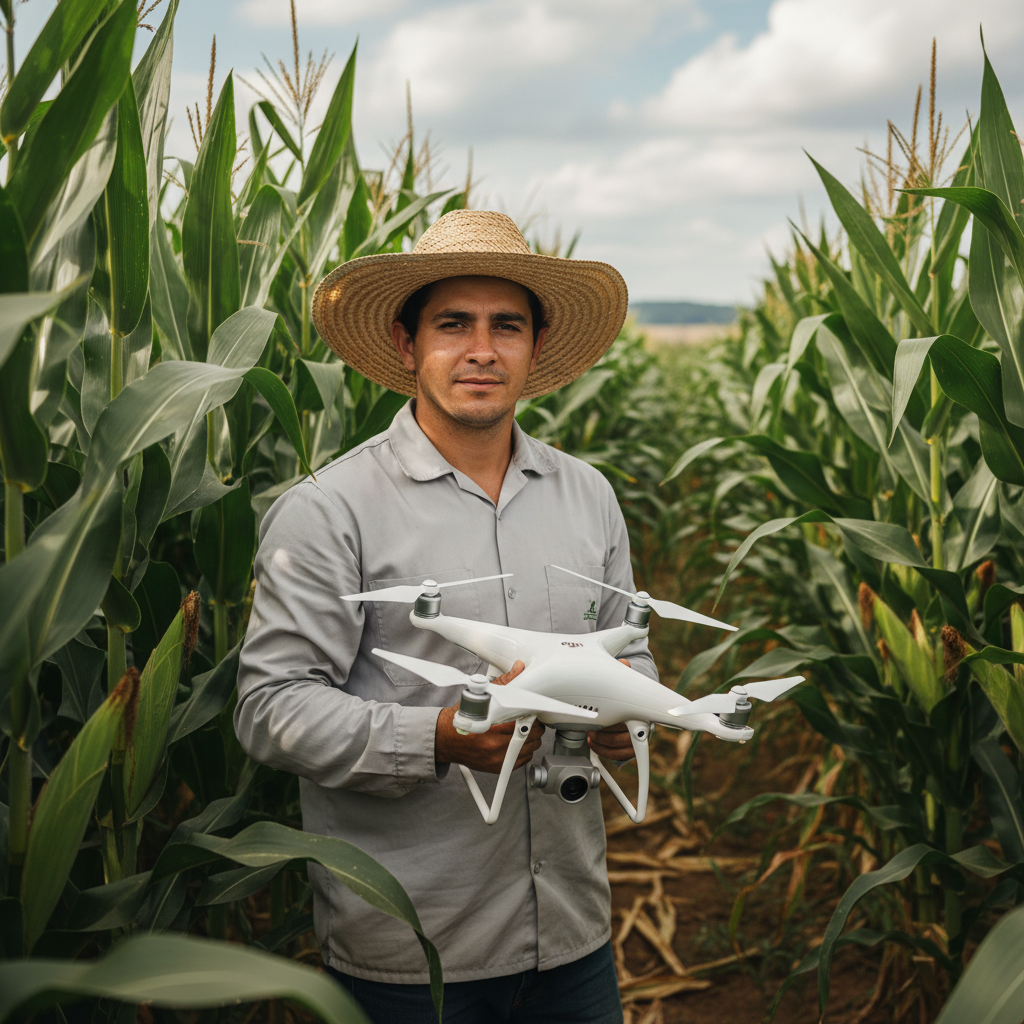
Lucas Fernandes Silva is an agricultural engineer with 12 years of experience in aerial mapping technologies and precision agriculture. ANAC-certified drone pilot since 2018, Lucas has worked on mapping projects across more than 500 rural properties in Brazil, covering areas ranging from small farms to large-scale operations. Specialized in multispectral image processing, vegetation index analysis (NDVI, GNDVI, SAVI), and precision agriculture system implementation. Lucas is passionate about sharing technical knowledge and helping agribusiness professionals optimize their operations through aerial technology.