
How you pick manual vs automatic drone mapping
Start by asking what you need from the flight. If you want consistent field scans over weeks with the same grid, automatic is usually the right call. Think of it like setting a lawn mower on a grid — you get the same lines every time. Use the phrase Manual vs Automatic Flight: When to Use Each Mode for Agricultural Mapping to frame that choice in your reports and logs so you can compare results later.
Next, check the field and environment. For wide, open fields with few hazards, automatic gives steady overlap and predictable battery use. If the area has trees, irrigation pivots, tall power lines, or livestock movement, you’ll lean toward manual or at least plan an automatic mission with tight safety buffers. Your goal is clear: map the crop, protect the gear, and keep people safe.
Finally, match your pilot skill and available tools to the mission. If you have RTK, good GNSS coverage, and reliable flight planning software, automatic flights will save time and reduce human error. If you’re facing odd shapes, changing conditions, or need very low-altitude shots for a quick problem check, manual gives you the finesse. Decide before you power up.
Pros of automatic flight for repeatable coverage
Automatic flight shines when you need repeatability. Set your grid, altitude, overlap, and speed once, then run the same mission week after week. That steady approach makes your NDVI or biomass comparisons valid; you’re comparing apples to apples. Automatic flights also keep image overlap and camera angle consistent, which helps stitching and analysis software.
You’ll also save time and reduce stress. Automatic missions let you plan around battery swaps and field size, and the autopilot handles turns and speed changes. If you want professional-looking maps without burning hours in the air, automatic is the efficient route.
| Feature | Automatic Flight | Manual Flight |
|---|---|---|
| Best for | Large, open fields; scheduled surveys | Tight spots; ad hoc inspections |
| Main benefit | Consistency and efficiency | Precision and flexibility |
| When to pick | Regular monitoring, crop health tracking | Inspecting gaps, obstacles, or damage |
When you should use manual control for tight spots
Choose manual when obstacles are close and you need close-up work. If you’re threading between pivot arms, under tree lines, or inspecting a damaged corner, the human eye and hands matter. Manual control lets you slow down, hover, and angle the camera to get the shot you need without forcing the autopilot into risky maneuvers.
Manual also wins when conditions change fast. Sudden gusts, unexpected animals, or workers in the field call for a pilot who can react on the fly. Use manual for targeted tasks like plant-level scouting, pest spots, or anything that needs a creative approach. Keep your movements calm, deliberate, and within line of sight.
Quick decision checklist for mode choice
If you want repeatable, scheduled coverage and your field is mostly clear — pick automatic; if the area is tight, has many hazards, or you need targeted close views — pick manual; if unsure, plan an automatic mission with a short manual override segment and stay ready to take control.
Regulatory steps for autonomous flight crop mapping
Start by checking local and national rules that affect autonomous flights. Contact the aviation authority or check its website for UAS guidance, approved equipment lists, and registration rules. If you plan flights beyond visual line of sight or over people, you will likely need an operational waiver or special authorization. Read the waiver conditions and plan your flights to meet them.
Next, build a compliance plan that covers training, maintenance, and operational limits. Train your team to the level required by your regulator and keep training records. Set up a maintenance schedule and keep maintenance logs for every aircraft and sensor. These steps protect your operation and make audits faster when they show up.
Finally, integrate risk controls into every mission plan. Use contingency procedures for loss of link, emergency landings, and data security. Test these procedures in real conditions before you fly over valuable crops.
Airspace rules and waivers you must get
Identify the airspace class where your fields sit. Controlled airspace near airports often needs written authorization. For flights that cross restricted zones or enter crowded areas, apply early for a Certificate of Waiver or Authorization (COA) or similar permit. Authorities can take time to process requests, so start weeks ahead of planned work.
If you operate autonomously beyond line of sight or at night, you will need specific waivers. Your waiver application must include safety mitigations, test data, and contingency plans. Show clear evidence of practice flights and system reliability.
Record keeping and reporting requirements
Keep a structured logbook for each aircraft, pilot, and sensor. Record flight hours, battery cycles, firmware versions, and payload changes. Store flight plans, NOTAMs, and preflight checklists with each mission entry. Good records speed up troubleshooting and defend you in case of a complaint.
Report incidents and near-misses as your regulator requires. Create a simple reporting flow: who documents, who notifies authorities, and how you fix the problem. Keep copies of incident reports, repair notes, and communications.
Documents to carry on every mission
Carry the pilot certificate, aircraft registration, insurance proof, current waiver or authorization, flight plan, latest maintenance log, and a printed emergency contact list. Keep both digital and hard copies in a weatherproof folder.
| Document | Why it matters | Where to store |
|---|---|---|
| Pilot certificate | Shows legal authority to operate | Physical encrypted digital copy |
| Aircraft registration | Proves ownership/authorization | Physical cloud backup |
| Insurance proof | Required by many clients and authorities | Physical wallet copy cloud |
| Waiver / COA | Allows restricted operations | Mission tablet paper copy |
| Maintenance log | Verifies aircraft airworthiness | Binder in vehicle digital logbook |
| Flight plan / NOTAMs | Shows planned operations and notices | Mission brief packet device |
| Emergency contacts | Speeds response after incidents | Printed card phone contacts |
Safety considerations — manual, automatic, drones in agriculture
Treat safety as your first task every time you fly. Start by thinking about who and what could be affected: people, livestock, crops, and equipment. Whether you plan a hands-on manual flight or set an automatic mapping route, keep situational awareness high. Check weather, line-of-sight, and nearby activities so you don’t surprise anyone or anything on the ground.
When choosing mode, balance control and repeatability. For precision mapping, follow guidance like: Manual vs Automatic Flight: When to Use Each Mode for Agricultural Mapping — use automatic for repeatable grid missions and manual when crops, obstacles, or livestock need on-the-spot judgment. If you switch modes mid-flight, have a clear plan for who takes control and why.
Keep your gear in good shape and your software current. Inspect batteries, propellers, antennas, and sensors before leaving the truck. Use geofencing, conservative altitude limits, and backup communications so a glitch doesn’t become a crash. Train with your crew and run quick drills; practice today saves you headaches tomorrow.
Preflight safety checks you must run
Before you arm the motors, run a simple checklist. Confirm firmware, battery voltage, and propeller condition. Verify the GPS has a stable lock and that the compass calibration matches the field. Check the camera and SD card, and remove any loose tools or farm debris from the takeoff area.
Next, scan the site itself. Walk the planned launch and landing spots to look for people, animals, irrigation lines, and overhead wires. Check wind direction and gusts, and note any nearby machinery that may move. If you plan an automatic mission, load the flight plan and do a dry run on the controller screen. Tell everyone what you’ll do—clear communication cuts risk.
Emergency procedures when control transfers
If control moves from automatic to manual—because of a failsafe, a pilot takeover, or an urgent obstacle—you must stay calm and act fast. Grab the controls, check altitude and attitude, and slow the aircraft if needed. Use gentle inputs: sudden jerks can worsen a situation. If you can, move to a stable hover before planning a landing.
Have clear roles and words for emergencies. Use callouts like “I have it” or “Switching to manual” so everyone knows who’s flying. If you lose link or hit a no-go area, follow your preset return or land procedure. After any abnormal event, log the incident, inspect the drone on the ground, and report to the right authority if there was damage or injury.
Minimum safe distances and buffer rules
Always keep practical buffers between your aircraft and people, animals, roads, and power lines. Fly slower and higher near sensitive targets, and never assume a fixed rule fits every farm—adjust for local traffic, animals, and crops. Use spotters and maintain visual line-of-sight when possible.
| Target | Minimum Horizontal Distance (recommended) | Notes |
|---|---|---|
| People (non-participants) | 50 m | Keep public well clear; use barriers or signs. |
| Farm workers / participants | 30 m | Have clear brief and spotter for closer work. |
| Livestock | 50–100 m | Animals spook easily; increase distance if stressed. |
| Roads / Vehicles | 75 m | Avoid overflying; risk of debris or distraction. |
| Buildings / Equipment | 30–50 m | Use extra caution near silos and machinery. |
| Power lines | 100 m | Treat lines as very high risk; keep maximum buffer. |
Data quality in manual flight agricultural mapping
Manual flights put you in the pilot’s seat and that control can be a strength or a weakness for data quality. When you fly by hand, small changes in altitude, speed, or camera angle change how images line up. Think of each photo as a puzzle piece; if pieces are cut at different sizes, the puzzle is harder to finish. Plan a clear flight path and repeat it the same way each pass to keep pieces matching.
Weather and timing change your results fast. Wind gusts tilt the drone, sun angle alters shadows, and changing light shifts color values. Pick stable windows of time and fly when light is steady. Use the same camera settings across the whole mission so images have the same brightness and color. That consistency saves hours later in stitching and analysis.
Post-flight work is where data quality becomes visible. Use Ground Control Points (GCPs) or an RTK system to lock your map to real-world coordinates. Keep good metadata: time, altitude, battery level, and any manual maneuvers. If something looks off, having that log will tell you why and where to re-fly.
How flight consistency affects image overlap
Your flight consistency directly controls image overlap. If you change speed or altitude mid-run, frontlap and sidelap shift. That creates holes or weak matches in the mosaic. Keep a steady altitude and pace so each photo covers the expected ground.
If wind or obstacles force you to vary speed, compensate by increasing overlap. Extra photos act like insurance. Fly with a simple visual cue on the ground or follow straight features in the field to keep track.
Sensor settings you must standardize
You must lock key sensor settings before takeoff. Set shutter speed fast enough to stop motion, choose a fixed ISO at the camera’s base level, set aperture for needed depth, and use manual white balance. Turn off auto-focus and auto-exposure. When settings don’t jump around, your images share the same tone and sharpness, which helps stitching and vegetation indices.
Standardize capture timing too. Match the capture interval to your flight speed so overlap stays consistent. If you use multispectral sensors, lock band gains and record calibration images of a reflectance panel.
| Setting | Recommended action | Why it matters |
|---|---|---|
| Shutter speed | Set fast (e.g., 1/500s or faster) | Reduces motion blur |
| ISO | Use camera base ISO (low) | Keeps noise low |
| Aperture | Mid-range for sharpness | Balances depth and detail |
| White balance | Manual fixed value | Keeps color consistent |
| Focus | Manual focus locked | Prevents focus hunting |
| Capture interval | Match to speed for required overlap | Keeps frontlap and sidelap steady |
| Calibration | Photograph reflectance panel pre- and post-flight | Enables radiometric correction for NDVI |
Simple calibration steps before mapping
Before you fly, calibrate sensors and check basics: wipe the lens, set manual exposure and white balance, take a test shot of a reflectance panel, and verify GPS/RTK fix and compass orientation. Do one short test run over the field, review the images for motion blur and exposure, then adjust if needed.
Flight planning autonomy — agricultural surveying tools
Pick tools that put autonomy to work while keeping safety front and center. Start with a planning app that shows no‑fly zones, geofences, and local NOTAMs. Add a sensor profile for your camera or multispectral rig so the app can calculate overlap, flight time, and battery needs.
Think of autonomy like a good copilot: it follows the route you set and watches limits you set. You still own the final call. Use RTK/PPK feeds, ground control points, and a preflight checklist to lock in accuracy. If you plan to switch between manual and auto, keep a clear rule: automatic for large grids, manual for spot checks or trouble spots — remember Manual vs Automatic Flight: When to Use Each Mode for Agricultural Mapping and write your switching rules into the plan.
Safety rules belong in the plan itself. Add emergency return, battery reserve, and a lost link action. Mark tall obstacles and access points so the pilot on the ground can respond fast.
Mission planning apps you can use
Popular choices include DJI GS Pro, DroneDeploy, Pix4Dcapture, UgCS, and QGroundControl. Look for export formats the rest of your pipeline reads (KML, MAVLINK, GeoJSON), plus overlays for airspace and weather. Prioritize apps that let you set overlap, flight speed, and altitude per mission, and that show estimated flight time and battery use. If your job needs centimeter accuracy, choose apps that support RTK/PPK and easy ground control point export.
How to pick altitude and speed for accuracy
Your main tradeoffs are resolution, coverage, and motion blur. Lower altitude gives better GSD (ground sample distance) but means more flight lines and more battery swaps. Faster speed covers ground quicker but raises the risk of blurry images and missed overlap. Pick a target GSD first, then set altitude and overlap to hit it.
Also match your shutter speed and sensor capabilities to flight speed. If you fly faster, use a faster shutter or lower ISO to avoid blur. For multispectral sensors, fly slower to collect clean spectral reads. When in doubt, reduce speed by 20–30% and increase overlap by 10%.
| Target GSD (approx.) | Example Altitude (m) | Forward Overlap | Typical Ground Speed (m/s) |
|---|---|---|---|
| ~1–2 cm | 15–40 | 80–90% | 2–4 |
| ~3–5 cm | 40–80 | 75–85% | 3–6 |
| ~6–10 cm | 80–200 | 70–80% | 4–8 |
Export and verify your flight plan
Always export your mission (KML, KMZ, or MAVLINK) and load it into the drone or controller, then run the plan in a simulator or dry‑run at low altitude. Check battery estimates, return‑to‑home, and geofence behavior. Verify that waypoints, altitude changes, and camera triggers match what you expect before the first real flight.
Using hybrid flight modes — crop surveying in practice
You start most surveys in automatic mode because it gives you steady, repeatable coverage. Set your grid, altitude, overlap, and sensor settings before takeoff. The drone follows the plan while you watch telemetry and battery life. This is the fastest way to map a field and get consistent images for analysis. Tip: name the flight plan and save it so you can repeat it next time.
Switch to manual control when the map or the field requires a human touch. If the crop rows curve, if there are scattered trees, or if animals wander into the area, you take over. Manual lets you pause, circle, tighten altitude, or point the gimbal for a close-up.
Keep safety front and center during both modes. Check battery, GPS lock, and failsafe settings before each leg. Communicate with any ground crew and use visual observers if you work near roads or people.
When to start with automatic and switch to manual
Start in automatic when the field is open, boundaries are clear, and weather is calm. Automatic is best for wide, even coverage and when you need consistent flight lines for stitching images.
Switch to manual the moment you see a problem the autopilot can’t handle: low GPS accuracy, sudden gusts, unexpected obstacles, or a sensor glitch. If your live images show bad framing, or you need a specific angle on a hotspot, take control.
| Start Automatic When… | Switch to Manual When… |
|---|---|
| Field is open and mapped | Trees, poles, or animals appear |
| Weather is calm and predictable | GPS signal drops or wind gusts |
| Flight plan uploaded and verified | Images need re-framing or close-ups |
| Battery level is safe for planned route | Sensor or camera errors occur |
Tasks best done manually in complex fields
Use manual mode for tight turns and low passes near obstacles. When you fly between hedgerows, around irrigation pivots, or under power lines, the autopilot’s grid can’t read the fine lines. You can thread the drone through narrow gaps and keep a steady camera angle while the autopilot would take a safe but poor-quality route.
Manual is also better for targeted inspections. If you spot a disease patch or irrigation failure in the map, you fly close and hover for detailed shots. You can adjust speed, altitude, and gimbal in real time to get the exact images you need.
Hand over checklist for safe switching
Before you flip control, run a quick checklist: confirm battery > safety margin; verify GPS lock and home point; announce switching to manual to ground crew; check clear airspace visually; set altitude limit and return-to-home; and confirm the camera is recording.
Pilot skills for manual control — pros and cons
Manual control gives you flexibility: you can react to a surprise obstacle, chase a sunbeam, or tweak camera angle on the fly. That said, manual flying takes focus and skill. When you compare modes, remember Manual vs Automatic Flight: When to Use Each Mode for Agricultural Mapping and pick the mode that fits the field, not your ego.
Manual flying sharpens your instincts. You learn how wind gusts push the drone, how battery sag changes climb rate, and how small stick inputs make big photo errors. Those lessons pay off when automatic plans fail or when a target area needs extra attention. Still, manual work is slower and more tiring; long fields will wear you out and your results will drift if you get sloppy.
Weigh pros and cons like a farmer checks soil moisture. Use manual for tight spots, repairs, and quick inspections. Use automatic for big, repeatable surveys where you need steady speed, precise overlap, and consistent altitude.
| Aspect | Manual control | Automatic mode |
|---|---|---|
| Best for | Close-up inspection, tricky obstacles, adaptive shots | Large-area mapping, repeatable surveys, consistent overlap |
| Pros | Flexibility, immediate reaction, targeted photos | Consistency, lower pilot fatigue, predictable results |
| Cons | Higher workload, variable overlap, pilot error risk | Less adaptive to sudden changes, needs good pre-planning |
| Skill needed | High — steady hands and good judgment | Medium — mission planning and system checks |
| Data quality risk | Inconsistent speed/altitude can hurt maps | Poor pre-planning or wrong settings can ruin a mission |
Core maneuvers you need to master
Be fluent in slow, steady flight. Practice holding a hover within a meter while you scan a plant or reframe a shot. Learn smooth stick transitions so the camera doesn’t jerk and create blurry frames.
Also master controlled turns and fixed-heading flight. You should fly straight lines at a constant speed and return to a path after an obstacle without wobble. Practice quick, safe recovery moves: a firm climb to safe altitude and a slow return to home.
Safety limits and when manual hurts data quality
Respect limits: wind, battery, altitude, and local rules. If wind is gusty or visibility poor, postpone or change mode. Manual mode can also harm data: small speed or altitude swings change image overlap and create gaps in orthomosaics. When high-quality maps are the aim, favor automatic missions for consistent overlap and steady camera angles.
Training milestones to track your progress
Start with short pattern flights: stable hover for 30 seconds, gentle figure‑eights, and smooth 50 m straight runs with less than 1 m altitude drift. Move to 5–10 minute mapping-like flights where you hold speed within 0.5 m/s and altitude within 1 m. Finish with emergency drills: return-to-home, motor cut simulations in a safe place, and manual landings within a 2 m target.
Equipment care for automatic flight agricultural mapping
Treat your mapping rig like a farm tractor: it needs regular care. Clean the airframe and camera windows after each flight to prevent dust or spray from blurring images. Take photos of the payload and frame before you pack it up; that habit catches small cracks or loose mounts early.
Keep a simple log that records firmware, sensor versions, battery cycles, and any odd behavior. That log becomes your best friend when you hunt down intermittent faults. Good upkeep makes automatic flights repeatable and gives you clean, usable maps every season.
Firmware and sensor checks you must do
Always start with firmware and sensor health. Update autopilot and camera firmware when stable releases appear, and note version numbers in your log. After updates, run a short hover test and a simple waypoint mission to confirm the autopilot holds attitude and position.
Calibrate the IMU, compass, and camera orientation regularly. Do the compass cal in an open area away from metal. Check GPS accuracy by comparing reported position to a known point. For multispectral sensors, run a white balance or radiometric check with a calibration panel.
Battery and propeller routines for reliability
Treat batteries like living tools: charge, store, and rotate them correctly. Charge to the manufacturer’s recommended voltage and keep batteries cool during storage. Check cell voltages after each flight and mark packs that sag under load.
Inspect propellers and motors before every sortie. Look for chips, cracks, or bends in props and feel for roughness in motor bearings. Swap props at the first sign of wear. Balance props and tighten hubs to the correct torque; a wobble ruins image quality.
Preflight maintenance checklist to follow
Before you fly, run one pass of checks: confirm firmware and sensor versions, verify GPS lock and home position, inspect props and frame, check battery voltages and mounting, test camera trigger and SD card space, and do a short systems hover. If anything looks off, fix it or don’t fly.
| Item | Check Frequency | Key Signs to Watch |
|---|---|---|
| Firmware & Software | Before major season; after updates | Version mismatch, unexpected errors |
| IMU / Compass | Weekly or after hard landing | Large heading offsets, drift |
| GPS | Each mission | Weak satellites, poor fix accuracy |
| Camera & Sensors | Each mission | Blurred images, inconsistent exposure |
| Batteries | Each charge cycle | Low cell voltage, swelling |
| Propellers & Motors | Every flight | Chips, vibration, rough spin |
| SD Cards & Storage | Each mission | Corruption, low free space |
Weather, terrain and obstacles — when to use manual mode in agriculture mapping
Pick the flight mode based on conditions. If the wind is steady and the field is flat, automatic routes save time and keep imagery consistent. If you see gusts, swirling air, or lots of nearby obstacles, switch to manual and take control.
Use the phrase Manual vs Automatic Flight: When to Use Each Mode for Agricultural Mapping as your mental checklist. Before takeoff, scan the sky and the site. Look for dark clouds, dust devils, or heat shimmer over plowed soil. Those are warnings that the air may be bumpy. If your drone starts drifting in hover during a quick ground test, that drift is a red flag for manual flying.
Practice until manual control feels natural. That lets you fly tight lines near trees, dance around powerlines, and save a mission when autopilot gets confused. Always plan an escape path and a landing zone before you commit to the mission.
| Condition | When to choose manual | Why manual helps |
|---|---|---|
| Gusty winds or gust spread | Gusts exceed steady wind by 30% or gusts >8–10 m/s | Autopilot may hunt for position; you can smooth inputs |
| Strong thermals or heat shimmer | Visible thermals or large temperature gradients | Autopilot altitude hold can bounce; you can compensate |
| Trees, hedgerows, or steep slopes | Narrow corridors, variable altitudes, or multipath GNSS | You can avoid branches and correct for GPS errors |
| Close powerlines or antennas | Less than 50 m lateral distance or complex obstacle fields | Autopilot may misjudge; you can prioritize safety |
Wind, thermals and microclimates that force manual
Wind can be a quiet enemy. A steady breeze is fine, but gusts and sudden shifts make autopilot fight to hold position. That cycle blurs images and drains battery. Take the sticks if gusts are frequent, or if the drone shows a lot of yaw or pitch correction during hover checks.
Thermals and microclimates act like invisible potholes. Over dark soil, near irrigation ditches, or along tree lines the air can rise or sink fast. Autopilot altitude hold can lag and make the craft bounce. When the air behaves oddly, fly manual so you can smooth altitude and avoid sudden climbs into branches or drops toward crops.
How terrain and trees affect autopilot performance
Terrain changes mess up sensors. Slopes and terraces change your radar and barometer readings. Trees create updrafts and block GPS signals; multipath from trunks and leaves can confuse GNSS and cause the autopilot to wobble.
Respect line-of-sight and keep a visual observer when trees or gullies are in play. Fly manual when you need to thread a corridor or hug a slope for close imagery. Use small control inputs, fly slower, and keep altitude margins so a sudden gust or signal drop doesn’t become a crash.
Go / No-go weather and site rules
If wind gusts are high, visibility is poor, rain or fog is present, or obstacles like powerlines and tall trees crowd your site, call it a no-go. If wind is steady and under safe limits, skies are clear, you have good GNSS and a clear landing spot, it’s a go. Always have a visual observer, a plan B landing zone, and the confidence to switch to manual when things look risky.
Frequently asked questions
Q: What is Manual vs. Automatic Flight: When to Use Each Mode for Agricultural Mapping?
A: It means choosing pilot control (manual) or autopilot (automatic). Pick manual for tight spots and autopilot for big, repeatable surveys.
Q: When should you fly manually over crops?
A: Fly manually near trees, powerlines, or damaged gear. Take control for spot checks and tricky angles. Stay low and slow and keep visual observers as needed.
Q: When should you use automatic flight plans?
A: Use automatic for large fields and repeat surveys. Set a grid, altitude, and overlap. Let the drone repeat the same path every time.
Q: How do you switch modes safely in the field?
A: Pause the mission first. Hover, then take control. Keep altitude steady and confirm GPS lock before resuming auto.
Q: How does weather or terrain affect your choice between manual and automatic?
A: Pick manual in high wind, gusts, or complex terrain. Use automatic in calm, open fields. Always check conditions and battery.
Short conclusion — actionable summary
Use automatic for repeatable, large-area surveys where consistency and efficiency matter. Use manual for obstacles, tight corridors, close inspections, and rapidly changing conditions. Keep the phrase Manual vs Automatic Flight: When to Use Each Mode for Agricultural Mapping visible in your SOPs and mission logs so your team makes repeatable, auditable decisions. Follow the checklists, carry the right documents, and practice both modes—reliable data comes from good planning, careful flying, and consistent equipment care.
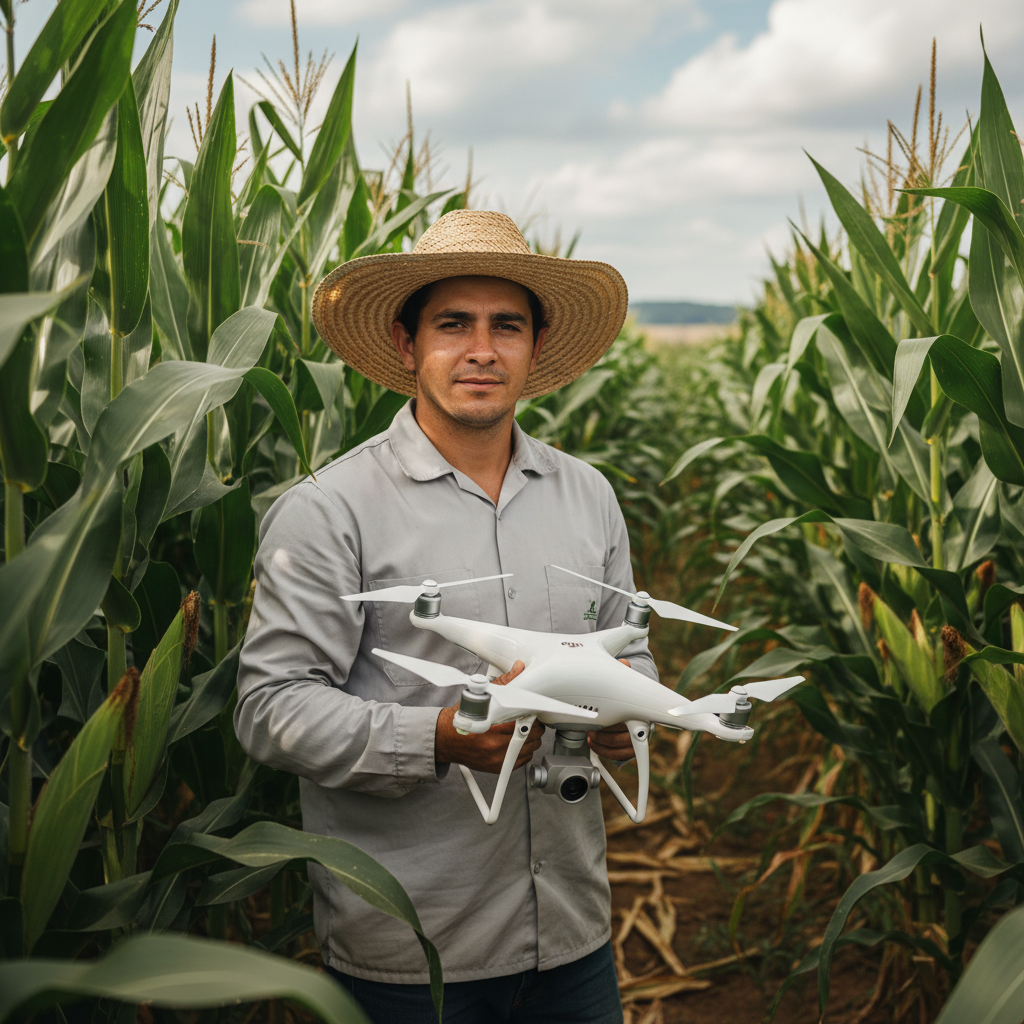
Lucas Fernandes Silva is an agricultural engineer with 12 years of experience in aerial mapping technologies and precision agriculture. ANAC-certified drone pilot since 2018, Lucas has worked on mapping projects across more than 500 rural properties in Brazil, covering areas ranging from small farms to large-scale operations. Specialized in multispectral image processing, vegetation index analysis (NDVI, GNDVI, SAVI), and precision agriculture system implementation. Lucas is passionate about sharing technical knowledge and helping agribusiness professionals optimize their operations through aerial technology.