Understanding ANAC drone operating categories
You should think of ANAC categories as a set of rules that tell you what you can and cannot do with a drone. They group operations by risk level and required safety measures. By learning the categories you avoid surprises at the launch site and keep your flights legal.
Start by matching your mission to a category: small camera flights over empty parks fall in a low-risk group, while commercial deliveries or flights over people often land in higher-risk groups that need extra approvals. That match decides the pilot skills, equipment, and permissions required before takeoff.
Keep paperwork and flight prep simple: carry the right documents, complete required equipment checks, and follow the category limits every time. Treat categories like a rulebook you consult before each flight — it keeps flights safe and keeps you out of fines.
What each ANAC operating category label means
The basic split is Open (low-risk), Specific (risk-managed), and Certified (high-risk).
- Open — limited operations with minimal approvals (short VLOS flights away from crowds).
- Specific — requires ANAC operational authorization and usually an operational risk assessment.
- Certified — applies when a drone or operation mirrors manned aviation risks, requiring aircraft certification and crew licenses.
Labels tell you legal standing: Open lets you fly with basic rules; Specific requires an operations plan and mitigation measures (geofencing, observers); Certified needs detailed inspections, type certificates, and operator accreditation.
How categories shape your flight limits
Your category sets altitude, distance, and overflight rules. Open operations usually require VLOS and limit altitude (commonly up to 120 m/400 ft); Specific operations may permit BVLOS or flights over people with added controls; Certified operations allow heavier craft and broader reach but carry the highest regulatory burden.
Categories also affect insurance, maintenance, and training demands. Moving from Open to Specific adds documentation, technical checks, and possibly a trained observer or remote pilot certificate — more power, more responsibility.
Quick category reference
Open = simple, low risk, basic rules
Specific = authorized, risk controls required
Certified = complex, heavy regulatory oversight
How to register your drone with ANAC
Registering your drone with ANAC ties the UAS to you as the operator and is required for many regulated operations. Before you start, have photo ID, contact details, and the drone’s serial number ready.
- Visit the official ANAC portal and create an account.
- Complete the online form: operator type (recreational or commercial), drone specs, and intended flight areas. Be accurate — that speeds approval.
- Pay any fee, upload photos/documents, and wait for the registration number. Mark that number on the drone and keep the digital certificate when you fly.
Check the ANAC Regulations for Drones: Operating Categories and Legal Requirements to confirm whether your model or operation needs formal registration.
When ANAC drone registration is required
Register when flights move past casual backyard practice into regulated activity: commercial work, flights in controlled airspace, or operations that carry people or goods. Certain drone categories and higher-performance models also fall under formal rules. If in doubt, register — it protects you.
Steps to complete drone registration online
- Log into ANAC web portal and choose Register UAS.
- Enter personal/company details, drone make/serial number, operation type, and safety answers.
- Upload ID, proof of address, and clear photos showing the serial number.
- Pay fees, submit, and watch for email confirmation. Respond quickly if ANAC requests extra info. Once approved, save and print the certificate and place the registration mark visibly on the aircraft.
Registration checklist
| Item | Why you need it |
|---|---|
| Photo ID | Confirms operator identity |
| Contact details | For official notices and safety alerts |
| Drone serial number | Links registration to the exact aircraft |
| Photos of the drone | Show condition and serial placement |
| Proof of ownership | Shows you have the right to register the UAS |
| Operation type | Determines which rules apply and possible fees |
Get your ANAC remote pilot certificate
If you fly for work or in higher-risk situations, an ANAC remote pilot certificate is often required. The guide ANAC Regulations for Drones: Operating Categories and Legal Requirements explains when a certificate is necessary and what it covers.
Confirm your operation type: paid work, flights near people, or BVLOS typically require registration, training, an exam, and documentation. The usual steps: register the aircraft, complete required training, pass the exam, and carry the certificate while operating.
Who needs an ANAC remote pilot certificate
Commercial operators should assume they need certification. Certificate requirements also apply for events, crowd operations, flights in controlled airspace, and advanced operations (BVLOS, night). Hobbyists flying purely casual flights away from people and airports may have fewer requirements, but rules vary — when unsure, get the certificate.
| Operation type | Certificate needed? |
|---|---|
| Casual backyard flights, low risk | Usually no |
| Commercial work (paid tasks) | Yes |
| Flights near crowds or events | Yes |
| Operations in controlled airspace or near airports | Yes |
| Advanced operations (BVLOS, night, high altitude) | Yes |
Training and exam basics
Expect lessons on air law, airspace, weather, flight safety, emergency procedures, and privacy. Courses mix classroom and hands‑on practice. Exams test regulations, risk management, and safe decisions. Bring ID, course completion proof if required, and use practice tests to prepare.
Follow VLOS operational limits (ANAC)
You must keep your drone within VLOS (Visual Line of Sight) at all times — see your drone with unaided eyes (use a spotter for FPV). ANAC sets these limits to protect people and other aircraft.
Stay under the maximum altitude and distance ANAC allows (commonly ~120 m / 400 ft, but check local rules). If you lose sight, return or land immediately. Keep registration, ID, and permissions on hand. If you plan BVLOS, obtain the proper authorization and training first — see ANAC Regulations for Drones: Operating Categories and Legal Requirements for specifics.
What VLOS limits mean for you
You’re responsible for detecting other aircraft, people, and obstacles. For FPV, use a spotter who maintains visual contact. Stop a flight if visibility deteriorates (fog, glare, trees).
Simple rules to keep in VLOS
- Do a preflight check.
- Pick a clear takeoff spot and keep flights short.
- Use a spotter for FPV.
- Don’t fly over crowds; obey altitude limits.
- Get authorization for night or BVLOS flights.
| Limit or item | Typical rule or value | What it means for you |
|---|---|---|
| Visual contact | Unaided eye (spotter if needed) | Keep drone visible; use spotter for FPV |
| Altitude | ~120 m (400 ft) | Don’t climb above without permission |
| Over people | Usually not allowed | Avoid crowds; get clearances |
| Night flights | May require authorization | Get permission and lights if needed |
VLOS quick tips
Wear a bright shirt, bring a spotter, keep your phone charged, and fly toward the drone when it gets small. If you lose sight, land or engage RTH.
Apply for ANAC BVLOS authorization
Applying for BVLOS with ANAC is about proving your operation is safe, repeatable, and compliant with Brazilian rules. Provide aircraft specs, pilot training, maintenance plan, and a safety case explaining collision avoidance and ground risk mitigation. Include tests and logs showing system performance.
Describe technical mitigations: detect-and-avoid systems, reliable command-and-control links, and redundancy. Explain failure modes and emergency procedures, and how you’ll coordinate with ATC and authorities. Start early — reviews can take weeks.
When to seek BVLOS authorization
You need BVLOS approval whenever your eyes can no longer keep the drone in sight during routine operations: corridor inspections, long mapping flights, pipeline patrols, or package delivery routes. Apply well before your first BVLOS mission.
Documents and approvals ANAC asks for
ANAC typically requires an operations manual, safety risk assessment, aircraft technical data, maintenance records, pilot qualifications, insurance, communication/ATC coordination plans, contingency procedures, and test logs.
| Document | Purpose |
|---|---|
| Operations Manual | Shows standard procedures and limits |
| Safety Risk Assessment | Explains hazards, probability, and mitigations |
| Aircraft Technical Data | Describes hardware, fail‑safes, performance |
| Maintenance Records | Proves airworthiness and upkeep |
| Pilot Training Records | Confirms competence for BVLOS |
| Insurance Certificate | Financial protection for third‑party damage |
| Test Logs / Flight Data | Evidence systems perform in real conditions |
| Communication & ATC Coordination | How you will keep traffic aware and safe |
BVLOS prep list
Confirm detect-and-avoid systems, test command links at operating distances, prepare a concise safety case, gather pilot training records, secure insurance, coordinate with ATC/local authorities, and collect supervised VLOS failsafe drill logs.
Know airspace restrictions for drones in Brazil
ANAC and DECEA set limits and grant permissions. Read ANAC Regulations for Drones: Operating Categories and Legal Requirements to know which operating category your flight falls into and whether you need registration, an operator certificate, or SARPAS authorization.
Common restricted zones: controlled airspace around airports, prohibited/restricted military areas, and temporary NOTAMs for events or emergencies. NO‑FLY ZONES can include prisons, major dams, and government buildings. Always check NOTAMs before flying.
How airspace restrictions affect your route
Airspace limits can force altitude cuts, detours, or reduced flight time — plan battery and shot lists accordingly. Temporary restrictions (events, official visits, emergencies) can appear at short notice. Build alternate routes and landing plans.
Tools to check restrictions before you fly
Use official sources first (DECEA maps, NOTAMs, ANAC/SARPAS), then cross-check with apps for convenience.
| Tool | Type | What it gives you |
|---|---|---|
| DECEA aeronautical maps | Official map | Legal airspace classes and airfields |
| ANAC portal / SARPAS | Official portal | Rules, registrations, authorization forms |
| NOTAM services | Official notices | Temporary restrictions and alerts |
| AirMap / UAV Forecast | Mobile/web app | Overlays, weather, quick checks |
Pre-flight airspace check
Consult DECEA maps, read NOTAMs, verify SARPAS status if needed, confirm app overlays, check weather and battery, and bring ID and registration.
Conduct a drone operational risk assessment (ANAC)
Map the mission: operation type, location, time, aircraft/payload, crew and third parties. Score each risk by likelihood and severity, and state mitigations using simple Low/Medium/High scales. Reference ANAC Regulations for Drones: Operating Categories and Legal Requirements so controls match legal limits.
Keep the assessment usable: a one‑page summary with the top actions to stop the job if risk rises. Update it when conditions change and keep signed versions.
Key hazards to list
- People and property under the flight path (bystanders, vehicles, buildings)
- Fixed hazards (power lines, towers, trees)
- System hazards (battery failure, GPS loss, software bugs)
- Environmental hazards (wind gusts, rain, low visibility)
How to document it properly
Use a consistent format: date, location, crew names, drone ID, version. Attach photos, NOTAM screenshots, weather, and licenses. Save a digital copy and a signed paper copy if required.
Risk assessment template
Use rows for Hazard, Impact, Likelihood, Severity, Risk Score, Control/Action and include a Go/No‑Go decision block signed by pilot and PIC.
| Hazard | Impact | Likelihood | Severity | Risk Score | Control / Action |
|---|---|---|---|---|---|
| People in landing area | Injury | Medium | High | High | Move crowd, use spotter, increase buffer |
| Power lines | Crash | Low | High | Medium | Map lines, set geofence, adjust route |
| GPS loss | Loss of control | Medium | Medium | Medium | RTH set, compass check preflight |
| Strong winds | Unstable flight | High | Medium | High | Delay flight, reduce payload, extra margin |
Follow safety and ANAC compliance for UAS operators
You must follow ANAC Regulations for Drones: Operating Categories and Legal Requirements before you fly. Start with registration, correct operational category, proof of pilot competency, and any needed flight authorizations. File permissions early and keep copies on your phone or printed pack.
Make habits that protect you and the people below: check NOTAMs, local restrictions, and privacy rules before arrival. Treat each flight like a professional job and log everything.
Daily good operating practices
Plan each flight with a short risk assessment and site walk. During flights, maintain VLOS, stick to altitude limits, and avoid flying over people or private property without permission. Monitor battery and telemetry closely; if conditions change, land early.
Maintenance and pre‑flight checks
Maintain a logbook of repairs and updates. Replace worn parts before failure, keep firmware current but test updates in a safe area first. Before every flight: check battery voltage/health, inspect props, confirm sensors/GPS, verify failsafes, and ensure insurance and registration are current.
Daily safety checklist
| Item | Action | Pass / Fail Criteria |
|---|---|---|
| Documents | Carry registration, pilot ID, authorizations | Present and valid |
| Weather | Check wind, visibility, precipitation | Wind within limits; acceptable |
| Battery | Check charge and health | > required %; no swelling |
| Propellers | Inspect for chips or cracks | No damage; secure fit |
| Firmware | Confirm versions & release notes | Tested; stable |
| GPS / Sensors | Achieve lock and calibration | Stable signals |
| Airspace / NOTAM | Verify permissions and restrictions | No conflicts; permissions received |
| Emergency plan | Team brief and landing site chosen | Everyone briefed and understands |
Stay within ANAC drone regulations and avoid penalties
When you fly in Brazil, treat ANAC rules like traffic lights: obey them or face consequences. The ANAC Regulations for Drones: Operating Categories and Legal Requirements spell out what you must do for safe, legal flights. Skipping registration, pilot credentials, or airspace authorizations can lead to fines, seizure, or loss of commercial privileges.
Keep key documents handy: aircraft registration, pilot qualification, and operational authorizations. Mark your drone with its ID and keep a simple log of flights and maintenance. Coordinate with DECEA near controlled airspace, follow privacy rules, and avoid risky maneuvers near people and airports.
Common drone legal requirements you must meet
| Operation Category | Typical limits | Key requirements |
|---|---|---|
| Small / Recreational | Short range, low altitude | Registration if required, follow VLOS, respect no-fly zones |
| Commercial / Specific | Mission-based; may exceed limits | Pilot qualification, authorization, insurance, operational plan |
| Complex / Certified | Heavy or high-risk flights | Certification, stricter oversight, formal approvals |
How ANAC enforces rules and what noncompliance can trigger
ANAC enforces rules through audits, coordination with ATC, and incident reports. Responses range from warnings and fines to grounding, seizure, or criminal referral for serious breaches. Repeated violations can end commercial privileges and lead to long legal battles.
Compliance action steps
Register your drone, obtain the correct pilot qualification, mark and document the aircraft, buy liability insurance when required, file flight authorizations with DECEA/SARPAS for controlled zones, carry documentation on every flight, perform preflight checks, keep maintenance and flight logs, and update procedures after incidents.
Frequently asked questions
- What are the main operating categories in ANAC Regulations for Drones: Operating Categories and Legal Requirements?
- Open (low risk), Specific (requires authorization), Certified (large or risky operations).
- Do you need to register your drone under ANAC Regulations for Drones: Operating Categories and Legal Requirements?
- Register if your drone meets ANAC criteria (weight, commercial use, or operation in controlled airspace). Check the ANAC portal.
- What training or certification do you need to follow ANAC Regulations for Drones: Operating Categories and Legal Requirements?
- Open often needs a basic exam; Specific and Certified require more training, exams, and approvals.
- Where can you legally fly under ANAC Regulations for Drones: Operating Categories and Legal Requirements?
- Keep VLOS, avoid airports, crowds, and restricted zones. Get airspace permission when required.
- What happens if you break ANAC Regulations for Drones: Operating Categories and Legal Requirements?
- You can face fines, seizure, or bans. Report incidents and correct breaches quickly to reduce penalties.
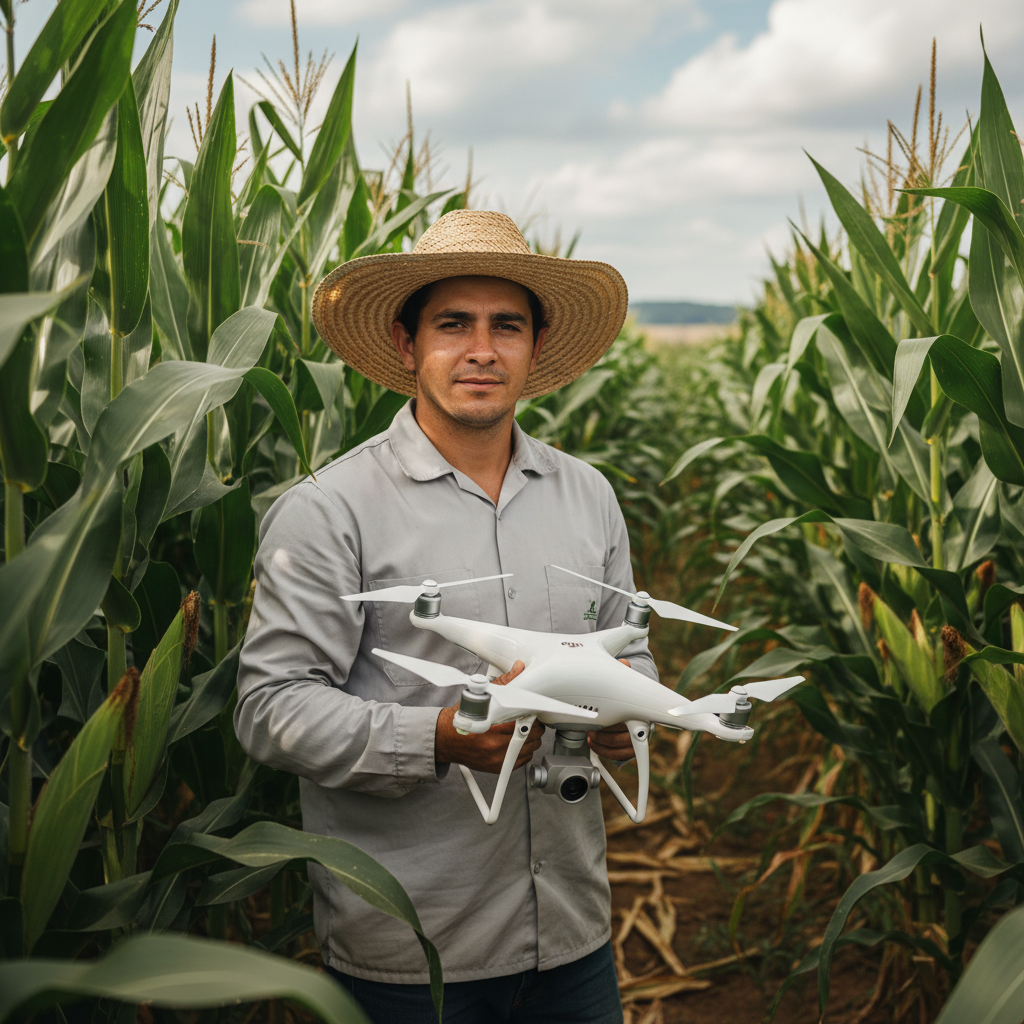
Lucas Fernandes Silva is an agricultural engineer with 12 years of experience in aerial mapping technologies and precision agriculture. ANAC-certified drone pilot since 2018, Lucas has worked on mapping projects across more than 500 rural properties in Brazil, covering areas ranging from small farms to large-scale operations. Specialized in multispectral image processing, vegetation index analysis (NDVI, GNDVI, SAVI), and precision agriculture system implementation. Lucas is passionate about sharing technical knowledge and helping agribusiness professionals optimize their operations through aerial technology.