
Use Digital Elevation Model basics for your field
A Digital Elevation Model (DEM) maps ground height across your field — think of it as a high-tech topo map. With a DEM you can spot low spots, ridges, and flow paths at a glance, which shows where water will run, pond, or erode. Use the DEM to plan drains, plant rows, or sampling points so your work follows the land, not fights it.
Work with a few core layers: elevation, slope, and aspect. Elevation gives raw heights; slope shows steepness that affects runoff and equipment; aspect indicates slope direction, which affects sun and moisture. Combine these layers to find critical areas for compaction, nutrient loss, or crop stress and to run the analysis titled “Digital Elevation Model: Relief Analysis and Identification of Critical Areas” for regulatory or management needs.
Start small: load a DEM for a single block, run flow-accumulation or a hydrological model, compare outputs to what you see on the ground (ditches, puddles, tile lines), then adjust resolution or processing until maps match reality before scaling across your farm.
What a digital elevation model shows you
A DEM reveals surface shape and helps you find places that matter: gentle bowls that collect water, sharp ridges that shed water fast, and channels where water concentrates. That tells you where soil washes away, where fertilizer might run off, and where seeds may drown or dry out.
You can also extract management layers like contour lines, field grading plans, and micro-elevation maps for seeding or irrigation. These let you set variable-rate applications, design terraces, or plan tile lines with confidence. The DEM is the map; the layers you draw on it are the actions you take.
Common DEM data sources you can use
You have several options depending on budget and precision.
| Source | Typical resolution | Best use | Quick trade-off |
|---|---|---|---|
| Satellite (SRTM, ASTER) | 30–90 m | Regional layout, rough drainage mapping | Low cost, low detail |
| LiDAR | 0.1–2 m | Precise grading, tile design, erosion hotspots | High detail, higher cost |
| UAV photogrammetry | 2–10 cm | Field-scale surveys, micro-relief | Very detailed, needs processing |
| National mapping / cadastral DEMs | 1–10 m | Farm planning, permits | Often free, variable quality |
Pick the source to match the job: coarse DEMs for planning many fields, LiDAR or UAV for detailed site fixes like tile or grading.
Quick DEM checklist for your site
Before analysis, confirm coverage, resolution, vertical accuracy, date of capture, and whether vegetation or buildings were removed. Validate a few ground spots with an altimeter or RTK point; note differences to decide if a re-survey is needed.
Apply DEM relief analysis to find terrain changes
Use a Digital Elevation Model to spot where the land has moved, sunk, or eroded. Comparing DEM layers from different dates shows where elevation changed — this is relief analysis: layer, subtract, and map differences to find ruts, gullies, or filled spots.
Look for patterns that matter: shifting drainage lines, sudden drops along a contour, or raised areas that trap water. Color ramps turn raw differences into clear maps that tell you where to dig, where to add buffer strips, and where to check soil depth.
Think of DEM differencing like checking a heartbeat: a steady profile means stable ground; spikes mean trouble. After storms or earthmoving, maps reveal problems faster than walking the whole field, so you can act before crops or machinery suffer.
How you measure relief with DEM metrics
Measure relief using these metrics: slope, aspect, curvature, Topographic Position Index (TPI), Terrain Ruggedness Index (TRI), and Topographic Wetness Index (TWI). Each turns elevation into actionable info — slope shows steepness, aspect shows exposure, curvature shows where water converges/diverges. Combine them for a relief fingerprint at every point.
Pick metrics by goal: for erosion risk use slope and curvature; for moisture mapping use TWI and TPI; for machine routing use TRI and slope thresholds.
| Metric | What it tells you | Why it matters for crops |
|---|---|---|
| Slope | Rate of elevation change | Controls runoff, erosion, and machine safety |
| Aspect | Direction slope faces | Influences sun, drying, and microclimate |
| Curvature | Concave/convex shape | Shows water concentration or dispersion |
| TPI | Position vs. neighborhood | Identifies ridges, valleys, and benches |
| TRI | Surface roughness | Affects planting and machinery access |
| TWI | Potential soil wetness | Flags waterlogged or drought-prone spots |
Relief indicators that affect your crops
Steep slopes speed runoff and strip topsoil; south- or west-facing aspects can dry and warm soils faster; concave zones and high TWI hold water and can drown roots. Use relief maps to place test strips, change seeding rates, route irrigation, or position sensors to avoid wasting water on dry knolls or letting low spots flood rows.
Relief analysis steps you can follow
- Get a recent DEM and older DEMs for change detection.
- Compute slope, aspect, curvature, TPI, TRI, and TWI.
- Classify layers into risk bands; create a difference map if multi-date DEMs exist.
- Overlay field boundaries and infrastructure to mark critical areas for soil tests, drainage fixes, or buffer strips.
Use terrain slope and aspect for crop planning
Slope controls runoff, soil depth, and erosion risk; aspect controls sun exposure and microclimate. Match crop needs to these factors to cut losses and boost yield.
Slope is like a tilted bowl: steep ground drains fast and often has thin soil; gentle slopes let water soak and develop deeper soils. Aspect acts like a compass for sunlight: south-facing slopes (Northern Hemisphere) get more sun and dry faster; north-facing slopes stay cooler and hold moisture. Map slope and aspect and place crops accordingly.
How you compute slope and aspect for fields
Start with a Digital Elevation Model: Relief Analysis and Identification of Critical Areas (or any reliable elevation grid). Load the DEM into GIS or field software, run a slope tool (percent or degrees) and an aspect tool (compass direction). With LiDAR or drone data, results sharpen; apply smoothing to reduce noise, then overlay with soil, yield, and irrigation layers to draw management zones.
Use aspect to decide planting and irrigation
Plant heat-tolerant or shallow-root crops on sunny slopes and schedule earlier irrigation there. Favor moisture-loving crops on cool slopes and watch for frost pockets in hollows. Position moisture sensors in driest-facing zones and run drip lines along contours on steep slopes to feed water where plants need it most.
Slope-action tips you should try
- Above 10%: contour planting, terraces, or grass strips to slow runoff.
- Moderate slopes: mulch and cover crops.
- Avoid heavy machinery or deep tillage on steep areas to prevent compaction and slips.
- Monitor high-risk spots after storms and adjust seed mixes to include stronger-rooted species.
| Slope (%) | Main Risk | Quick Actions |
|---|---|---|
| 0–3% | Poor drainage | Improve drainage lines, plant moisture-tolerant crops |
| 3–10% | Moderate runoff | Contour planting, cover crops, reduced tillage |
| 10–25% | High erosion | Terracing, grass strips, avoid heavy machinery |
| >25% | Severe risk | Consider non-cultivation, permanent cover, reforesting |
Perform critical area identification in your fields
Read your land as a map of highs and lows. Use a Digital Elevation Model: Relief Analysis and Identification of Critical Areas to spot slope, flow paths, and depressions. Match DEM signals to on-ground signs — soggy corners, pale patches, stunted plants — to know where to act.
Walk fields with GPS or a phone to mark spots, take photos and notes. Label each spot with a risk level (high/medium/low), note which repeat after rain, and prioritize fixes.
How to spot low spots and waterlogging
Look for puddles, muddy tracks, pale leaves, slow growth, or soil that sticks to boots. Use a probe rod to test wet-soil depth and mark those points to match the DEM. Compare DEM layers with recent satellite images; if map and notes match, you have a real target. If not, check again after rain — patterns become clear quickly.
| Problem | On-ground signs | DEM signal | Quick tool |
|---|---|---|---|
| Low spot / ponding | Standing water, muddy soil, pale crops | Depressions, flow accumulation | Probe rod, phone GPS |
| Waterlogging stress | Yellowing, root rot, slow growth | Flat areas with poor drainage | Photos, drone imagery |
Flag erosion and compaction zones for action
Spot erosion by bare streaks, small channels, or moved topsoil at edges; check slopes after rain for new rills. Compaction shows as thin roots or runoff instead of infiltration — use a penetrometer or spade to test. Flag these as high priority for immediate fixes.
Mark critical areas on your map
Add a map layer and draw polygons around flagged spots using color codes (red = high, orange = medium, green = low). Add notes: date, rain event, photos. Sync the map so your crew can see what to fix and where.
Map landslide susceptibility for safe operations
Collect elevation, soil, land cover, and rainfall data. A Digital Elevation Model: Relief Analysis and Identification of Critical Areas helps spot steep slopes, hollows, and ridgelines. Compute slope, aspect, and curvature to find likely sliding start points.
Turn layers into a simple susceptibility map with classes (Low / Moderate / High / Critical), mark exclusion zones for heavy equipment, and sketch safer routes. Update maps after big storms or earthmoving.
How slope and soil create landslide risk
Slope angle controls how fast soil moves — steeper means faster. Use DEMs to flag slopes >30° as high risk, 15–30° as moderate, <15° usually low. Soil type matters: clay holds water and can fail when saturated; sandy soils drain but can collapse if undermined. Shallow soil over bedrock increases risk after heavy rain.
Combine land cover and rainfall in your model
Vegetation increases soil strength; clear-cut areas lose grip. Map crop types and recent changes to flag where roots no longer bind soil. Track rainfall intensity and 24–72 hour totals — both short, heavy bursts and prolonged wet periods trigger slides. Tie rainfall thresholds to the map so zones update from moderate to high risk after storms.
Landslide risk flags to check
Check: steep slope, clay-rich soil, bare or recently cleared land, saturation/ponding, new cracks/seepage, and heavy recent rainfall. If two or more flags co-occur, treat the area as high risk and stop heavy fieldwork.
| Flag | Indicator | Immediate Action |
|---|---|---|
| Steep slope | Slope > 30° from DEM | Reroute equipment, set buffer |
| Saturated soil | Soil moisture high, ponding | Halt tillage, test drainage |
| Bare land | Recent clearing or burn | Stabilize with cover crop |
| Heavy rain | >50 mm in 24h or sustained rains | Postpone operations, inspect site |
Run watershed and drainage analysis for irrigation
Use a Digital Elevation Model: Relief Analysis and Identification of Critical Areas to spot slopes, ridges, and low spots. Run these GIS steps: fill sinks, compute flow direction, then flow accumulation. From these layers pick stream lines and catchment boundaries, mark pour points where water exits the field, and tag critical areas that trap water or cause erosion.
Use results to place ditches along natural low paths, size drains by predicted runoff, and plan outlets where water leaves your land. Cross-check with field walks or drone photos to ensure practical solutions.
How to delineate catchments and flow paths
Prepare a cleaned DEM, run a sink-fill, use a flow algorithm (e.g., D8) for flow direction, then create flow accumulation to see where water concentrates. Choose an accumulation threshold to define streams relevant to your field size. Place pour points at drains or field edges and use them to delineate upstream catchments; validate against imagery or a walk and adjust thresholds or pour points if boundaries look wrong.
Design field drains using DEM-derived streams
Use derived streams as draft drain centerlines. Align tile drains or open ditches along low paths so water moves by gravity. Keep slopes in range to avoid stalling or erosion. Size drains using flow accumulation by converting accumulated area to runoff estimates and choosing pipe diameter or ditch cross-section. Also mark maintenance access and potential blockages like road crossings.
Drainage planning steps for your layout
| Step | Key Action | Tools / Data |
|---|---|---|
| 1 | Prepare DEM and fill sinks | DEM, GIS |
| 2 | Compute flow direction & accumulation | Flow direction, flow accumulation |
| 3 | Choose threshold and delineate streams | Threshold value, pour points |
| 4 | Delineate catchments | Catchment polygons, outlet points |
| 5 | Design drains and outlets | Pipe/ditch sizing, slope checks |
| 6 | Field-check and adjust | Drone/photos, boots-on-ground |
Use elevation-based hazard detection for floods
A Digital Elevation Model: Relief Analysis and Identification of Critical Areas reveals low spots and flow paths. Clean DEM artifacts, run flow direction and accumulation, then create a flood-risk map marking high-accumulation cells, depressions, and low slopes. Use these layers to plan roads, storage, and equipment placement.
Keep this a living process: update DEMs or re-run models after heavy storms, terraces, or soil movement. Validate with simple checks like digging a post hole to see water depth after rain or comparing modelled ponds to known high-water marks.
How to model inundation with DEM data
Prepare DEM (fill sinks, smooth noise, remove vegetation artifacts where possible). Choose a method: a simple bathtub fill is fast and visual; flow-based routing using flow accumulation and slope gives realistic flood paths. Mask cells below a water-surface elevation or run rainfall-runoff scenarios. Run multiple scenarios (light, heavy, peak river stage) and validate against known floods or creek height records. For coarse DEMs, run sensitivity tests and keep models actionable.
Identify flood-prone strips and buffer zones
Trace low-elevation corridors with high flow accumulation; convert them to polygons and overlay with crop maps and infrastructure. Rank strips by likely depth and frequency to decide which to leave fallow, protect, or drain. Create buffer zones around streams using slope and accumulation rather than fixed distances — wider where slopes are flat and accumulation is high — and use them for grassed waterways, sensor lines, or access lanes.
Hazard detection checks to perform
Compare modelled inundation to historical flood points; scan for DEM artifacts; check flow continuity across roads/culverts; validate buffer widths against slope and infiltration. Quick wins include plugging drainage gaps, raising tracks, or moving pumps out of low patches.
| Check | Why it matters | Quick action |
|---|---|---|
| DEM sink/pit errors | Create false ponds | Re-run sink fill and re-check inundation |
| Flow path breaks (roads/fields) | Water may be redirected into fields | Add culverts or swales |
| Historical flood comparison | Validates model | Adjust thresholds and re-run |
| High-accumulation cells | Predict persistent waterlogging | Design buffers or change crop placement |
Process high-resolution DEMs with the right tools
High-resolution DEMs carry detail and data weight. Use proper processing chains and keep the goal clear: extract slopes, flow paths, and erosion risk — i.e., Digital Elevation Model: Relief Analysis and Identification of Critical Areas.
Plan hardware and software: large tiles need RAM or cloud nodes. Use GPU-accelerated tools and command-line tools for batch work (PDAL, LAStools, QGIS, ArcGIS Pro). Script repeatable steps so you can process many fields consistently.
Set a clear workflow: clip tiles, keep raw data intact, write metadata, match coordinate systems and target resolution before resampling, and test a small area first.
Work with LiDAR and UAV DEMs for detail
LiDAR penetrates canopy and gives reliable ground points; UAV DEMs give very high lateral detail and imagery. Use LiDAR for ground models over trees and UAV DEMs for crop-row detail. Co-register carefully with ground control points and decide whether to analyze at a unified target resolution or use a multi-scale approach.
Clean and fill DEM errors before analysis
Watch for sinks, spikes, voids, and striping from sensor gaps or misclassification. Fix problems with filters and hydrological corrections: median or adaptive filters reduce spikes while preserving edges; fill small sinks locally and interpolate larger voids from nearby tiles or auxiliary data. Tools like PDAL and LAStools support scripted fixes while preserving originals.
Processing best practices to follow
Keep raw files untouched and save processed versions with clear names and metadata. Tile logically, run visual checks, record parameters, automate repetitive steps, validate with field checks or GCPs, and version outputs so you can roll back.
| Tool / Resource | Best use | Quick tip |
|---|---|---|
| PDAL | Batch point cloud ops and filters | Script pipelines for repeatability |
| LAStools | Fast LiDAR cleaning and classification | Good for quick denoising |
| QGIS / SAGA | Raster editing and spatial analysis | Use for visual QC and small fixes |
| ArcGIS Pro | Hydrological modelling and raster tools | Use for end-to-end watershed work |
| Cloud processing | Large datasets and parallel tiles | Keep tile size consistent across nodes |
Extract terrain features for topographic risk assessment
Feed a Digital Elevation Model: Relief Analysis and Identification of Critical Areas into GIS and derive slope, aspect, curvature, and flow accumulation. Use an appropriate resolution (1–5 m for small fields, 10–30 m for large farms) and a light filter to cut noise while keeping real bumps. Run TPI and curvature to mark ridges, hollows, and terraces and combine those features with soil, crop, and weather data to highlight critical areas for action.
How to find ridges, hollows and terraces
Compute slope and curvature for convex (ridges) and concave (hollows) zones; use TPI to compare each cell to neighbors (positive = ridge, negative = hollow). For terraces, look for repeating flat bands on slopes and check plan curvature for flat-to-concave transitions. Validate with drone photos or ground checks.
Turn terrain features into field actions
Translate features into actions: hollows with high accumulation → drainage ditches, check dams, or vegetated buffers; ridges with thin topsoil → windbreaks or deep-root cover crops; terraces → repair or adjust machine access and erosion control. Set thresholds (e.g., slopes >12% = high erosion) and make them part of your field plan.
Feature extraction guide for your plan
Pick a DEM (1–10 m), smooth once, compute slope/aspect/curvature/TPI/flow accumulation, classify into ridge/hollow/terrace, validate with a walk or drone, assign actions and priorities, and export printable maps and a CSV with coordinates for crews.
| Feature | Detection method | Typical field action |
|---|---|---|
| Ridge | Positive TPI, convex curvature | Windbreaks, deep-root cover crops, machine routing |
| Hollow | Negative TPI, high flow accumulation | Drainage, check dams, vegetated buffers |
| Terrace | Repeating flat bands, plan curvature changes | Terrace repair, machinery planning, erosion control |
Frequently asked questions
- What is Digital Elevation Model: Relief Analysis and Identification of Critical Areas?
It is a digital map of ground height used to study land shape and find risky spots — slopes, pits, and flood paths. - How do you perform relief analysis with Digital Elevation Model: Relief Analysis and Identification of Critical Areas?
Load the DEM into GIS, run slope, aspect, curvature, and hillshade tools, compute hydrological layers, and classify areas by risk. - How do you identify critical areas using Digital Elevation Model: Relief Analysis and Identification of Critical Areas?
Run flow accumulation and slope maps, flag high slopes, concave basins, and high-accumulation zones, and apply thresholds to find risk areas. - What data and tools do you need for Digital Elevation Model: Relief Analysis and Identification of Critical Areas?
DEM files (SRTM, LiDAR, UAV), GIS (QGIS, ArcGIS), and tools for derivation and filtering (PDAL, LAStools). - How do you validate results from Digital Elevation Model: Relief Analysis and Identification of Critical Areas?
Validate with field visits, aerial photos, or high-res LiDAR; tweak thresholds and rerun until maps match reality.
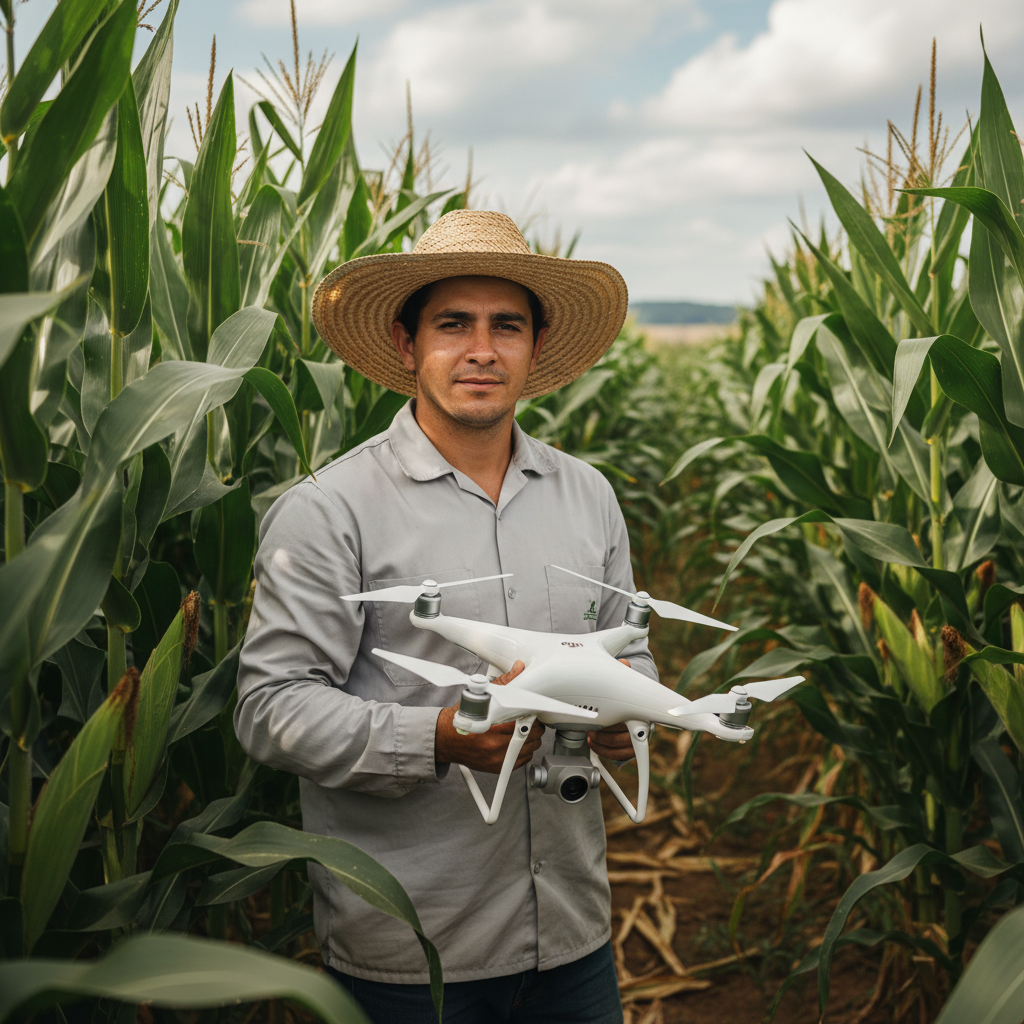
Lucas Fernandes Silva is an agricultural engineer with 12 years of experience in aerial mapping technologies and precision agriculture. ANAC-certified drone pilot since 2018, Lucas has worked on mapping projects across more than 500 rural properties in Brazil, covering areas ranging from small farms to large-scale operations. Specialized in multispectral image processing, vegetation index analysis (NDVI, GNDVI, SAVI), and precision agriculture system implementation. Lucas is passionate about sharing technical knowledge and helping agribusiness professionals optimize their operations through aerial technology.