
Why manufacturer battery life differs from actual flight time
You’ll see a neat number on the spec sheet. That number is a manufacturer rating from a lab test under calm, repeatable conditions — useful, but not the whole story. Labs test with a steady flight profile, no wind, little payload, and fresh cells. In the field you add wind, camera weight, rapid maneuvers, and colder temps. Those things pull more current, so the real clock on your remote will often stop earlier than the spec says.
Treat the spec as a guide and plan a safety margin. That keeps you out of emergency landings and gives you time to shoot the shot you came for.
How ratings are measured in labs
Manufacturers usually run a hover or steady cruise test: fully charge the battery, fly a fixed profile in calm, warm conditions, and run until the drone reaches the low-voltage cutoff. They control battery age and charging method so results are repeatable — the downside being those conditions don’t match messy outdoor flights.
Common real-world cut factors
Key reasons you lose time are wind, payload, aggressive flying, cold, and battery age. Wind forces motors to work harder. A heavier camera or extra gear draws more power. Fast climbs and sudden turns spike current draw. Cold reduces chemical activity and cuts capacity. Old batteries simply hold less charge.
| Factor | Typical cut in flight time | Why it hits you |
|---|---|---|
| Wind (gusty) | 10–40% | Motors fight gusts and hover harder |
| Payload (camera/gear) | 5–25% | Extra weight = more thrust = more drain |
| Aggressive flying | 10–30% | Rapid maneuvers spike current draw |
| Cold temperatures | 10–30% | Lower chemical performance, less usable capacity |
| Battery age & cycles | 5–40% over life | Cells lose capacity with cycles and time |
Key takeaway for your flight planning
Plan with a safe reserve: land with at least 20–30% battery left in normal conditions and more in wind or cold. Preflight check your battery health, warm cold packs if needed, and carry spares charged and ready.
How wind and payload affect drone battery real flight time
Wind and payload are the two quickest ways to shrink your battery life. Headwinds and crosswinds force higher throttle and constant control corrections; tailwinds may help one leg but bite you on the return. Hovering in a gusty spot burns more juice than steady forward flight.
Payload adds constant demand: every extra gram needs lift. Heavy cameras, gimbals, or mounts reduce climb rate and increase current on every maneuver. Combine wind and payload and spec time can fall by a third or more. Plan with margin.
Estimating autonomy with wind data
Use conservative penalties by wind speed:
- Light breeze (0–5 m/s): ~5–10% extra draw
- Moderate (5–10 m/s): ~15–30%
- Strong (>10 m/s): 30–60% or worse
Simple calc: spec time × (1 − wind penalty). Example: spec 30 min, moderate wind 20% → 30 × 0.80 = 24 minutes. Subtract a safety buffer (10% small) and log flights to refine numbers.
Adjusting for payload weight
Estimate by drone size:
- Small consumer quads: ~5–10% per 100 g
- Medium prosumer: ~3–6% per 100 g
- Large platforms: ~1–3% per 100 g
Balance and placement matter: a centered, streamlined mount costs less than an off-center heavy add-on. Remove anything unnecessary and choose lighter mounts to add minutes back.
Quick rule:
Real time ≈ Spec time × (1 − Wind penalty − Payload penalty). Always round down and add a safety buffer.
| Condition / Drone class | Typical penalty (range) |
|---|---|
| Wind: Light (0–5 m/s) | 5–10% extra draw |
| Wind: Moderate (5–10 m/s) | 15–30% extra draw |
| Wind: Strong (>10 m/s) | 30–60% extra draw |
| Payload: Small drone (per 100 g) | 5–10% flight time loss |
| Payload: Medium drone (per 100 g) | 3–6% flight time loss |
| Payload: Large drone (per 100 g) | 1–3% flight time loss |
How battery aging reduces drone flight time
Battery aging is a chemical process: LiPo cells lose capacity and internal resistance rises. Higher resistance causes voltage sag under load, so motors see less usable power and your drone lands sooner than the spec sheet claim.
Heat, storage habits, and charge style speed up aging. Store cells at mid charge, keep them cool, and use proper charging profiles to slow the slide and keep flight time closer to expectations.
Signs of capacity loss to check
- Shorter flights than usual (e.g., 20 minutes → 14–15 minutes)
- Steep voltage drops during flight
- Longer charge times
- Puffed/swollen cells, voltage imbalance, or charger reporting lower capacity
Run timed hover tests and compare logged minutes to spec to spot declines.
How cycle count impacts runtime
Many consumer LiPo packs lose a few percent capacity in the first 100 cycles and then continue to drop. Track cycles and treat partial charges as partial cycles. Shallow discharges and topping up cause less wear than deep cycles.
| Cycle Range | Typical Remaining Capacity | What to Do |
|---|---|---|
| 0–100 | 90–100% | Use normally; monitor |
| 100–300 | 75–90% | Rotate packs; test before flights |
| 300 | <75% | Consider replacement; check safety |
When you should replace a cell
Replace when capacity falls below about 80%, when you see puffing, or when cell imbalance exceeds roughly 0.05 V at rest. Retire packs after hundreds of cycles if runtime and confidence drop.
How to test real-world drone battery performance
Measure runtime, voltage behavior, and temperature under conditions you actually fly in. Run tests that mirror your missions — same payload, flight mode, altitude, and similar wind.
Do at least three flights per battery and average results. Track takeoff weight, wind, air temperature, and firmware version. Use strict RTH or land-at-x% rules during tests so you never push a pack to dangerous depletion. Record when the controller warns you, minutes at that point, and pack voltage at landing.
Simple flight tests you can run
- Hover test: consistent altitude until first low-battery alert. Record minutes, end percentage, and pack voltage. Repeat three times and average.
- Mixed mission: climb to working altitude, cruise a set route, camera moves, then land. Shows how maneuvers and payload affect runtime.
- Payload swap: test with and without accessories to see their impact.
Recording and comparing runtime data
Log battery ID, cell voltages before/after, flight minutes, outside temperature, payload weight, and wind. Compare averages, subtract a safety margin (e.g., 20–30%) from average usable minutes to set go/no-go rules.
| Test type | What to record | Why it matters |
|---|---|---|
| Hover test | Minutes to alert, end voltage, temp | Baseline idle draw |
| Mixed mission | Minutes, payload, wind, maneuvers | Real-world mission estimate |
| Payload swap | Minutes with/without payload | How gear affects autonomy |
| Cold test | Minutes at low temp | Temperature impact on capacity |
Test checklist you can follow
Fully charge and balance the pack; confirm firmware and GPS lock; inspect props and motors; weigh aircraft with payload; pick calm weather; set a clear flight plan; start a fresh log entry with battery ID and start time; use the same flight mode each run.
Calibrating drone battery capacity for accurate autonomy
Track a few full-charge-to-empty cycles in the conditions you fly in. Log flight duration, payload, wind, and ambient temperature. Averaging these runs gives a realistic autonomy figure to plan around. Use that calibrated runtime as your operational baseline rather than the manufacturer’s ideal.
Steps to calibrate battery sensors
- Fully charge and rest the battery 30–60 minutes.
- Perform a controlled hover or light flight until the drone reports low battery or reaches planned cutoff. Record voltage, reported percentage, and flight minutes.
- Repeat three times and average.
- Discharge at different loads to see sensor responses and adjust safety buffers if the telemetry overestimates remaining charge.
How telemetry affects estimated time
Telemetry combines voltage, current draw, and historical runtime to estimate remaining minutes. If inputs are off—bad sensor, cold cells, unusual spikes—the estimate shifts. Read telemetry as a dynamic estimate and use your calibrated runtime plus a margin.
| Telemetry Input | What it tells you | Effect on ETA |
|---|---|---|
| Voltage | Instant cell health | Sudden drops reduce ETA |
| Current draw | How hard motors work | Higher draw shortens ETA |
| Historical runtime | Past performance baseline | Improves estimate accuracy |
Calibration routine you can repeat
Fully charge and rest → controlled flight to cutoff → log minutes, voltage, payload → repeat three times at different loads → update baseline → set conservative reserve (e.g., 20–30% below observed average). Run monthly or after crashes.
How temperature changes affect drone battery runtime vs rated capacity
Cold slows chemical reactions, raises internal resistance, and reduces usable capacity. Rated capacity is measured around 20–25°C; expect 20–40% less flight time near freezing and more loss below 0°C. Warm conditions can give small short-term gains but accelerate aging and risk.
Battery behavior in cold vs warm:
- 25°C: ~100% capacity (expected runtime)
- 5–15°C: 70–90% capacity (noticeable drop)
- 0 to −10°C: 50–75% capacity (large runtime loss)
- >35°C: 90–105% short term, but reduced life and safety risk
| Ambient Temp | Typical Capacity vs Rated | Effect on Runtime | Quick Action |
|---|---|---|---|
| ≥20°C (room) | ~100% | Expected runtime | Follow manufacturer spec |
| 5–15°C | 70–90% | Noticeable drop | Keep batteries warm before flight |
| 0 to −10°C | 50–75% | Large runtime loss | Pre-warm, shorten flights |
| >35°C | 90–105% (short term) | Reduced life, safety risk | Cool before charging, shade storage |
Tips to keep batteries at safe temps
In cold: keep batteries in an insulated bag or your jacket; use warm packs or battery warmers; hover briefly after mount to settle and check telemetry. In hot: park in shade, carry spares in a cool part of your pack, let batteries cool before charging, and use shorter flights with cooldowns between aggressive runs.
Temperature precautions you should take
Check battery temperature before charging or flying, avoid storing packs in hot cars or freezing spots, use insulated bags in winter, let hot batteries cool before charging, and plan shorter flights in extremes.
How to increase drone flight time — real-world tips
Think like a mechanic and a pilot: trim weight, fly smoothly, and monitor the environment.
- Reduce payload: remove nonessential gear, use lighter mounts.
- Fly with purpose: smooth inputs, slow climbs, and glide/coast when possible.
- Monitor environment: wind, temperature, and altitude affect performance. Log conditions and actual flight times to predict endurance.
Flight technique and payload reduction
Gradual throttle changes and smooth turns keep motors in an efficient range. Replace heavy mounts and straps with lighter options, and consider lower camera settings if it helps reduce payload weight.
Motor and prop tuning basics
Match props to motors and use manufacturer-recommended sizes and pitches. Higher-efficiency props and balanced props reduce wasted power. Keep motors clean and bearings smooth; repair bent shafts and replace unbalanced props promptly.
Top quick improvements:
- Remove extra payload: 5–15% flight time
- Swap to efficient props: 3–10%
- Warm batteries (to ~20°C) in cold: 5–12%
- Fly smoother: 5–20%
| Quick Change | Typical Flight Time Gain | Effort |
|---|---|---|
| Remove extra payload | 5–15% | Low |
| Swap to efficient props | 3–10% | Low |
| Warm batteries (to ~20°C) | 5–12% in cold | Low |
| Smooth flight style | 5–20% | Medium |
Planning missions using manufacturer vs real-world drone battery autonomy
Manufacturers publish flight time under ideal lab conditions. Use that as a baseline, not gospel. Track your own flights for a week or two to find a pattern — that pattern becomes your true autonomy for planning.
Turn logs into rules: run a short test before critical work, log takeoff time and landing SOC, and set conservative usable minutes for future flights.
Building conservative flight time margins
Choose a margin by conditions: 20% on calm days, 30–40% on windy or cold days. Calculate usable time = measured real-world minutes × (1 − margin). If a mission needs more than the safe window, split it across batteries or adjust the shot list.
Using safe-return and reserve minutes
Set a hard reserve in minutes (not only percentage). Example: 5–7 minutes of actual flight time reserved for RTH and landing; increase if you’re far from home. Test your RTH and add hover time and buffer into the reserve. Configure alarms and failsafes to start RTH before your reserve is reached.
| Item | Manufacturer Spec (example) | Typical Real-World Result | Recommended Usable Time |
|---|---|---|---|
| Published flight time | 30 min | 18–22 min | 12–18 min (after margin) |
| Reserve strategy | N/A | Depends on conditions | 5–7 min hard reserve margin |
| Margin guideline | N/A | Varies | 20% calm / 30% moderate / 40% harsh |
Mission planning rule you must use
Never plan a mission that uses more than 60% of your measured usable flight time for one leg; always reserve the rest for return and surprises.
Battery care, charging, and storage to maximize how long drone batteries last in real conditions
Most consumer drones use LiPo cells that perform well but are sensitive to heat, deep discharge, and rough charging. Good care helps real-world flight times approach specs.
- Cool-down after landing, charge at the right rate, never store at full charge in heat, and inspect for puffing or damage.
- Watch the first 20–50 cycles to spot early decline.
Best charging habits you should follow
Use a balance charger and the original charger when possible. Charge at about 1C for daily use. Let batteries cool to room temp before charging. Charge on a non-flammable surface and, if possible, in a fireproof bag. If swelling, odd heat, or smells occur during charging, stop and isolate the battery.
Storage state of charge and temperature
Store at roughly 50% SOC for long-term rest. For short gaps (days), full charge is fine; for weeks/months keep them at 40–60% and check every 2–3 months. Store in a cool, dry place around 15–25°C (60–77°F).
| Condition | Recommended State of Charge | Suggested Storage Temp | Action |
|---|---|---|---|
| Short-term (days) | 90–100% before flight | 15–25°C | Charge to 100% before use |
| Medium (weeks) | 40–60% | 15–25°C | Check monthly, top to 50% if needed |
| Long-term (months) | 40–60% | 15–25°C | Store in cool place, monitor SOC every 2–3 months |
| Hot environment | 40–60% (avoid 100%) | <30°C if possible | Move to cooler storage, avoid full charge |
Care routine you can adopt
Pre-flight inspect for puffing or damage, let packs cool 10–20 minutes after flight, charge with a balance charger at ~1C, store at ~50% SOC if not flying soon, and log cycle counts and symptoms.
Frequently asked questions
Q: How does “Drone Battery: Real Autonomy vs Manufacturer Specification – What You Need to Know” affect my flights?
A: Expect less time than the spec. Plan shorter flights and keep a safety margin.
Q: Why is manufacturer flight time usually higher than real autonomy?
A: Manufacturers test in ideal lab settings; you fly in wind, cold, and with payloads, which cuts time.
Q: How can you measure your drone battery real autonomy at home?
A: Fully charge, fly a normal route until low-battery warning, note the time, repeat for accuracy, and average runs.
Q: What steps will extend your battery life and real flight time?
A: Keep batteries cool and store at 40–60% for longer-term storage, fly lighter and smoother, use balanced charging, and avoid extreme temps.
Q: When should you replace a drone battery?
A: Replace when capacity drops below ~80% (or 70% for conservative safety), when you see swelling, or when runtime shortens suddenly.
Remember: the manufacturer number is a lab ideal. Your tests, care routine, and planning convert that number into predictable, safe real-world autonomy. Drone Battery: Real Autonomy vs Manufacturer Specification – What You Need to Know — use the spec as a starting point, then measure, calibrate, and plan.
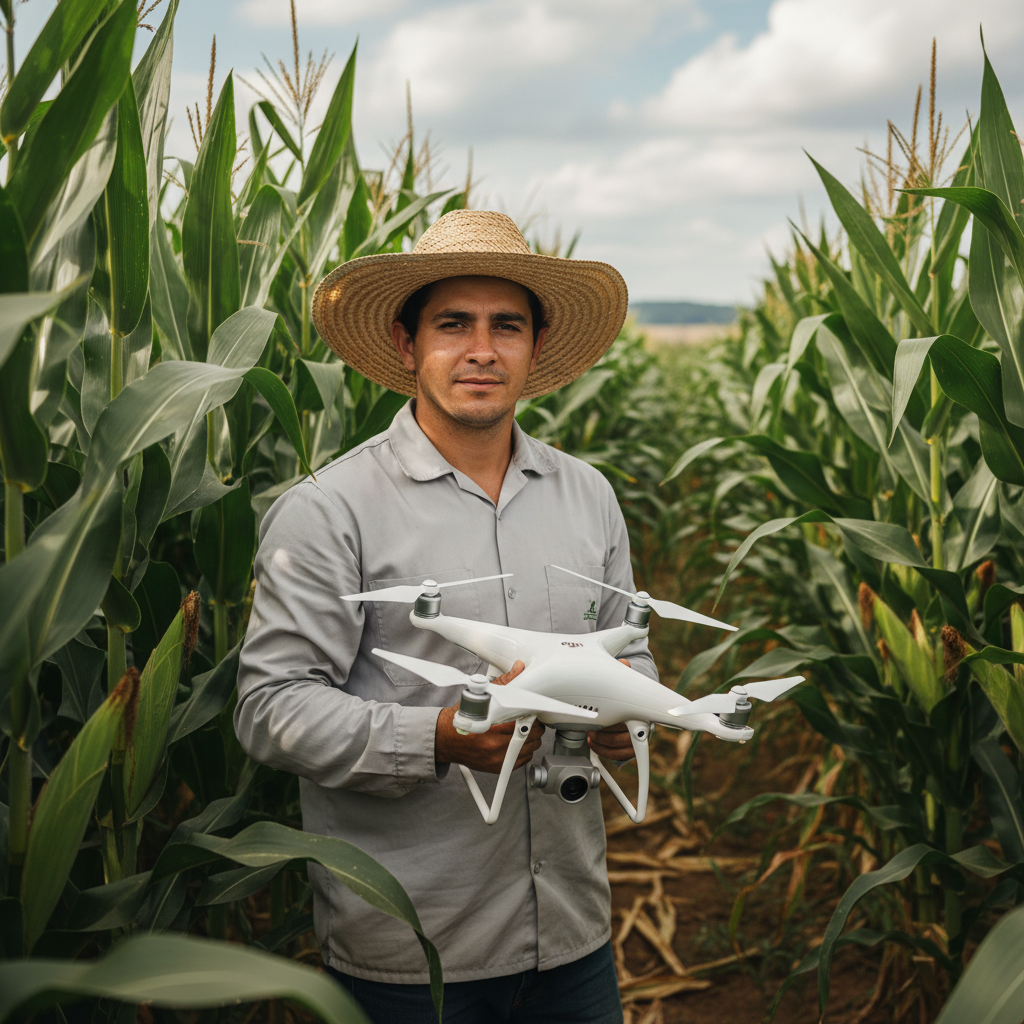
Lucas Fernandes Silva is an agricultural engineer with 12 years of experience in aerial mapping technologies and precision agriculture. ANAC-certified drone pilot since 2018, Lucas has worked on mapping projects across more than 500 rural properties in Brazil, covering areas ranging from small farms to large-scale operations. Specialized in multispectral image processing, vegetation index analysis (NDVI, GNDVI, SAVI), and precision agriculture system implementation. Lucas is passionate about sharing technical knowledge and helping agribusiness professionals optimize their operations through aerial technology.