Drone Technical Specifications: Autonomy, Speed, and Payload Capacity Explained
Key Drone Technical Terms
When you read specs, focus on three big ideas: autonomy, speed, and payload. Each one tells you how a drone will behave in real life. For example, autonomy is about how long and how smart the drone can fly without help. Speed tells you how fast it can move and how quickly it gets to a shot. Payload shows what extra gear you can carry, like a camera or sensors. Think of specs like a recipe — they show what you’ll get and how it will perform.
A quick table lines up the term, a short meaning, and why you should care when choosing gear.
| Term | What it means | Why it matters to you |
|---|---|---|
| Autonomy | Flight time and onboard decision-making | Longer flights and smarter returns mean fewer interruptions |
| Speed | Max and cruise velocity (m/s or km/h) | Affects shot style, tracking moving subjects, and safety |
| Payload | Weight the drone can lift (kg/g) | Determines camera choice and extra sensors you can add |
Scan specs like a mechanic looks at an engine chart. Match battery life to your shoot plan, max speed to the kinds of shots you want, and payload capacity to the camera you love. Keep notes — a little prep saves you from buying gear that can’t do what you expect.
Drone Autonomy Explained
Autonomy covers two parts: flight time and smart features. Flight time depends on the battery and weight — heavier payloads reduce time aloft. Smart features include return-to-home, obstacle sensing, and follow modes; these let the drone act on its own and save you trouble when the wind picks up.
Plan for less flight time than the spec: manufacturers list ideal numbers, but real flights with wind, video, and advanced modes give lower times. Always leave a safety buffer. Think of autonomy as your mission clock: it tells you when to land and recharge so you don’t lose a shot — or worse, the drone.
How Speed Is Measured
Speed specs usually show two numbers: max speed and cruise speed. Max speed is the top burst the drone can hit under ideal conditions; cruise speed is the steady pace you’ll fly for stable footage. Units are typically meters per second (m/s) or kilometers per hour (km/h), so check units before comparing models.
Speed affects how you get a shot and how safe you are. Faster drones chase subjects better but need smarter control and more battery. Slow cruise speeds make smoother video. For action shots, prioritize higher max speed and quick acceleration; for cinematic work, pick steady cruise speed and stable gimbal support.
Payload Capacity Basics
Payload capacity is the extra weight the drone can lift beyond its own frame and battery. That number, shown in grams or kilograms, decides what camera, gimbal, or sensor you can attach. Overloading shortens flight time and risks poor handling or crashes. Always check the combined weight of your gear and leave a safety margin so the drone can climb and respond reliably.
Measuring Drone Autonomy
When you read a spec sheet, hunt for autonomy numbers and real test notes. The phrase “Drone Technical Specifications: Autonomy, Speed, and Payload Capacity Explained” ties flight time, range, and payload together — treat those specs as a starting point, not gospel.
Measure autonomy by looking at battery energy in Wh (watt-hours), the drone’s mass, and the stated flight profile (hover vs cruise). Battery capacity (mAh) and voltage (V) tell half the story; the other half is how hard your motors and propellers must work. More weight more speed = less time aloft.
Run at least three real flights to get reliable numbers. Log flight time, payload weight, wind, and temperature. Compare those logs to the spec sheet and plan conservatively — keep a battery reserve for Return-to-Home. Small experiments teach you more than a spec page ever will.
Drone Flight Time Autonomy
Flight time autonomy is how long your drone stays airborne on a single charge under a given load and mission. It changes with hover, climb, and forward flight. Hovering can use power differently than steady cruise; stop-and-go aerial work wastes more energy than a steady sweep.
To maximize flight time, trim weight, lower max speeds, and fly in calm air when possible. Use eco modes unless you need sport performance. Most pros keep a 20–30% battery reserve for unexpected headwinds or safe landing.
Factors That Reduce Autonomy
Weight is the first thief of flight time: every extra gram forces motors to pull more power. Payload, heavy batteries, and bulky mounts cut minutes off your mission. Weather matters — wind, cold temperatures, and gusts force higher throttle and faster drain. Aged batteries, aggressive flight profiles, and power-hungry accessories like lights also reduce autonomy.
Electrical and mechanical issues bite too. Worn propellers or poor motor tuning increase drag and current draw. High cruising speeds raise aerodynamic drag exponentially, so going faster often costs much more time than you expect. Treat autonomy as a moving target and test with the exact setup you plan to use.
| Factor | Typical Effect on Autonomy | Simple Mitigation |
|---|---|---|
| Extra payload (camera, gimbal) | Minutes lost per 100 g | Reduce weight, use lighter mounts |
| Wind (headwind, gusts) | Large unpredictable drain | Fly in calmer windows, plan reserve |
| Low temperature | Lower battery output, reduced mAh | Keep batteries warm before flight |
| Aged battery cycles | Lower capacity over time | Track cycles, replace at drop-off |
| High speed flight | Disproportionate drag increase | Slow down or plan shorter legs |
Battery Endurance and Autonomy
Battery chemistry and care set the ceiling for autonomy: LiPo and Li-ion cells list capacity in mAh and energy in Wh, and the cell count (S) sets voltage. Higher Wh under the same load gives longer endurance. But battery health, storage level, and C-rate matter — a tired or cold battery will underperform. Charge smart, store at recommended voltage, and rotate packs for predictable flight times.
Drone Power and Batteries
Your drone’s battery is the single most important component for flight time and performance. Think of it like the fuel tank: size, weight, and chemistry decide how far you go. Most consumer drones use LiPo (Lithium Polymer) packs because they offer high power with low weight. More mAh usually means longer flights, but added weight eats into runtime.
Watch voltage and cell count (S-rating) because motor power depends on them. A higher cell count raises voltage and can let motors spin faster, affecting speed and climb rate. But higher voltage can mean higher current draw during aggressive maneuvers, so real-world flight time can drop quickly if you push the throttle. Learn your drone’s normal current draw to judge how much extra capacity will actually help.
Match battery choice to the mission: long scouting runs or heavy payloads need more capacity and a higher continuous discharge rating (C-rate); light, quick flights benefit from smaller packs that save weight. Keep the phrase “Drone Technical Specifications: Autonomy, Speed, and Payload Capacity Explained” in mind — battery specs bridge those three factors.
Battery Capacity and mAh
Battery capacity is measured in mAh (milliamp-hours). Higher mAh usually means longer flight time, but actual minutes depend on how many amps your motors draw. Use this formula to estimate time:
Flight minutes ≈ (mAh / 1000) ÷ Current draw (A) × 60
Many factors change these numbers: wind, payload, flying style, and battery age. For example, a 2200 mAh pack on a small quad might return 15–20 minutes in calm air, but that drops with a camera or headwind.
| Capacity (mAh) | Typical drone type | Approx flight time |
|---|---|---|
| 1000–1500 | Tiny racers / micro quad | 6–12 min |
| 2000–3000 | Small consumer camera drones | 12–22 min |
| 4000–6000 | Medium prosumer / long-endurance builds | 20–35 min |
| 7000 | Heavy-lift or industrial setups | 30 min (depends heavily on payload) |
Charging and Cycle Life
How you charge a pack affects lifespan. Use a proper balance charger and set the correct cell count (S) and charge rate (C). Charging at about 1C is safe for most packs; faster charging raises temperature and shortens usable life.
Cycle life is the number of full charge/discharge cycles before capacity falls noticeably. Increase cycle life by charging to storage voltage (~3.8V per cell) when not flying, keeping batteries cool, and avoiding deep discharges below ~3.3V per cell.
UAV Speed Specifications
You need to know how speed shapes every flight choice. UAV speed affects battery life, image blur, and legal limits. When you read specs, look past a single number: speed ties to autonomy and payload. If you load extra gear, your top speed and cruise range will drop.
Think in two kinds of speed: steady cruise for efficient, smooth flights, and sprint max for emergencies. Cruise speed yields cleaner frames and longer airtime; max speed is for quick transits but burns energy fast.
Treat spec numbers as a starting point. Test in the conditions you fly in: do short runs with your usual payload and record battery drop and frame sharpness. Log the results — your future flights will thank you.
Cruise Speed vs Max Speed
The cruise speed is the steady pace you choose for efficiency and smooth shots. For example, 6–12 m/s often works for mapping to avoid motion blur. The max speed is the sprint number — useful to outrun weather or get home fast, but it reduces range and can harm image quality.
| Term | Typical Use | Practical note |
|---|---|---|
| Cruise speed | Mapping, surveys, smooth video | Optimizes battery and image clarity |
| Max speed | Emergency return, racing, quick transit | Short bursts reduce flight time and can reduce image quality |
Wind and Speed Effects
Wind changes everything. A tailwind can boost ground speed and save battery on the way home; a headwind does the opposite and can halve your range. Think about airspeed versus ground speed: motors feel airspeed, while GPS reports ground speed.
Crosswinds force tilt and use more power, creating drift and possible blur. Check wind forecasts and add a margin to flight time. If gusts are strong, slow down cruise speed and bring the drone home early.
Measuring Maximum Drone Speed
To measure max speed, use a straight, open course with a GPS log. Do short sprints in both directions to average out wind effects, record peak ground speeds, and compare with the manufacturer’s number. Use your normal payload and repeat tests for reliability.
Calculating Payload Capacity
Treat payload like a puzzle piece that must fit the drone’s lift and power. First, list the empty weight: frame, motors, flight controller, propellers, and battery. Then list the maximum static thrust each motor can produce and multiply by the number of motors to get total thrust. Subtract your empty weight from usable lift and the remainder is the theoretical payload. Test with small weights before real missions.
Apply a safety margin: aim for a thrust-to-weight ratio of about 1.5:1 to 2:1 for stable flight and responsive control. If total maximum thrust is 4000 g, plan to use no more than 2000–2666 g for full aircraft weight (empty drone plus payload). That margin keeps you nimble and protects components from overheating.
Compare specs side by side. When you consult “Drone Technical Specifications: Autonomy, Speed, and Payload Capacity Explained,” you’ll see how battery size, motor rating, and prop choice change the math. Keep a small flight log after every change.
Payload Capacity Calculation
Start with a simple formula:
Payload = (Total Thrust × Safety Factor) − Empty Weight
Use a safety factor that keeps your thrust-to-weight ratio in the 1.5–2.0 range. For a four-motor drone, grab the static thrust number from the motor data sheet, multiply by four, apply the safety factor, and subtract empty weight — that result is usable payload.
Do a real-world test by mounting small weights in 50 g steps and hovering for 30 seconds while watching motor temps and battery voltage. If motors get hot or voltage drops quickly, reduce payload. Log thrust, battery draw, and flight time — numbers beat guesses.
| Parameter | Example Value |
|---|---|
| Motor static thrust (each) | 1000 g |
| Number of motors | 4 |
| Total static thrust | 4000 g |
| Safety factor for usable lift (50%) | 2000 g |
| Empty weight (frame battery electronics) | 1500 g |
| Calculated payload | 500 g |
Drone Payload Weight Limits
Know both the technical limit and the practical limit. The technical limit is the maximum payload where motors stop producing lift. The practical limit is lower: what keeps you safe, comfortable, and legal. Flight time, stability, and component stress drop quickly near the technical maximum, so keep planned payload well below that threshold.
Also watch legal and mission limits: some jurisdictions cap maximum takeoff weight or require permits above certain weights. For inspections or filming, a lighter rig improves maneuverability and reduces noise. If you need more payload, upgrade motors, props, or battery — and test each change.
Payload Effect on Speed
Adding payload increases motor power demand and raises drag slightly; the result is lower top speed and slower acceleration. Expect reduced climb rate and shorter flight time — the heavier the drone, the harder it has to work. Plan missions with speed and endurance margins, and trim payload to preserve both.
Payload Impact on Flight
Adding a payload changes the whole math of flight. Extra weight forces motors to work harder, which chews through battery life faster and cuts autonomy. The phrase “Drone Technical Specifications: Autonomy, Speed, and Payload Capacity Explained” captures this trade-off — manufacturers list limits because each gram matters.
You’ll notice two clear effects: shorter flight times and reduced performance margins. A small camera might shave minutes off a run; a heavy cinema rig can halve practical flight time. That means fewer shots per battery, more swaps, and tighter windows to get the shot. Plan like a stage manager — every extra piece changes the cue.
Payload also changes balance and aerodynamics. Where you attach gear affects the center of gravity and creates extra drag, which can pull the drone off heading or make it fight to hover. Keep payload centered and low when you can, and treat handling as new after any change.
Effect on Autonomy and Range
Weight hits battery life first. More mass demands more thrust and draws more current; small increases give small hits, large increases bite hard. Measure with a checklist: weigh the gear, fly a test hover, then record battery drain.
Range falls too because the system spends more energy to maintain speed and overcome winds. If you push for long hops with a heavy payload, you risk returning low on charge. Use conservative planning: add buffer time, set return-to-home triggers earlier, and map waypoints with energy costs in mind.
Impact on Handling and Climb
Handling becomes sluggish as you add payload. Extra mass increases inertia, so turns feel slower and corrections lag. In crosswind or tight framing, you’ll need smoother flying and earlier planned moves. Climb rate drops and motors run hotter under heavier loads. Continuous heavy climbs can push motors and ESCs toward higher temperatures, cutting component life. Always test climb performance on the ground before full missions and keep a safety margin between your expected payload and the drone’s max lift.
Balancing Payload and Flight Time
Strike a balance by prioritizing what matters for the shot: choose lighter mounts, prune nonessential kit, and decide if extra battery or extra camera wins the day. Swap components in small steps and test flight time; a single accessory can be the tipping point. Plan for the worst wind you might meet and pack redundancy: spare batteries, backup camera, and a checklist that keeps your flight time where you need it.
| Payload Change | Typical Flight Time Impact | Handling & Climb Effect |
|---|---|---|
| 100 g | -5% to -10% | Slightly less responsive, mild climb loss |
| 300 g | -15% to -30% | Noticeable sluggishness, slower climbs, higher motor temps |
| 500 g | -30% or more | Large handling drop, reduced safety margins, possible overheating |
Autonomous Navigation Systems
You rely on autonomous navigation systems when you want a drone to fly with little input. These systems combine positioning, motion sensors, and software to keep the drone on course so you can focus on the shot, survey, or delivery.
At the core are GPS, RTK, IMU, and sensor-fusion software. GPS gives a global fix; RTK can cut error to centimeters; IMU catches quick movements when satellite signals lag. Choose the mix that fits your mission.
Also set clear fail-safes and return-to-home rules. If a link drops or batteries fall low, the system must act predictably. Set geofences, altitude limits, and emergency actions — practical choices here save time and avoid accidents.
GPS and RTK Basics
Consumer GPS is often accurate to a few meters — fine for casual flights and scenic video. For mapping or tight landings, meters of error can ruin the job. RTK adds ground station or network corrections to cut error to centimeters, important for surveying, inspection, or precision agriculture. RTK can be finicky in tall cities or heavy tree cover; test on-site before critical missions.
Autonomous Navigation Drones
When a drone is marketed for autonomous flight, check what level of autonomy it offers. Some handle waypoint missions; others add real-time re-routing and object tracking. Look for clear settings so you can control how much freedom the drone has.
Software updates shape a drone’s abilities over time. Update firmware and mission apps, and practice missions in safe airspace. Autonomy is powerful, but your judgment remains the most important control.
Obstacle Avoidance and Sensors
Obstacle systems use stereo cameras, ultrasonic sensors, LiDAR, or time-of-flight modules to sense objects. They help the drone stop, sidestep, or climb around obstacles. Choose sensors that match your flight speed and environment; fast flights need faster, more precise sensing.
| Sensor | What it measures | Best use |
|---|---|---|
| GPS | Global position (meters) | Open-field flights, casual video |
| RTK | Corrected position (cm) | Surveying, precise mapping |
| IMU | Acceleration & rotation | Stabilization & short-term motion |
| Stereo Camera | Visual depth | Outdoor obstacle avoidance, tracking |
| LiDAR | Distance via laser | Low-light or complex 3D mapping |
Specs for Aerial Photography
Pick the right drone by matching payload, autonomy, and speed to your shoot. The phrase “Drone Technical Specifications: Autonomy, Speed, and Payload Capacity Explained” matters here — it tells you what the drone can actually carry and how long it will stay in the air. Read the specs like a recipe: camera weight, gimbal type, battery capacity, and thrust all mix together to make the final result.
For travel clips, a small drone with a light camera gives long flight time and quick setup. For cinematic work, a heavier camera and a solid 3-axis gimbal give smoother shots but cut endurance. Aim for a thrust-to-weight ratio of at least 2:1 to handle wind and maneuvers without stressing motors.
Plan for real-world limits: batteries lose power in cold weather and extra gear reduces hover time. Keep spare batteries and do a short hover test with your exact setup before every shoot.
| Payload range | Typical drone class | Expected flight time (single battery) | Recommended gimbal |
|---|---|---|---|
| < 500 g | Consumer/compact | 20–30 min | Integrated 3-axis |
| 500–1500 g | Prosumer | 12–25 min | Robust 3-axis, external mount |
| > 1500 g | Cine/Heavy-lift | 8–20 min | Motorized cine gimbal |
Camera Weight and Gimbals
Camera weight shapes your whole setup. A heavier camera shortens flight time and needs a stronger gimbal with better vibration isolation. If you mount a mirrorless body and a big lens, check the drone’s payload capacity and motor ratings. Don’t guess — look at thrust numbers and manufacturer limits.
Choose a gimbal that matches the weight and shot style. A 2-axis gimbal can handle simple pans; a 3-axis gimbal gives steady tilt, roll, and yaw control for cinematic moves. Balance the camera properly and use dampers — small mount adjustments make a big difference in footage smoothness.
Autonomy Needs for Shoots
Autonomy means more than flight time: it covers battery swaps, mission planning, and the control link back to you. For short real estate shots, plan several 5–10 minute flights with quick battery changes. For mapping or long tracking shots, you need longer endurance or hot-swap batteries or hybrid power.
Always keep a safety reserve: aim to end each flight with at least 20–30% battery remaining. Use waypoint missions for repeatable moves and return-to-home settings for safety. Bring spare batteries, a charger, and a checklist; warming batteries in cold weather adds minutes to usable time.
Speed and Smooth Footage
Speed affects stability and your shutter choices. Fly slower for smooth, cinematic lines. A steady speed of 3–7 m/s often gives the best results for human-scale subjects; push faster for sweeping landscape passes but watch wind. Use higher frame rates for motion you might slow in post, and keep the gimbal well balanced to avoid jitter.
Compare Drone Technical Specs
When shopping, focus on three big numbers: autonomy, speed, and payload — think of them like a car’s gas tank, top speed, and trunk. The phrase “Drone Technical Specifications: Autonomy, Speed, and Payload Capacity Explained” sums that up — read it as your checklist. Ask what flight time really means, what the payload limit includes, and how fast it will go in wind.
Specs often tell a best-case story. A 30-minute flight time might be measured with no wind and a tiny camera. Real flights add weight and wind, and time drops fast. Speed numbers are usually max values; cruise speed is lower and steadier. Payload limits tell how much extra weight the frame and motors can lift safely.
Match specs to your mission: cinematic shots need stable gimbals, longer hover time, and light payloads; inspections or deliveries need higher payload and good range. Write down priorities and cross-check each spec against them.
How to Read Spec Sheets
Start by locating key fields: battery capacity (mAh or Wh), flight time, max takeoff weight (MTOW), payload, max speed, and control range. Manufacturers also list sensors like GNSS, obstacle avoidance, and gimbal specs. Camera specs matter if you shoot video: sensor size, aperture, and lens field of view are big ones. Prefer Wh over mAh when comparing energy.
Read the units. mAh tells charge but Wh tells energy available; Wh is more reliable for comparisons. Flight time is often theoretical and range may be radio line-of-sight. Pay attention to test conditions in the fine print.
Real-World Test Numbers
Plan for less than the spec. Expect 20–40% lower flight time with a camera and everyday wind. For example, a listed 30 minutes can become 18–24 minutes in normal use. Speed drops when you add weight or face headwinds. Do your own tests: fly at a safe site, record flight time from full charge to return-to-home trigger, note battery voltage, temperature, wind, and payload. Repeat three times and average the results — this gives you real numbers to trust.
Drone Technical Specifications Comparison
A quick reference to see trade-offs between common drone classes:
| Class | Typical Autonomy (min) | Typical Max Speed (km/h) | Typical Payload (kg) | Notes |
|---|---|---|---|---|
| Consumer (camera drones) | 20–35 | 40–60 | 0.1–0.5 | Light cameras, smooth gimbals, best for video |
| Prosumer / Hybrid | 20–40 | 60–90 | 0.5–3 | Can carry larger cameras or small survey kits |
| Industrial / Delivery | 30–90 | 80–120 | 5–30 | Built for heavy payloads, longer range, hearty frames |
Frequently Asked Questions
Q: What cuts drone autonomy the most?
A: Heavy payloads drain battery fastest. High speed and strong wind also cut time. Fly lighter and slower to extend range.
Q: How do you estimate flight time (autonomy)?
A: Check battery mAh and average amp draw. Use the formula (mAh ÷ 1000) ÷ amps × 60 = minutes. Add a 20% safety margin.
Q: Does speed change payload rules?
A: Yes. Faster flight raises power needs, so you must reduce payload or battery time. Balance speed and weight for safe flights.
Q: How do you pick the right payload capacity?
A: Check max takeoff weight (MTOW), subtract your drone’s empty weight, and leave a 20–30% margin for safety.
Q: How do you balance “Drone Technical Specifications: Autonomy, Speed, and Payload Capacity Explained” in practice?
A: Prioritize your main need first. Lower speed to gain autonomy. Cut payload or upgrade battery if needed. Test changes and log real-world numbers.
Quick Checklist: Use the Keyword in Practice
- Read specs with “Drone Technical Specifications: Autonomy, Speed, and Payload Capacity Explained” as your guide: battery (Wh), weight, and thrust.
- Test with your exact payload and flight profile. Record three runs and average.
- Keep a 20–30% battery reserve for safety and return-to-home triggers.
Conclusion
Understanding “Drone Technical Specifications: Autonomy, Speed, and Payload Capacity Explained” helps you pick the right gear and plan realistic missions. Focus on battery energy (Wh), payload mass, and realistic cruise speeds. Test often, log data, and prioritize safety margins — that approach will keep your flights reliable and your footage sharp.
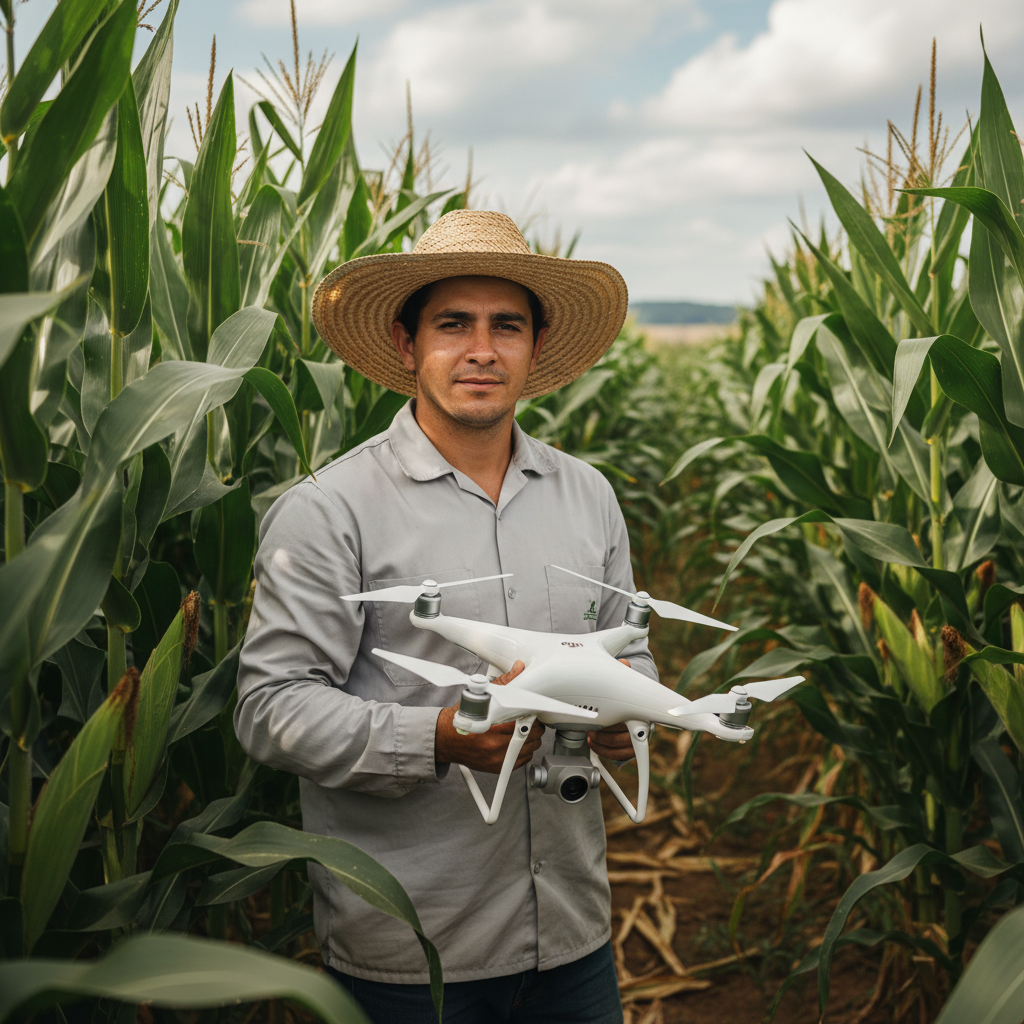
Lucas Fernandes Silva is an agricultural engineer with 12 years of experience in aerial mapping technologies and precision agriculture. ANAC-certified drone pilot since 2018, Lucas has worked on mapping projects across more than 500 rural properties in Brazil, covering areas ranging from small farms to large-scale operations. Specialized in multispectral image processing, vegetation index analysis (NDVI, GNDVI, SAVI), and precision agriculture system implementation. Lucas is passionate about sharing technical knowledge and helping agribusiness professionals optimize their operations through aerial technology.