Camera Specs for Professional Drones
You want a drone camera that gets the job done every time. Start by focusing on sensor size, resolution, and dynamic range. A larger sensor gathers more light and gives cleaner images at higher ISOs — important for low-light shoots and color grading. Balance sensor size with weight and cost: very large sensors add both.
Next, consider video bitrate, color depth, and frame rates. Higher bitrate and 10-bit or 12-bit color keep detail in highlights and shadows and give room to push colors in editing. For motion, 60 fps or higher lets you create smooth slow motion; 24–30 fps keeps a cinematic feel. Choose codec and bitrate based on delivery: streaming, broadcast, or cinema.
Check shutter type, ISO range, and connectivity. Global shutter avoids rolling distortion for fast motion; rolling shutter is common and cheaper. A clean ISO range and good low-light performance let you fly at dusk. Ensure the camera provides accessible ports and recording options so it fits your workflow. If you’re following “How to Choose a Professional Drone: A Complete Guide to Specifications and Performance”, camera-spec choices are where precision starts to matter.
Camera details and checklist
Start with sensor format: Micro Four Thirds, APS-C, or full-frame. Each step up improves low-light and depth control but adds weight. Pay attention to pixel size; larger pixels often outperform higher megapixel counts in low light. For stills, 20–45 MP is common; for video, prioritize bitrate and color sampling over sheer megapixels.
Look for wide dynamic range and flexible color profiles (Log, RAW, ProRes/RAW outputs) for grading. Check whether the camera supports mechanical shutters if you need to avoid rolling-shutter artifacts.
Camera-buy checklist: sensor size, resolution, bitrate, color profile, frame rates, shutter type, gimbal axes, lens focal length, aperture, and ND filter compatibility — verify these before each job.
Quick spec comparison:
| Spec | Typical Range | Best For |
|---|---|---|
| Sensor | Micro 4/3, APS-C, Full-frame | Low light & depth (bigger is better) |
| Resolution | 20–45 MP stills | Large prints, detailed maps |
| Video Bitrate | 100–1000 Mbps | High motion, broadcast, color grading |
| Frame Rates | 24–120 fps | Cinematic or slow motion |
| Color Depth | 8-bit, 10-bit, 12-bit | Grading flexibility (10 preferred) |
Gimbal stabilization and lens options
A good 3-axis gimbal is standard for smooth pans, tilts, and rolls. Look for active vibration dampening and precise motors so frames stay steady in wind. Test gimbal response to quick joystick moves and manual framing for predictable behavior.
Lens choices shape the look of your shots: prime lenses give sharpness and wide apertures for low light; zoom lenses offer flexibility on set. Consider focal length, aperture, and ND filter support. For inspections and mapping, use wider lenses; for cinematic portraits, choose longer focal lengths and shallow depth.
Camera checklist reminder: check sensor size, resolution, bitrate, color profile, frame rates, shutter type, gimbal axes, lens focal length, aperture, ND filter compatibility before each job.
Drone Performance Metrics
You pick a drone for how it flies and what it can carry. Start by checking flight time, range, and payload. When researching “How to Choose a Professional Drone: A Complete Guide to Specifications and Performance”, look for clear numbers so you can match machine to job.
Battery capacity and weight set run time. Wind and temperature change those numbers, so treat published figures as guides, not guarantees. Use specs to match jobs to gear: long surveys require long range and reliable links; film work often prioritizes stability and payload over raw speed.
Comparing flight time and range
Manufacturers list ideal flight times; real-world time drops with payload, wind, and active sensors. Plan for about 20–30% less than published specs. Range is affected by control link, transmitter power, and local rules — pick radios and antennas that match your mission and keep a buffer.
Speed, climb rate, and stability
Top speed matters for chasing action, but higher speed increases power draw and reduces flight time. Climb rate affects obstacle clearance. Stability from frame design, motors, and control software keeps footage steady and reduces postwork.
Flight performance numbers to compare: minutes of flight, kilometers of range, km/h top speed, and m/s climb rate. Compare figures side by side to understand trade-offs.
| Class | Flight time (min) | Range (km) | Top speed (km/h) | Climb rate (m/s) | Stability (1-5) |
|---|---|---|---|---|---|
| Consumer | 20–30 | 2–5 | 40–60 | 3–5 | 3 |
| Prosumer | 25–35 | 5–10 | 50–90 | 5–8 | 4 |
| Professional | 30–50 | 10–30 | 60–100 | 8–12 | 5 |
Payload and Sensor Options
Start with the mission: what will you carry? Payload choice drives frame, battery, and flight plan. A high-resolution camera may be light but needs a steady gimbal and bandwidth. A LiDAR or heavy thermal unit requires stronger motors and a bigger battery. Check connector types, mounts, and whether the autopilot supports the sensor’s data stream.
Plan for upgrades: choose a platform with modular mounts and reserve payload capacity to grow. That keeps costs down and adds flexibility.
Common sensors and needs
Cameras are workhorses. An RGB camera with a stabilized gimbal covers most photo and video jobs. For inspections, add zoom; for search and rescue, use thermal; for agriculture, use multispectral; for topography, consider LiDAR. Each has trade-offs in weight, power draw, and data needs.
| Sensor Type | Typical Weight (g) | Best For | Notes |
|---|---|---|---|
| RGB camera (stabilized) | 100–600 | Aerial photography, video | Good balance of weight and image quality |
| Zoom camera | 300–900 | Inspections, surveillance | Keeps distance; needs stronger gimbal |
| Thermal camera | 200–800 | Search, night inspections | Lower resolution, high detection value |
| Multispectral | 200–700 | Agriculture, surveying | Needs mounts and calibration |
| LiDAR | 800–3000 | Topography, dense vegetation | Heavy, power-hungry, high data rates |
Payload capacity vs flight time
Heavier payloads shorten flight time sharply. A light camera might allow 20–30 minutes; add a heavy sensor and you may drop to 10–15 minutes. Use lighter mounts, reduce extra gear, and choose higher-capacity batteries if possible. Always test with the actual sensor and conditions — real-world checks beat spec sheets.
Pick sensors for the job: high-resolution cameras with good overlap and GPS for mapping; thermal for night searches; multispectral for vegetation with calibration panels.
Choosing a Drone for Surveying and Mapping
Match sensor, flight time, and accuracy to the job. For mapping, camera resolution, mechanical shutter, and stability matter. For small plots, a compact multirotor with a good sensor suffices; for large linear projects, consider fixed-wing or VTOL for endurance.
Budget and operating cost affect daily capacity. Cheap drones may cost time in processing due to lower image quality or missing RTK/PPK. Factor in payload flexibility, service plans, parts availability, and team training.
Drone types for mapping
List mission needs: area size, target resolution, terrain. For fine detail, choose a high-resolution sensor with a mechanical shutter. Use built-in positioning tech (RTK/PPK) and confirm software compatibility. Consider how many batteries you must carry to finish a site in one day and practical issues like battery swap speed and controller usability.
| Drone Type | Best For | Sensor | Typical Flight Time | RTK/PPK Support |
|---|---|---|---|---|
| Entry multirotor | Small plots, tight sites | 12–20 MP RGB | 15–30 min | Sometimes |
| Pro multirotor | Urban surveys, high detail | 20–45 MP RGB, mechanical shutter | 20–40 min | Often |
| Fixed-wing | Large areas, corridors | 16–24 MP, belly mount | 45–120 min | Often |
| VTOL | Mixed missions | 20–45 MP, interchangeable | 30–90 min | Often |
GPS, RTK, and mapping accuracy
GPS alone is fine for rough planning; RTK and PPK add corrections for centimeter accuracy. RTK streams corrections live; PPK records raw data for later correction. Accuracy also depends on flight plan and camera settings: lower altitude and higher overlap reduce GSD and improve positional accuracy. Use GCPs where centimeter certainty is required.
Mapping setup tips: plan grids with ~80% forward overlap and 60% side overlap, fly at altitude for target GSD, lock exposure, and place GCPs across the site. Warm batteries, verify RTK/base logs, and do a quick test flight to confirm focus and trigger timing.
Commercial Drone Selection Tips
Start with the job: real estate, film, inspections, or sensor carriage. Focus on flight time, camera quality, range, and payload. Balance budget with long-term value: cheaper drones can cost time and clients; pricier models often bring better stability, warranties, and pro software.
Test before buying: rent or demo a unit on a real job. Watch wind handling, gimbal steadiness, and app usability. Talk to other pilots. Choose the drone that helps you finish work faster with better results.
| Feature | Why it matters | What to look for |
|---|---|---|
| Camera quality | Better images win clients | 20MP stills, 4K video, large sensor |
| Flight time | Fewer battery swaps | 25 practical minutes per battery |
| Range & transmission | Stable signal and feed | 4–10 km range with low latency |
| Payload capacity | Needed for sensors | Match payload with margin |
| Durability & support | Minimizes downtime | Replaceable parts and strong warranty |
Shopping approach
Write a short list of mission needs (altitude, flight duration, camera specs). Use it as a filter. Compare models for stability, gimbal performance, and app flight modes. Read user reviews for real-world issues like overheating or weak GPS. Prefer platforms that allow future upgrades.
Certifications, licenses, and insurance
Fly legally: get FAA Part 107 in the U.S. or the local equivalent. Carry certification and follow rules. Insurance is essential: liability covers third-party damage; hull covers gear. For large jobs, require subcontractors to show proof of insurance.
Meet commercial rules: register drones if required, file waivers for night or over-people operations, keep preflight checklists and flight logs, and adhere to VLOS rules unless waived.
Battery Life, Management, and Charging
Battery life is the biggest limiter. Consider capacity (mAh), weight, and discharge rate (C). Match voltage (S) to your drone. Battery choice changes what and how long you can shoot — a core part of “How to Choose a Professional Drone: A Complete Guide to Specifications and Performance.”
Manage batteries like tools: log cycles, charge times, and hard landings to spot falling capacity. Use manufacturer chargers or quality balance chargers to protect cells. Charge on non-flammable surfaces, don’t leave packs unattended, cool to room temperature before charging, and stop when fully charged.
Battery types and safe charging
Most camera drones use LiPo for light weight and high current; Li-ion offers higher energy density but more weight. Smart batteries add telemetry and protection. Buy spares matching manufacturer specs.
Charge safely: use balance chargers for multi-cell packs, never charge swollen packs, and dispose of damaged packs per local hazardous-waste rules.
| Battery Type | Weight | Best For | Charging Notes |
|---|---|---|---|
| LiPo | Light | Quick bursts, many camera drones | Balance charging; store at storage voltage |
| Li-ion | Heavier | Longer endurance | Slower discharge; proper charger |
| Smart | Varies | Telemetry, easy swaps | Follow manufacturer guidance |
Maximize flight time with swaps
Plan battery swaps like a pit crew: pre-charge several packs, label them with date and cycle count, and keep them cool. Practice quick, safe swaps until they’re confident. Rotate packs so each cools between flights to preserve cell health.
Battery care basics: store at storage voltage (~3.7–3.85V per cell for LiPo), keep moderate temperature, check for swelling, and cycle occasionally.
Controller, Software, and Autonomy
Pick a controller with comfortable sticks, clear switches, and good signal strength. Radios using modern protocols give better range and lower latency. Try controllers before buying — ergonomics affect precision.
Flight apps provide live telemetry, camera control, and flight logs. Learn which settings affect photo formats, bitrate, and gimbal behavior. Save presets and export logs after missions to review performance.
Autonomy features (GPS, obstacle sensing, RTK) save time and improve safety. Know failsafes: return-to-home, low-battery actions, and signal-loss behavior. Match autonomy features to job complexity and pilot skill.
Flight modes and mission planning
Learn modes and use cases: Manual/Atti for expert cinematic flying, GPS/Position Hold for steady photos, Sport for fast runs, Follow/ActiveTrack for moving subjects, Waypoint/Mission for mapping. Plan missions like road trips: set waypoints, altitude, and speed before takeoff and factor battery life and wind.
| Mode | Best use | Quick tip |
|---|---|---|
| Manual / Atti | Expert cinematic flying | Practice in open fields |
| GPS / Position Hold | Still photos | Calibrate compass first |
| Sport | Fast inspection | Keep altitude safe |
| Follow / ActiveTrack | Moving subjects | Check path for obstacles |
| Waypoint / Mission | Mapping, repeatable routes | Plan battery swaps into mission |
Firmware updates and app features
Keep firmware current but read release notes first. Back up settings, charge batteries, and follow update steps carefully. App features that matter: reliable telemetry, low-delay live view, easy export of logs and media, geofencing, and mission editors. Review app permissions and cloud sync options to protect flight and footage privacy.
Choose control systems that fit your work: classic RC for precision, tablet-based for visuals, or dual-operator setups for complex shoots.
Build Quality, Weather Resistance, and Reliability
Build quality indicates longevity. Check frame, motor mounts, and gimbal fit. Avoid wobble or thin plastic. Read manufacturer notes about material grade and testing — these matter when following “How to Choose a Professional Drone: A Complete Guide to Specifications and Performance.”
Weather limits — wind, operating temperature, and IP rating — tell you where you can safely fly. Redundant systems (dual IMUs, backup GPS) can save missions. Maintain a flight log of hours, failures, and near-misses to spot patterns and guide maintenance or model changes.
Materials, IP rating, and durability
Materials balance toughness versus weight: carbon fiber is light and rigid but costly to repair; ABS/nylon absorbs impact and is cheaper to replace; aluminum parts help heat dissipation. IP ratings indicate dust/water resistance — IP54 is splash-proof; IP67 is dust-tight and water-immersion safe. Remember seals wear; inspect ports and moving parts.
| Item | Typical Benefit | Practical Note |
|---|---|---|
| Carbon fiber | Lightweight, rigid | Best for cinematography; repairs costly |
| ABS/nylon blends | Impact-absorbing | Good for training and field work |
| Aluminum parts | Strength, heat dissipation | Replace if bent after hard landings |
| IP54 | Splash and dust resistance | OK for light rain and dust |
| IP67 | Dust tight, water immersion safe | For heavy spray or near water |
Maintenance and crash protection
Make preflight inspections routine: props, battery contacts, mounts, and screws. Replace chipped props — small damage causes oscillations. Keep firmware current but test after updates. Use prop guards for training, foam bumpers near people, and choose drones with accurate return-to-home and obstacle sensors for critical work. Carry a basic repair kit and consider insurance and a backup drone for paid gigs.
Keep a checklist: props, batteries, compass calibration, GPS lock, and sensors. Practice emergency landings in an open field.
Professional Drone Buying Guide and ROI
Think like a small business owner: weigh purchase price against revenue potential and operating costs. Ask what work you will win with the rig — real estate, mapping, inspections, or cinema — and let that drive specs.
Calculate a payback period: total cost of ownership (drone, extras, insurance, training, repairs) divided by expected monthly project income. A payback under 12–18 months is a good target for steady work. Also consider intangible ROI: faster jobs, improved safety, and repeat clients.
Buying checklist
Match specs to mission: sensor size and bitrate for video, GNSS accuracy and stable flight for mapping, zoom optics and RTK for inspections. Factor workflow: batteries, chargers, spare props, ND filters, gimbal stabilization, and software. Include training, certification, and secure storage.
Total cost and service:
| Cost Component | Typical Budget Range | Notes |
|---|---|---|
| Drone (pro level) | $5,000 – $20,000 | Depends on sensor, redundancy, payload |
| Batteries & chargers | $300 – $1,200 | Buy extras to keep uptime high |
| Spare parts & repairs | $200 – $2,000/yr | Expect occasional fixes |
| Insurance & warranty | $500 – $3,000/yr | Liability hull recommended |
| Software & training | $200 – $2,000/yr | Processing, licenses, pilot training |
Choose reliable brands with strong support networks, inspect flight time and spare parts availability, and confirm service response times. A good warranty and quick repairs reduce downtime.
How to Choose a Professional Drone: A Complete Guide to Specifications and Performance — Quick Checklist
- Define the job: deliverables, altitude, required accuracy, and budget.
- Camera: sensor size, bitrate, frame rates, shutter type, Log/RAW support.
- Flight: practical flight time, range, top speed, climb rate, stability.
- Payload: weight, power draw, mounts, and autopilot integration.
- Positioning: RTK/PPK or GCPs if centimeter accuracy required.
- Durability: materials, IP rating, redundant systems.
- Operations: controller ergonomics, software, mission planning, and failsafes.
- Logistics: spare batteries, chargers, repair kit, insurance, and training.
- ROI: total cost of ownership vs expected monthly income and uptime.
Frequently Asked Questions
Q: How to Choose a Professional Drone: A Complete Guide to Specifications and Performance — what’s the first step?
A: Define your job. Note camera needs, flight time, payload, accuracy, and budget. Make a must-have list.
Q: What camera specs should you focus on for a pro drone?
A: Sensor size, resolution, low-light performance, frame rates, bitrate, color depth, and a stabilized gimbal. Prefer Log/RAW outputs for grading.
Q: How much flight time and range do you need?
A: Aim for 20–40 practical minutes per battery and buy spares. Match range to the mission and legal line-of-sight constraints.
Q: What safety features and build quality matter most?
A: Obstacle avoidance, accurate return-to-home, redundant IMUs/GPS for critical work, and weather resistance appropriate to your environment.
Q: How do you balance performance, regulations, and budget?
A: Know local rules and insurance needs, prioritize features that enable your work, and buy modular gear so you can upgrade later.
If you follow these guidelines and use “How to Choose a Professional Drone: A Complete Guide to Specifications and Performance” as your decision framework, you’ll be able to select a drone that fits your missions, scales with your business, and gives reliable, professional results.
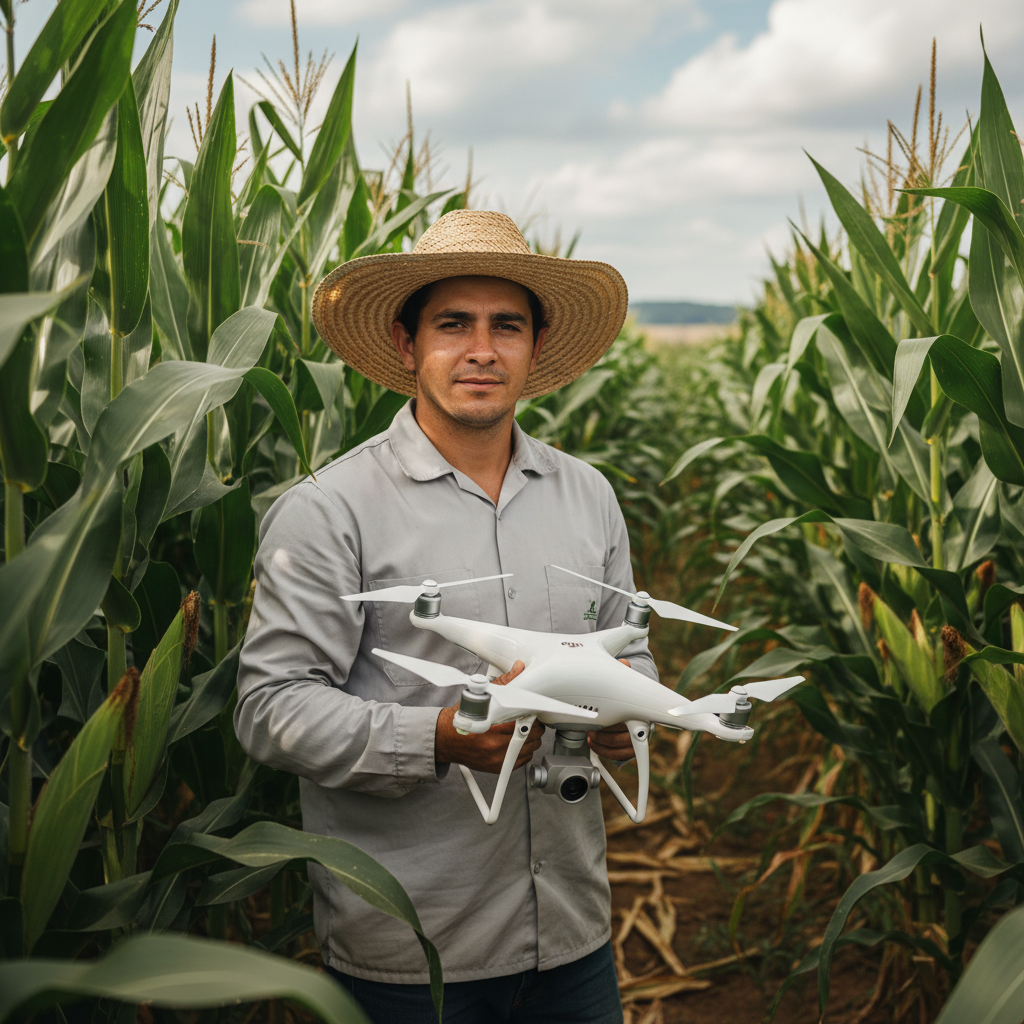
Lucas Fernandes Silva is an agricultural engineer with 12 years of experience in aerial mapping technologies and precision agriculture. ANAC-certified drone pilot since 2018, Lucas has worked on mapping projects across more than 500 rural properties in Brazil, covering areas ranging from small farms to large-scale operations. Specialized in multispectral image processing, vegetation index analysis (NDVI, GNDVI, SAVI), and precision agriculture system implementation. Lucas is passionate about sharing technical knowledge and helping agribusiness professionals optimize their operations through aerial technology.