
Know your regulatory limits
You must treat regulatory limits like a seatbelt: they keep you safe and legal. Read the rules from your national aviation authority before you fly — check who controls the airspace, what altitude caps apply, and whether you need permits for commercial mapping or survey work. If you skip this, you risk fines, grounded jobs, or worse.
Map your operation against the rules step by step. Identify the class of airspace, the maximum height, and any no-fly zones near airports, prisons, or stadiums. Keep copies of the right forms on your device and note any time-of-day or line-of-sight requirements that could stop your job before it starts.
Treat rules as part of your workflow: build them into your pre-flight checklist and your client contract. If a country lets you fly under certain conditions, record that permission and carry it with you.
Check your national rules
Start by visiting the official site for your country’s aviation regulator. Look for sections on unmanned aircraft, commercial operations, and licensing. Many sites have simple charts or PDFs you can download and save to your phone.
If rules seem unclear, call or email the regulator. Ask about special permissions, mapping over people, or crossing borders. A quick call can save you headaches and keep your flights lawful.
Note allowable weather thresholds
Weather kills more missions than dull batteries. Do a proper Meteorological Analysis: Wind, Rain, and Ideal Mapping Conditions before you plan flights. Know the max wind and gust values you will accept, whether rain is allowed, and the visibility floor for safe imaging.
Here’s a quick guide to common safe operating bands to get you started. Treat these as conservative values — check your aircraft specs and national rules before you commit.
| Condition | Typical Safe Threshold | Quick Note |
|---|---|---|
| Wind steady | ≤ 15 mph (≈24 km/h) | Good for most consumer and prosumer drones |
| Wind gusts | < 20 mph (≈32 km/h) | Strong gusts spoil image quality and control |
| Rain | Avoid precipitation | Water can damage sensors and electronics |
| Visibility | ≥ 1 statute mile / 1.6 km | Needed for visual line of sight and recovery |
| Cloud ceiling | > 500 ft AGL | Stay below clouds and maintain separation |
Document compliance steps
Write a short, dated log that lists the permit numbers, the flight plan, the weather briefing, the pilot-in-command name, and photos of any site warnings; keep copies in your cloud folder and on your device so you can show them on demand.
Assess your wind: speed, direction, shear
Treat wind like traffic on a busy road: know how fast it moves, which way it flows, and where lanes suddenly change. Frame your plan around speed, direction, and shear so you can pick safe windows and clear go/no-go limits. Use simple rules and checklists everyone on site understands.
Record conditions regularly and compare them to past readings to spot patterns. Link on-site readings to broader reports such as Meteorological Analysis: Wind, Rain, and Ideal Mapping Conditions so decisions match both site reality and regional forecasts.
Measure wind speed on site
Use a calibrated anemometer or mobile wind sensor at the exact working height. Hold instruments away from structures and obstacles; measurements near walls will lie to you. Take at least three readings over a few minutes and use the average plus the maximum gust to set your limits.
Set clear cutoffs: a working limit, a caution range, and a shutdown threshold. Make those values visible on site boards. Train your team to act on the thresholds without delay — consistency saves lives.
| Wind speed (mph) | Typical action |
|---|---|
| 0–15 | Normal operations; stay aware |
| 16–25 | Caution: reduce exposed work and secure items |
| 26 | Stop high-risk tasks; shelter personnel |
Track wind direction trends
Mark the dominant wind direction on a daily chart so you can plan laydown areas and approach paths. Small shifts over days can change your risk map. Communicate changes in briefings so everyone knows where the wind is likely to run.
Note wind shear and gust events
Treat shear and sudden gusts as hidden traps: they can flip loads and surprise workers. Look for quick drops or spikes in speed over short distances — especially near cliffs, buildings, or between open and sheltered areas — and pause high-risk moves when those patterns appear.
Check your rain: intensity and type
Treat rain like a traffic light: green, yellow, red. Use routine checks and the phrase Meteorological Analysis: Wind, Rain, and Ideal Mapping Conditions as your guide when you read reports. Focus first on rain intensity and precipitation type — those decide whether you keep working, slow down, or stop.
Start with simple numbers. Look for rain rate in mm/hr or in/hr, and watch for alerts that call it Heavy or Flash rainfall. Check radar loops for trends: is the echo building, steady, or breaking up? Save screenshots or timestamps so you can prove conditions if needed.
Tie that data to what people on site feel and see. Use a simple checklist: observed rate, radar trend, and on-ground puddling. Those three pieces give you a clear picture.
| Rain Category | Typical Rate | What you do |
|---|---|---|
| Light | 0–2.5 mm/hr (0–0.1 in/hr) | Continue work; watch updates |
| Moderate | 2.5–7.6 mm/hr (0.1–0.3 in/hr) | Slow non-essential tasks; inspect drains |
| Heavy | 7.6–50 mm/hr (0.3–2.0 in/hr) | Pause exposed work; move gear to shelter |
| Intense / Flash | >50 mm/hr (>2.0 in/hr) | Stop operations; seek shelter |
Watch rainfall intensity reports
Pull three sources: radar loop, local weather station, and official alerts. Radar gives motion and intensity; weather stations give ground truth; alerts tell you if authorities expect sudden changes. When all three align, you can act fast.
Be ready to change plans within minutes. If radar shows a fast-building cell, get people and equipment to safe positions, call a quick huddle, state the observed rate and action, and log the time.
Identify precipitation type quickly
Temperature at the surface and aloft decides rain vs sleet vs freezing rain vs snow. Look at surface temp and the temperature profile on a sounding or model. If a warm layer sits above a cold layer, you risk freezing rain — far more dangerous than ordinary rain.
Use simple site signs: wet roads that freeze when temps drop, glaze on metal, or crunchy flakes. If ice starts to form, stop exposed operations and move vehicles.
Set rain cutoffs for safety
Pick clear cutoffs and post them: for example, pause outdoor lifts at ≥10 mm/hr, stop work at ≥25 mm/hr, and suspend all operations during flash flood warnings. Communicate those numbers to every crew member so decisions aren’t left to opinion.
Use radar reflectivity in your planning
Treat radar reflectivity as a top planning tool. Look at loops, not single frames, so you can see growth and decay. Combine radar with your flight plan and fuel/battery reserves. Remember Meteorological Analysis: Wind, Rain, and Ideal Mapping Conditions when you pick products — radar ties those pieces together.
Know what different dBZ values mean: low values indicate light rain, high values mean heavy rain, hail, or dense turbulence. Watch for sudden spikes — that signals a growing convective cell and can change your route in minutes.
Use radar to set go/no-go limits you can follow under pressure. Mark thresholds for diversion, altitude changes, and hold times.
| dBZ range | Typical weather | Pilot action |
|---|---|---|
| 0–20 | Light rain or drizzle | Normal ops; monitor |
| 20–35 | Moderate rain | Consider puddle/wind changes |
| 35–50 | Heavy rain, small hail | Avoid cores; raise mins |
| 50 | Severe hail, intense convection | Divert; large deviation |
Read radar reflectivity maps
Start by checking the time stamp and loop speed. You want the latest data and a 10–30 minute loop to show storm trends. Focus on cores (bright colors) and their path. Track cell motion with reference points like highways for a simple sense of where trouble will be.
Spot convective echoes near routes
Scan a buffer of airspace around your route, not just the centerline. Convective echoes can grow or move into your path. Lines and bow echoes can bring straight-line winds; isolated cores can drop hail. If you see rapid vertical growth, assume strong updrafts and turbulence and plan a safe lateral or vertical offset.
Combine radar with surface reports
Always cross-check radar with METARs, PIREPs, and ATIS. Surface reports confirm radar about precipitation type and wind shifts. A PIREP of hail or severe turbulence near a radar echo is a red flag — treat it as real and act.
Manage your visibility reduction risk
Treat visibility as a primary safety control. Run a quick Meteorological Analysis: Wind, Rain, and Ideal Mapping Conditions before you move gear or people. If the forecast shows fog or heavy rain, act early and say it out loud in your briefing: visibility matters more than schedule.
Set clear minimum visibility numbers for your operation, write them down, and give copies to every team member. Use easy language: if visibility drops below your number, pause or move to backup tasks.
Build layers of protection: use a spotter, a visibility sensor, and a plan B route. Keep lights ready and make a firm rule that anyone can call a stop. Train the team with a short drill so stopping becomes second nature.
Measure visibility limits before launch
Use a trusted handheld visibility meter, an app with live camera feeds, or an observer with known landmarks. Compare multiple sources; if instruments disagree, trust the lowest reading and act conservatively. Record and announce readings plainly: 300 meters and falling. Log the reading for later review.
| Visibility (meters) | Typical Condition | Action to Take |
|---|---|---|
| > 1000 | Clear to light haze | Proceed with normal ops |
| 300–1000 | Moderate haze/fog risk | Use spotter, reduce speed, prep lights |
| < 300 | Dense fog or heavy precipitation | Pause or cancel until it improves |
Plan for fog and low light
Pick routes with escape options and open sight lines. Fly or move slower. Use bright marker lights and reflective vests. Schedule tricky work for daylight when possible. If you must work in low light, add extra staff and two-way radios so communication stays clear.
Cancel when visibility lowers safety
Make a hard rule: cancel when visibility hits your minimum or when any team member calls stop. No debate. If sensors fail or reports contradict, pull the plug and wait for a clear reading.
Check mapping suitability before your flight
Treat every flight like a short test. Start with a checklist that covers weather, airspace, site hazards, and sensor limits. Read the plan once, then read it aloud — that extra step catches small things that bite later.
Run a quick Meteorological Analysis: Wind, Rain, and Ideal Mapping Conditions and compare it to your minimums. If wind or rain are beyond limits, mark the mission no-go. If the site has strong gusts, low visibility, or active hazards, swap dates or move to a safer site.
Document your decision and tell the team. A brief call or text keeps everyone aligned — highlight the go/no-go reason for later review.
Judge mapping suitability by weather
Look at both forecast and current conditions: wind speed, gusts, rain chance, and visibility. If gusts exceed your drone’s rated tolerance by a margin, do not fly — gusts are surprise shoves your drone may not handle.
Match sensor needs to conditions
Choose sensors that fit the day. For clear, bright days, an RGB camera gives sharp color and detail. For hazy light or low contrast, LiDAR or multispectral sensors often perform better. Adjust flight settings: lower speed for fine detail; increase overlap when clouds or shadows are present. For thermal mapping, pick cooler parts of the day and run a calibration check.
| Condition | Recommended Sensor | Flight Tip |
|---|---|---|
| Bright, clear day | RGB camera | Faster speed, normal overlap |
| Hazy or low contrast | LiDAR / Multispectral | Higher overlap, slower passes |
| Rain or heavy moisture | No flight | Wait for dry window |
| Thermal needs | Thermal camera | Fly at cooler times of day |
Approve sites that meet mapping suitability
Only approve a site when weather, airspace, and sensor capability all line up. Note mitigations and get verbal buy-in from the pilot and observer.
Check spatial sampling density for data quality
Start by checking spatial sampling density because that controls the level of detail your map will show. Look at points per square meter (or per hectare). Wide gaps or clumps produce holes or noisy spots — low sampling is a blurry picture, high sampling is sharp.
Compare measured density to project need: utility surveys need high point density, rough land-use maps can accept less. Run a heat map of the point cloud and mark areas below your minimum threshold — use that diagnostic to decide whether to re-fly or adjust settings.
Finally, check how weather affected sampling. Use Meteorological Analysis: Wind, Rain, and Ideal Mapping Conditions to interpret gaps or noise: wind can smear returns, rain can add false points, and low visibility can reduce return strength. Flag areas for re-survey where weather likely lowered density.
Set spatial sampling density targets
Decide and write down clear density targets before you fly (points per m²). Include minimum acceptable levels and a recommended target that gives wiggle room.
Define how you will measure success after the flight: heat maps, per-tile point counts, and percent area meeting the target. Numbers up front remove guesswork.
| Area Type | Typical Target (pts/m²) | Minimum Acceptable |
|---|---|---|
| High-detail utility corridor | 10–20 | 8 |
| Terrain modeling / topo | 2–5 | 1.5 |
| Vegetation canopy studies | 5–12 | 4 |
Adjust flight lines to hit density
Plan flight lines for consistent overlap and repeat coverage. To boost density, fly lower, slow down, or add cross-strip passes. Balance density needs with battery/time. Use forward and side overlap; increase side overlap to avoid edge gaps. Add extra lines at complex boundaries or where shadowing is expected. If wind is strong, tilt your pattern into the wind so returns stay tight.
Verify coverage meets your standards
After processing, run a coverage map and check tiles against your targets. Mark tiles below the minimum acceptable density and list them for reflight. If weather caused the shortfall, note that so future planning avoids the same trap.
Follow good operating practices for your safety
Start every mission by putting safety first. Slow down planning. Check legal limits, equipment condition, and weather. If anything feels off, pause and fix it.
Build simple routines and use a trusted checklist. Keep communication short and direct — that makes the team calmer and more effective when things change. Review past flights and learn one thing each time; small improvements add up.
Do pre-flight weather briefings
Do a focused briefing on wind direction and speed, rain chances, cloud height, and temperature changes. Use the phrase Meteorological Analysis: Wind, Rain, and Ideal Mapping Conditions as a checklist title to remind you of the core items. Say the numbers out loud and confirm them with your team. If forecast models disagree, plan for the worst-case scenario.
Assign crew roles and backups
Give everyone clear roles: who flies, who watches instruments, who talks to ground contacts. Write roles down and read them aloud. Name a backup for each role so swaps are smooth. Practice quick handovers with short commands and confirmations.
Use conservative go/no-go rules
Set simple conservative limits and follow them. Pick thresholds for wind, visibility, battery margin, and crew experience. If any limit is exceeded, call it a no-go and try another day.
| Condition | Conservative Go Threshold | No-Go Threshold |
|---|---|---|
| Wind gusts | < 15 mph | ≥ 20 mph |
| Visibility | ≥ 3 miles | < 1 mile |
| Ceiling (cloud base) | ≥ 1,500 ft AGL | < 800 ft AGL |
| Precipitation | Light or none | Heavy rain or icing |
| Battery reserve | ≥ 30% margin | < 20% margin |
| Crew experience | At least one trained pilot per task | Novice-only crew on complex ops |
Record your meteorological data for compliance
You must log all meteorological readings so you can prove compliance. Record the time, location, and instrument ID every time you take a reading. Keep entries short, clear, and dated so they trace back to the exact moment the condition was observed.
Create a routine: every hour note wind speed, wind direction, gusts, and rainfall totals. For remote sensing add radar reflectivity and visibility snapshots. This habit feeds your reports and supports Meteorological Analysis: Wind, Rain, and Ideal Mapping Conditions when you must show why a site was mapped or avoided.
Commit to a reliable storage plan. Save raw logs, annotated summaries, and calibration records. If a sensor fails, note it immediately and flag the gap. Clear notes let you explain data gaps instead of guessing later.
| Parameter | How to log | Frequency | Retention |
|---|---|---|---|
| Wind (speed/direction/gusts) | Numeric values instrument ID timestamp | Hourly or event-driven | 2–5 years (regulatory range) |
| Rainfall | Tipping bucket totals daily cumulative | Every tip and daily summary | 2–5 years |
| Radar reflectivity | Raw files PNG snapshots timestamp | Continuous capture / hourly extracts | 1–3 years (longer if needed) |
| Visibility | Sensor values human observations | Hourly / event-driven | 1–3 years |
Log wind and rainfall readings
When you log wind, record steady speed and the gust value, unit, and instrument used. If direction shifts, add a short note — e.g., “gusts 25 kt 14:00 — survey paused.”
For rainfall, capture tipping-bucket counts and daily totals. For heavy showers, take minute-level counts. Note calibration dates so data is trustworthy.
Store radar reflectivity and visibility logs
Store radar outputs as both raw files and easy-view snapshots; include timestamp and radar site ID in filenames. For visibility, combine sensor readings with brief human checks. Keep automated alerts and a simple index to pull low-visibility events quickly.
Share reports that prove mapping suitability
When you share reports, attach raw logs, snapshots, and a short narrative tying conditions to mapping decisions. Highlight key moments — heavy gusts, radar cores, or fog events — and show how they affected the mapping window. A clean bundle with evidence and plain explanation gets faster approvals.
Frequently asked questions
- What is Meteorological Analysis: Wind, Rain, and Ideal Mapping Conditions?
It checks wind, rain, and mapping needs to pick safe survey times and thresholds. - How do you use Meteorological Analysis: Wind, Rain, and Ideal Mapping Conditions to plan field work?
Check short-term forecasts, radar loops, and local gauges; pick calm, dry windows; secure gear and set backups. - What wind limits should you set in Meteorological Analysis: Wind, Rain, and Ideal Mapping Conditions?
Aim for under 10 mph for fine sensors; 15 mph is a hard max for most gear. Cancel if gusts spike. - How does rain impact Meteorological Analysis: Wind, Rain, and Ideal Mapping Conditions?
Rain lowers visibility and skews data. Wait until surfaces dry or delay ~24 hours after heavy rain where possible. - How can you map ideal conditions fast with Meteorological Analysis: Wind, Rain, and Ideal Mapping Conditions?
Run a quick checklist: radar loop, hourly wind, and local gauges. Pick a calm morning and do a short test flight or scan.
Quick checklist — Meteorological Analysis: Wind, Rain, and Ideal Mapping Conditions
- Verify regulatory permissions and airspace class.
- Check wind (steady and gust), visibility, and cloud ceiling against your limits.
- Inspect radar loops and local station reports for building echoes.
- Confirm sensor suitability and overlap for target density.
- Log readings (wind, rain, visibility, radar) with timestamp and instrument ID.
- Communicate go/no-go and store evidence for compliance.
Use this checklist with your pre-flight plan to reduce surprises and keep mapping quality high.
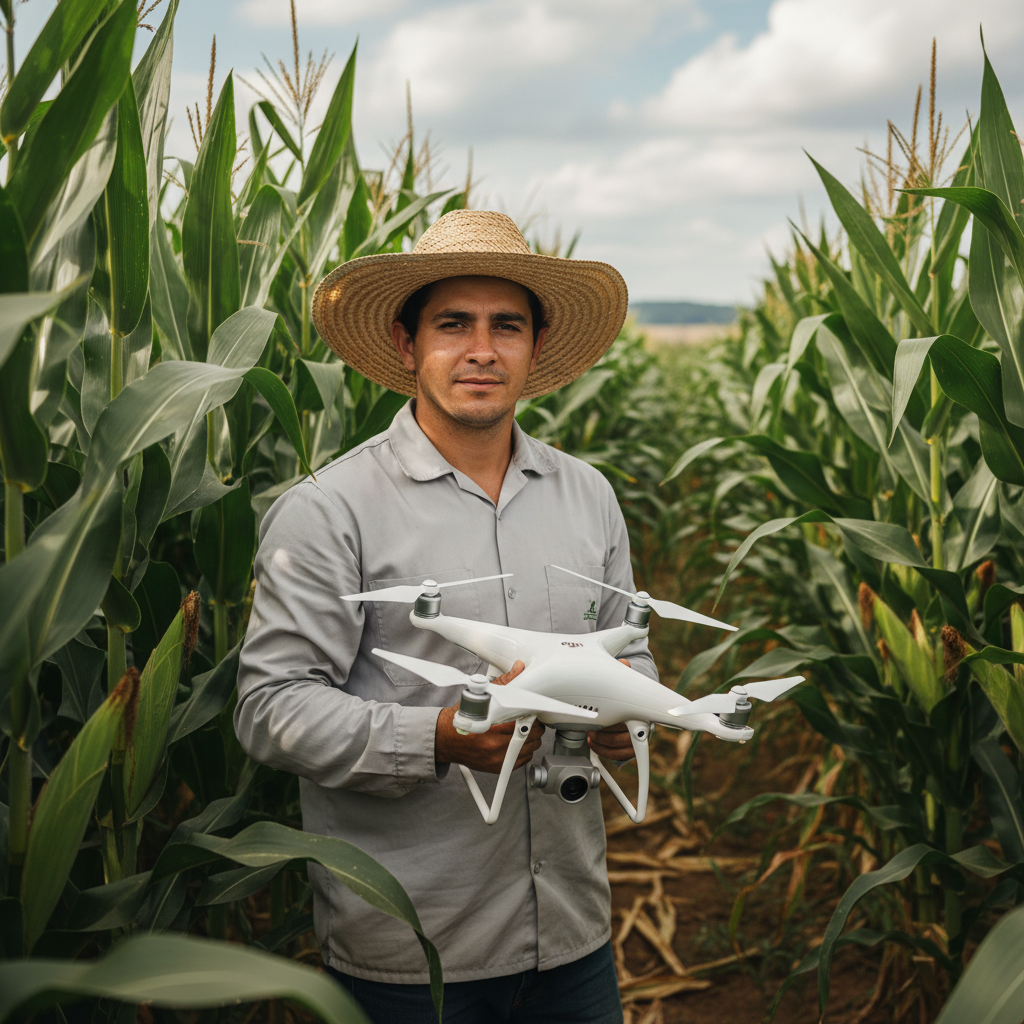
Lucas Fernandes Silva is an agricultural engineer with 12 years of experience in aerial mapping technologies and precision agriculture. ANAC-certified drone pilot since 2018, Lucas has worked on mapping projects across more than 500 rural properties in Brazil, covering areas ranging from small farms to large-scale operations. Specialized in multispectral image processing, vegetation index analysis (NDVI, GNDVI, SAVI), and precision agriculture system implementation. Lucas is passionate about sharing technical knowledge and helping agribusiness professionals optimize their operations through aerial technology.