
Microtopography: How Small Variations in Relief Affect Productivity
What microtopography means for your field
Microtopography affects how water, nutrients, and plants behave on your land. Think of your field like a shallow bathtub with tiny hills and hollows. Those small bumps decide where water pools after rain, where soil dries first, and where seeds face stress. If you read these small shapes, you can place drainage, fertilizer, or seeding to match the land rather than fight it.
You will see yield change across short distances because microrelief creates tiny microclimates. In one patch, corn may start fast where water collects; five meters away, it lags on a little ridge that dries faster. By mapping these spots, you can vary seeding rates, irrigation, or soil amendments to boost overall productivity. This is the core idea behind Microtopography: How Small Variations in Relief Affect Productivity.
When you treat microtopography as a management tool, decisions get sharper and cheaper. Small changes in grade or targeted tillage can cut standing water, reduce erosion, and improve germination. Use simple observation, a low-cost GPS, or drone photos to spot patterns. With those patterns, you turn scattered trouble spots into predictable areas for action.
How you spot microrelief in the soil
Start with your eyes and boots. Walk the field after a light rain and look for puddles, faster-drying ridges, and places where residue collects. Mark them with flags or GPS points. This simple scouting often finds the biggest problems before tech does.
Add a few tools that scale your view: a handheld level, cheap RTK-GPS, or a smartphone mapping app. Drones with overlapping photos reveal patterns you missed walking. Pair visual checks with a few soil moisture readings to link shape to function — where water stays and where roots struggle.
Typical scales of microtopography effects on crop productivity
Microtopography works at many sizes, from millimeters to meters, and each size touches crops differently. Tiny bumps a few centimeters high change seedbed contact and germination. Larger ridges and hollows can redirect water and affect root depth. Match your fix to the scale of the problem.
When you plan fixes, think in practical terms. For centimeter-level roughness, change tillage depth, seed press wheel pressure, or row cleaners. For meter-level depressions, consider field grading, contour drains, or adjusted seeding maps. The goal is to stop treating the whole field the same when small differences drive big yield gaps.
Quick definition and scale guide
Microtopography = small changes in surface height that shift water flow, seed contact, and root growth; typical scales range from millimeters to meters and demand different fixes depending on size.
| Scale | Typical feature | Crop effect | How you detect it |
|---|---|---|---|
| Millimeters–centimeters | Rough seedbed, small clods | Affects seed-soil contact; patchy emergence | Walk rows, seedling counts |
| Decimeters (10s of cm) | Small ridges/mini hollows | Local water pooling or drying | Hand level, moisture probe |
| Meters | Depressions, ridges across rows | Persistent wet spots, yield strips | Drone imagery, GPS mapping |
How microrelief controls soil moisture
Microrelief — the small bumps and dips in your soil surface — acts like a patchwork of cups and ridges that hold or shed water. After a rain, water pools in dips and runs off crests, so your field ends up with a mix of wet pockets and dry spots. That pattern changes how roots grow and how quickly water moves into the soil.
When water sits in a low spot it soaks deeper and stays longer; on a high spot the soil dries fast and roots get thirsty sooner. That creates spatial variability that affects seed emergence, fertilizer uptake, and crop response to heat or drought. Microrelief also changes surface runoff and erosion: tiny ridges direct flow, concentrating it in lanes and leaving others starved.
How you measure microrelief–soil moisture variability
Start simple: combine visual mapping with a few measurements. Walk after rain or irrigation and mark where water ponds, where it soaks in fast, and where plants look pale. Use a hand probe or portable moisture meter to sample the root zone at those points. Record depth and moisture at high, mid, and low positions to make a quick map of how microrelief ties to wetness.
For more detail, use sensors and remote tools. Drones with NDVI or thermal cameras show moisture-related stress patterns; an RTK DEM reveals tiny slopes and depressions. A grid of buried soil moisture sensors or electromagnetic (EM) scans gives continuous data you can turn into a moisture map. Match sensor spots to visible hummocks and hollows so measurements reflect real microrelief behavior.
| Tool | What it measures | Best for |
|---|---|---|
| Hand probe / moisture meter | Root-zone moisture at point | Quick checks and spot validation |
| Drones (NDVI / thermal) | Plant stress patterns, surface moisture proxies | Field-scale visual patterns |
| RTK DEM / high-res LiDAR | Tiny elevation changes (microrelief) | Pinpointing hollows and ridges |
| Soil moisture sensor grid | Continuous moisture over time | Detailed maps and irrigation control |
| EM or GPR | Soil texture and moisture proxies | Finding zones with different water holding |
How moisture patches change plant stress
Plants in wet pockets often look lush while neighbors on a crest can be pale. Wet spots reduce drought stress but can cause root oxygen loss if water stands too long. In soggy patches, roots slow, microbes shift, and nutrients like nitrogen can be lost or converted to unusable forms.
Dry patches are the opposite: plants close stomata, slow growth, and show heat or drought stress faster. That leads to uneven maturity and yield loss. By mapping moisture patches you can target irrigation, change seeding rates, or move fertilizer so plants perform more uniformly.
Simple check for wet and dry spots
Dig a small hole a few inches: dark, crumbly soil that smells earthy = moist; light, powdery soil = dry. Wilted leaves, pale color, or curled tips signal dryness; waterlogged areas show yellowing lower leaves and soft stems. Use this feel-and-see test to place probes or decide where to walk next.
How microtopography affects yield variation
Microtopography steers water and roots. Small rises and hollows change soil moisture, seed contact, and root oxygen. After a rain, water pools in hollows and runs off ridges — that simple shift can cut or boost yield in strips a few meters wide.
Low spots keep water longer and can drown young plants; high spots dry faster and stress roots. Even a few centimeters of relief change how fertilizer moves and where soil compacts, creating the patchwork of high and low yield you see in combine data.
Treat microtopography like a map of problem spots. When you know where hollows and ridges sit, you can fix drainage, alter seeding depth, or use variable-rate inputs. Think small changes, big payoffs.
How you link microtopography effects on crop productivity to maps
Start by getting the right layers: a high-resolution DEM/DTM from LiDAR or RTK GPS and your yield map from the harvester. Overlay elevation and yield at the same resolution. Where low elevation aligns with low yield, microrelief is a likely culprit. Bold patterns that repeat across years point to persistent microtopography effects.
Workflow: create a hillshade from the DEM to see small ridges and hollows, calculate average yield by elevation class, and flag spots where yield drops consistently in hollows. Ground-truth those locations on foot to separate real issues from noise.
| Feature | Typical effect on yield | Map layer to use |
|---|---|---|
| Shallow depression | Water pooling → lower yield | DEM / hillshade, yield map |
| Slight ridge | Faster drainage → drought stress | DEM, soil moisture |
| Wheel compaction line | Root restriction → strip yield loss | Harvest map, imagery |
| Variable soil depth | Nutrient stress → patchy yield | Soil map, yield map |
How small-scale relief and yield differ across rows
If planting is perpendicular to a slope, one row may sit slightly higher than the next. That tiny difference changes seed depth and moisture at planting, creating alternating bands of high and low yield. Planter and wheel traffic deepen low spots and concentrate compaction in bands. Compare yield data at the width of your rows or use meter-scale combine data. When patterns line up with row spacing, adjust planter depth or traffic patterns.
Use yield maps to find microrelief impacts
Use yield maps as your first detective tool. Set a tight color ramp and zoom to field scale. Match yield dips to a hillshade or elevation layer; if they coincide, microrelief is at work. Mark those spots, walk them after rain, and decide if drainage, filling, or targeted inputs will fix the problem.
Field drainage and pooling from microvariations
Microtopography changes by a few centimeters can trap water in low spots and push dry zones elsewhere. Those small highs and lows drive where water pools after rain and shape root health, seed germination, and yield across acres.
You can spot the problem before crops show stress if you read the land with the right tools: RTK GPS, high-resolution elevation maps, or drone photogrammetry. Those maps reveal channels, ridges, and bowls where water sits. Think of the map as a weather report for soil moisture.
Fixing drainage starts with knowing where water moves and where it stays. A small grade change or a shallow sub-surface drain can turn chronic wet patches into productive ground. Use site-specific fixes like shallow tilling, targeted soil replacement, or micro-drains rather than whole-field fixes — that saves money and minimizes disturbance.
How you read field microtopography drainage patterns
Walk the map with a probe or shovel after a rain. Look for shiny soil, slow-ponding areas, and spots where plants grow thinner. Carry an elevation print or tablet and mark exact low spots to match map pixels to ground.
Add sensor data: install a few soil moisture sensors across suspected low and high patches and log readings for a week after rain. If moisture stays high in a low pocket, that’s a pooling hotspot. Use this combined view to rank fixes by impact and cost.
How poor drainage lowers root oxygen and growth
When water sits it pushes air out of the soil and cuts off oxygen to roots. Without oxygen roots slow, disease takes hold, and plants stop growing well. You’ll see stunted plants and patchy yields where oxygen-starved roots can’t function.
Poor drainage also moves nutrients out of reach or locks them in unusable forms. Iron and manganese can build up; nitrogen can be lost to runoff or denitrification. Fixing drainage keeps roots healthy, preserves nutrients, and makes your inputs work harder.
Fix low spots to reduce pooling
Make a plan: mark each low spot, measure depth and area, then choose a fix by scale. For small shallow spots, add soil or mix in sand to lift the spot and improve flow. For larger or persistent wet bowls, install a shallow drain or regrade the contour to channel water to a natural outlet. Use cost-effective fixes first and monitor with sensors to confirm the problem is solved.
| Feature | Drainage effect | Quick tech fix |
|---|---|---|
| Micro-depression (<5 cm) | Short-term pooling after rain | Topdress with sand or soil, compact lightly |
| Persistent low bowl | Long-term standing water, crop loss | Shallow tile or regrade low edge to outlet |
| Narrow channeling | Uneven flow, erosion | Small grade adjustment or grassed channel |
| Mixed wet/dry patches | Patchy growth, nutrient loss | Place soil moisture sensors and map fixes |
Erosion, run-off, and sediment moves at small scale
Microtopography steers water like a maze. A few centimeters of slope can change where runoff concentrates and where soil moves. Shallow channels and ruts concentrate flow, increasing erosion. Over a few rains, tiny losses add up to visible gullies.
Act fast and local: fixing a small ridge or plugging a micro-channel takes less time and money than reworking a whole field. Use quick checks after storms, mark spots that keep losing soil, and pair those marks with elevation data to stop soil movement where it starts.
How you spot microtopography erosion and sediment transport
Walk after rain and look for rills, patches of bare soil, and seams of dark sediment at low points. Pull a handful of soil — how it crumbles or streaks tells you surface fragility. Add a tech layer: drone or handheld GPS to record tiny height differences; LiDAR or high-res stereo images reveal dips and ridges you might miss on foot. Place stakes across suspected strips and measure them before and after big rains to quantify movement.
How tiny ridges change run-off paths
Tiny ridges act like curbs. Water that would spread gets funneled, forming channels that speed flow and scour soil. Even small ridges left by tillage or machinery can change run-off paths across dozens of meters. Use ridges to your advantage: steer flow into grassed areas or ponds, or break ridges so water spreads and slows.
Protect edges to limit soil loss
Protect field edges with buffer strips, grassed waterways, or short terraces. Plant cover vegetation or install small check dams at flow exits to catch sediment before it leaves your land. Even a narrow strip of perennial grass at the edge will slow water and hold soil.
| Visible sign | What it means | Quick action |
|---|---|---|
| Rills or tiny channels | Concentrated flow is forming | Break ridges, add cover crop, or install small diversion |
| Dark sediment at low point | Soil is moving downslope | Place a buffer strip or small check dam |
| Bare soil patches after rain | Surface sealing or splash erosion | Add mulch or cover crop; reduce exposure |
| Displaced clods or smooth soil surface | High flow speed or runoff concentration | Slow flow with micro-contours or grass strips |
Nutrient patches driven by tiny highs and lows
Small bumps and dips make big differences in fertility. A shallow hollow that holds water will trap organic matter and fertilizer; a tiny ridge dries faster and loses nutrients to wind and runoff. Map those seams and you can target feed where plants need it most.
Use simple tools: a drone or phone with GPS, a hand probe, and a few soil tests. Walk after a rain and mark where water pools or runs off. Combine those observations with a drone DEM or RTK GPS points to make a low-cost map. Then apply more phosphorus and organic amendments in dips where they stick, and reduce nitrogen on high dry spots that leach fast. This targeted approach is where Microtopography: How Small Variations in Relief Affect Productivity really matters — you’ll spend less and get more crop per acre.
How you test topographic microvariations and nutrient distribution
Sample upslope and downslope positions using a grid or transect that crosses highs and lows. Use RTK-enabled drone or handheld GPS for accurate spot locations. Take cores at consistent depths (0–15 cm, 15–30 cm) and label each with elevation or micro-position. Add EC mapping, NDVI or multispectral images, and moisture probes. Run simple spatial analysis to see where nutrients cluster.
How nutrients concentrate in microdepressions
Water slows in microdepressions and drops sediment and dissolved nutrients, creating pockets of higher organic matter and sometimes elevated phosphorus and potassium. Microdepressions stay moister and cooler, favoring decomposition and nutrient cycling; anaerobic spots can change nitrogen forms and slow leaching. Lows act like tiny storage tanks for nutrients while highs act like express lanes moving nutrients away.
Sample across highs and lows
Take paired cores from a high point and the nearest low every 20–50 meters (field size dependent), keep depths consistent, and make composite samples for each micro-position. Label clearly and run the same lab tests for all samples so you can compare results.
| Position | What happens | Management action |
|---|---|---|
| High (ridge) | Faster drainage, lower organic matter, potential nutrient loss | Reduce N rates, add mulch or cover crop to hold nutrient |
| Low (depression) | Water pooling, higher organic matter, nutrient buildup | Boost P/K where needed, avoid overwatering to prevent denitrification |
Mapping microtopography for precision work
You map microtopography because tiny rises and dips change how water moves, where nutrients sit, and how crops grow. Mapping those bumps gives you a clear plan to act on. Start by collecting a high-resolution surface map — centimeter-level detail is ideal for seedbeds, wheel tracks, and microdrainage lines. That lets you plan variable-rate seeding, place drainage, and time irrigation.
Maps also let you test fixes quickly: mark a low spot, try a tile or small berm, and watch yield maps the next season. Small corrections often pay back fast. Track changes and you’ll learn what works on your soil and slope.
How you use microtopography mapping and precision agriculture tools
Load maps into your farm software. Create management zones around highs, lows, and flow paths. Set variable-rate fertilizer or seed maps so you apply less where water pools and more where it drains fast. Flag low spots for drainage, change tillage depth by zone, or move irrigation lines to match the land. Use historic yield maps overlaid with microtopography to see cause and effect.
How drones, LiDAR, and RTK create microscale maps
Fly a drone with a camera to build a detailed surface via photogrammetry. Software stitches many photos into a 3D map — fast and cost-effective for small fields. Use LiDAR when you need ground returns through vegetation or when shadows confuse photos; LiDAR pulses give true ground height. Pair both with RTK GPS for centimeter positioning so your tractor hits the same spot every time.
Choose the right sensor for your scale
Pick sensors by the job: drone photogrammetry for quick, low-cost surveys; LiDAR for true ground under cover; RTK for centimeter accuracy when controlling machinery.
| Sensor | Typical Accuracy | Best Use | Cost Level |
|---|---|---|---|
| Drone (photogrammetry) | ~5–10 cm | Quick field scans, visual surface detail | Low–Medium |
| LiDAR | ~1–5 cm (with good setup) | Ground surface under vegetation | Medium–High |
| RTK GNSS | ~1–3 cm positioning | Precise control of machinery & survey tie-in | Medium–High |
Modeling microrelief to predict yield
Use high-resolution elevation data from drones or LiDAR to build a DEM. Translate the DEM into layers: microcatchment areas, local slope, and flow paths. Those layers map how water and soil move across short distances. Compare them to yield maps to spot repeatable patterns. When the same low spot underperforms year after year, relief is driving results.
Turn patterns into rules: label repeating low-yield patches as management zones and use those zones for targeted drainage, seed-rate changes, or soil fixes. Treat the model as a living tool: run it, check results, and adjust.
How you apply microtopography modeling for yield prediction
Fly a drone after harvest or get LiDAR. Create a DEM at 10–50 cm resolution. Overlay last year’s yield map and any irrigation or tile data. Build indicators from the DEM: local depression depth, contributing area, micro-slope. Correlate these against yield points or grid samples. If low spots show reduced yield and wetter soil, mark them for action.
How soil, slope, and moisture feed simple models
A few strong inputs work best: soil texture (from samples or maps), slope from the DEM, and a moisture index (from sensors or remote sensing). Combine them in a simple formula or scoring system to predict stress risk by location. Keep it light: too many variables add noise at this scale.
| Input | Measurement | Effect on yield prediction |
|---|---|---|
| Soil texture | Lab sample or soil map | Controls drainage and root access |
| Slope | DEM-derived local slope | Drives runoff and erosion risk |
| Depression depth | DEM local minima | Indicates ponding and waterlogging |
| Moisture index | Sensor or NDWI from imagery | Shows current water stress or saturation |
| Organic matter | Soil test | Modulates water holding and fertility |
Start with a basic model and validate
Begin with a basic rule or linear model (e.g., predict yield drop when depression depth > 10 cm and sandy soil exists). Split data into training/test sets or hold out strips for validation. Ground-truth with soil probes and harvest maps. If the model flags areas correctly, scale up; if not, tweak one variable at a time and retest.
Manage microrelief to boost productivity
Microrelief affects how water pools, how roots grow, and where nutrients collect. When you map those tiny highs and lows you see pockets that drown crops and ridges that dry out too fast. Fixing them raises the floor for your whole field, not just one spot.
You don’t need giant earthworks to get big wins. Targeted edits — a shallow grade, a small berm, or a tweak to a drainage tile — change water movement in ways that persist. These changes cut variability and give you more uniform emergence, fewer stressed plants, and steadier yields.
Measure before you move dirt: use an RTK GPS pass, drone imagery, or a walking rod to mark trouble spots. Record the problem, the fix, and results. Over time you’ll turn a patchwork of problems into a single, easier-to-manage field.
How you apply managing microrelief to improve productivity on farm
Start by mapping. Walk or fly to create an elevation map, find depressions, ridges, and subtle flow lines, and mark areas where water stands after rain. The map becomes your action list; fix the worst spots first to save fuel and time.
Act in small steps: level shallow hollows, add minor berms, or adjust drainage outlets. Use your tractor for light grading or hire a local operator for targeted laser leveling. Keep notes: what you changed, how deep, and how crops responded. Over a season or two you’ll see fewer drowned plants, more even ripening, and clearer returns for each edit.
How small edits like contouring and tillage reduce variability
Contouring guides water instead of fighting it. Running equipment along contours slows runoff and spreads moisture more evenly, reducing erosion and keeping topsoil. Tillage can break compacted spots that choke roots and trap water; use light, targeted tillage in low areas shown on your map. Focused passes lower variability, boost uniformity, and often give a quick yield uptick.
Prioritize fixes with biggest yield gain
Rank problems by cost to yield. Fix standing-water hollows first, then compaction bands, then tiny ruts and wheel tracks. Small fixes with big effects include shallow regrading of ponds, plugging or lowering tile outlets, and opening compacted strips.
| Fix | Why it helps | Typical yield impact |
|---|---|---|
| Drain low hollows | Stops drowning and root rot | High |
| Break compaction bands | Restores root depth and drainage | Medium–High |
| Small contouring runs | Slows runoff and evens moisture | Medium |
| Repair wheel ruts | Stops channeling of water | Low–Medium |
Frequently asked questions
- What is Microtopography: How Small Variations in Relief Affect Productivity?
Microtopography: How Small Variations in Relief Affect Productivity means tiny bumps and dips in your land. You map them to see how water and soil move and to guide targeted fixes. - How does microtopography change water flow?
It guides water to low spots and away from highs. Use that knowledge to stop pooling and boost root health. - How do you measure microtopography on your field?
Use a drone, RTK LiDAR, laser level, or a simple hand probe and GPS to record small height changes and make a map. - How can you manage crops with microtopography information?
Adjust seeding, drainage, and fertilizer by zone. Match inputs to each micro-slope to raise yield and reduce waste. - What tools help you act on microtopography?
Maps, GPS/RTK, variable-rate equipment, drones, LiDAR, soil moisture sensors, and farm software that supports management zones.
Microtopography: How Small Variations in Relief Affect Productivity is practical: small, well-targeted changes often give outsized returns. Read the land, map it, test fixes, and let the relief guide your management.
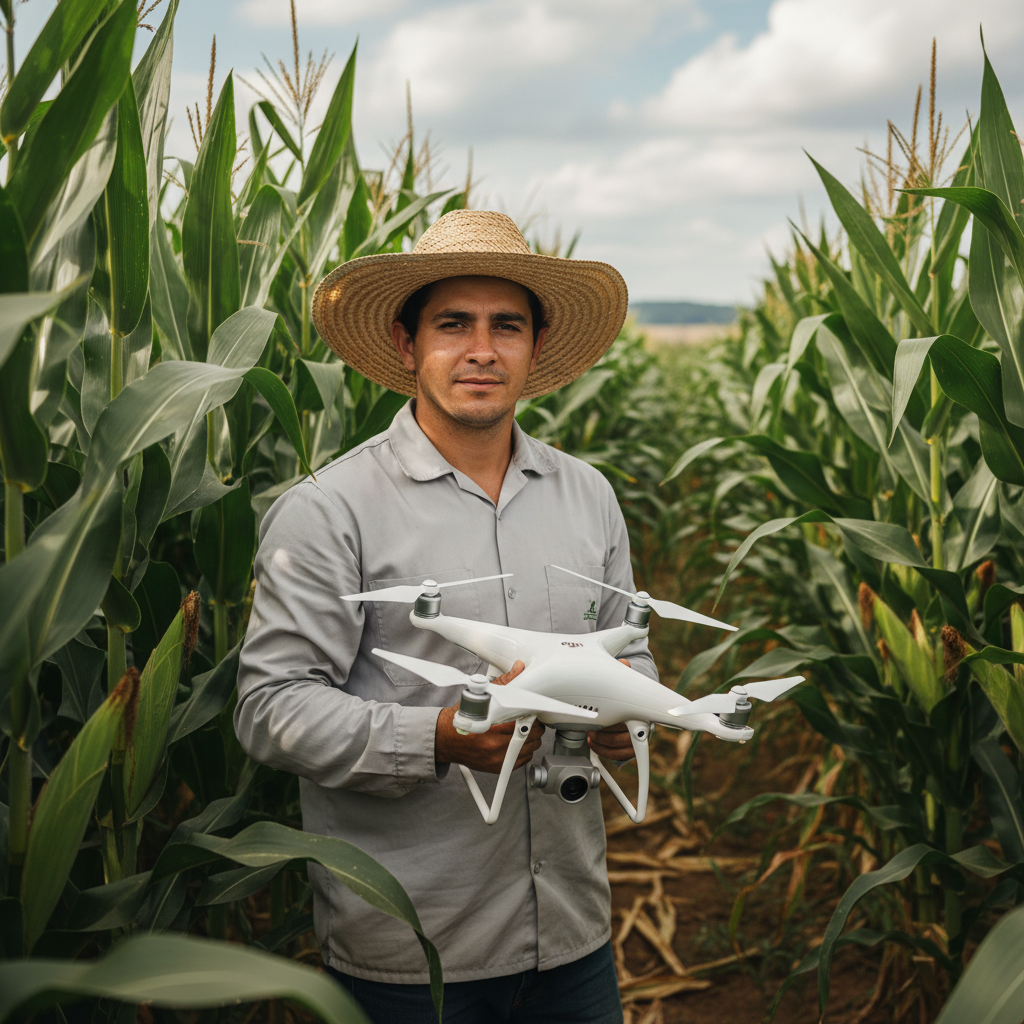
Lucas Fernandes Silva is an agricultural engineer with 12 years of experience in aerial mapping technologies and precision agriculture. ANAC-certified drone pilot since 2018, Lucas has worked on mapping projects across more than 500 rural properties in Brazil, covering areas ranging from small farms to large-scale operations. Specialized in multispectral image processing, vegetation index analysis (NDVI, GNDVI, SAVI), and precision agriculture system implementation. Lucas is passionate about sharing technical knowledge and helping agribusiness professionals optimize their operations through aerial technology.