How you use GNDVI to spot nitrogen stress
GNDVI works like a quick health check for your crop. GNDVI compares near-infrared and green light to show leaf vigor. Low GNDVI often means low chlorophyll and possible nitrogen stress. Use the project title “Nitrogen Deficiency: Detection with GNDVI and Localized Application Planning” so your team knows the focus when you share maps or reports.
Collect GNDVI with a drone, tractor-mounted sensor, or handheld device. Fly or scan at a consistent height and speed, and save date, time, and sensor settings. Calibrate your sensor before each session and keep weather notes. Do a quick walk-through of one healthy spot as a check before you run the full field scan.
Once you have maps, look for patches that are darker (lower values) than the rest. Mark those areas and compare them to your baseline (healthy readings). Turn zones that fall below thresholds into prescription maps for variable-rate nitrogen. Small, timely corrections save inputs and protect yield.
GNDVI nitrogen detection basics
GNDVI = (NIR − Green) / (NIR Green). That ratio rises with more leaf chlorophyll; more chlorophyll usually means more nitrogen in leaves. Falling GNDVI points you to possible nitrogen shortage.
Sensors read reflected light. Green reflectance drops when plants lack nitrogen; NIR stays strong with healthy structure. Use consistent lighting and crop stage to avoid false alarms—if clouds move across your scan, repeat the pass or flag that data.
Compare readings to healthy baselines
Sample a clear, healthy area and record its GNDVI average as your baseline for the crop and growth stage. Calculate percent difference for each zone. Values 10–20% below baseline usually need attention; larger drops require quicker action.
Turn percent differences into simple action classes: low, medium, high priority, then build a variable-rate plan.
| GNDVI range (relative to baseline) | Likely nitrogen status | Suggested action |
|---|---|---|
| 0 to -5% | Normal | Monitor; no immediate change |
| -5% to -15% | Mild deficiency | Spot test tissue; consider light N top-up |
| -15% to -30% | Moderate deficiency | Apply variable-rate N in mapped zones |
| Below -30% | Severe deficiency | Ground-truth immediately; apply higher N and investigate causes |
Quick field checklist: calibrate the sensor, pick a healthy baseline spot, scan at consistent height, log metadata, map anomalies, ground-truth flagged zones with tissue tests, and convert flagged areas into prescription zones for variable-rate nitrogen application.
Choose the right platform for monitoring
Pick a platform that matches your goals and scale. For a few acres of vegetables, high-resolution drone data gives actionable detail. For a thousand-acre grain farm, satellite coverage or tractor-mounted sensors may fit budget and timing. Match platform resolution and timeliness to the problem.
If your aim is early detection—Nitrogen Deficiency: Detection with GNDVI and Localized Application Planning—you need sensors sensitive to subtle leaf-color changes at the right growth stage. Drones give fine detail; satellites give regular broad views; tractors give live, point-by-point readings.
Factor in cost, staff time, and data workflow. Buy or rent with the whole loop in mind: capture, process, decide, and apply.
Drone GNDVI monitoring tips
Fly at low wind, mid-to-late morning light, when plants have enough leaf area to show contrast and are dry. Calibrate and overlap your shots for clean maps: radiometric calibration, consistent altitude, and 70–80% overlap make a smooth mosaic. Add ground targets or reference panels if possible—this makes GNDVI maps reliable so you can plan localized applications and catch early nitrogen stress.
When to use satellite or tractor sensors
Use satellites for broad coverage and regular monitoring; choose constellations with frequent revisits if clouds are common. Use tractor sensors for real-time in-field control during application; combine tractor reads with drone or satellite maps so prescriptions match what you see on the ground.
Platform selection checklist: field size, target problem, timing needs, budget, staff skills. Match: drone for detail, satellite for wide-area scouting, tractor sensors for instant action.
| Criterion | Favor Drone | Favor Satellite | Favor Tractor Sensors |
|---|---|---|---|
| Field size | Small to medium | Large | Any with machinery |
| Resolution needed | High | Medium to low | Point-level |
| Action speed | Days | Days to weeks | Real-time |
| Cost per use | Moderate–High | Low–Moderate | Moderate |
| Best use | Detailed maps, GNDVI | Regular scouting | Variable-rate application |
Collect accurate GNDVI data in the field
Aim for clean, repeatable GNDVI maps. Choose a flight window: mid-morning to early afternoon, stable sun, low wind. Fly when crops are dry and not under transient stress (irrigation or frost). Plan consistent timing so maps compare well over time.
Use a multispectral camera with a dedicated green and NIR band or a stabilized modified RGB with a clear green band. Set altitude and overlap to achieve the ground sample distance (GSD) you need. Keep flight speed low enough to avoid motion blur.
Bring reflectance panels and logs: place panels in view for calibration, record sun angle, temperature, and time. Note recent fertilization or field operations—these notes save headaches when analyzing GNDVI and using it for “Nitrogen Deficiency: Detection with GNDVI and Localized Application Planning.”
Flight and sensor settings you need
Set altitude to balance coverage and resolution. For most row crops, 50–120 meters gives a good GSD. Use forward overlap 75–85% and side overlap 65–75% to reduce stitching errors. Use manual exposure if available so brightness stays constant.
Adjust camera parameters: fast enough shutter to avoid blur, low ISO to cut noise, aperture where the lens is sharp. Record exact settings in a flight log so you can repeat the setup.
| Parameter | Recommended range | Why it matters |
|---|---|---|
| Altitude | 50–120 m | Balances resolution and coverage |
| Forward overlap | 75–85% | Reduces stitching gaps |
| Side overlap | 65–75% | Improves mosaic quality |
| Shutter speed | Fast enough to avoid blur | Prevents motion blur |
| ISO | Low (100–400) | Reduces image noise |
| Exposure mode | Manual | Keeps brightness consistent |
Radiometric calibration steps
Start every flight day with a white reflectance panel in the first frame. Capture bracketed images of the panel at your chosen exposure and again at the end of the flight to check drift. Apply dark-frame and sensor corrections before computing GNDVI. Use flat-field or vignetting profiles to fix edge falloff. If you have an irradiance meter, log its values and feed them into processing. When clouds roll in, pause and retake panels.
Data quality checklist: check image sharpness, exposure consistency, presence of panel photos, GPS timestamps, and overlap coverage; re-fly affected passes or retake panels if needed. Make a quick map preview to spot missing areas and tag frames with artifacts so you can filter them in processing.
Turn GNDVI into nitrogen deficiency maps
GNDVI highlights green-leaf vigor from multispectral imagery. Match the image to field boundaries and you have a raw map that shows where plants look weak. Add ground truth—leaf tissue or SPAD readings—to link GNDVI values to actual plant nitrogen levels. That link turns color bands into numbers you can trust. This is where “Nitrogen Deficiency: Detection with GNDVI and Localized Application Planning” becomes practical, not just theory.
Clean the data: radiometric correction, shadow removal, sun-angle correction, and accurate stitching so pixels align with GPS points. Then classify pixels into stress levels and validate with a few extra samples. If numbers match, create precise maps to guide fertilizer work.
Steps for nitrogen deficiency mapping
- Capture imagery at the right time (full leaf cover, before major stress events). Collect green band and RGB.
- Process and calibrate: convert raw images to reflectance using calibration panels; calculate GNDVI = (NIR − Green) / (NIR Green).
- Link field samples to pixels and derive thresholds or a lookup table to translate index numbers into nitrogen status.
Classify stress zones for action
Split the field into zones like Severe, Moderate, and Healthy using thresholds from your samples. Label each zone with recommended fertilizer rates and urgency. Export zones as a prescription file for your spreader or controller; add buffers around severe patches if equipment spreads unevenly. Validate after application with follow-up imagery and tissue tests.
Mapping quick steps: collect multispectral imagery; correct to reflectance; compute GNDVI; sample tissue or SPAD at representative points; derive thresholds linking GNDVI to nitrogen levels; classify pixels into action zones; export a prescription for variable-rate application; recheck with follow-up imagery.
| GNDVI range | Nitrogen status | Recommended action |
|---|---|---|
| < 0.30 | Severe deficiency | Apply corrective nitrogen now; sample weekly |
| 0.30–0.45 | Moderate stress | Apply moderate rate; monitor in 7–14 days |
| > 0.45 | Healthy | Maintain routine fertility; no urgent action |
Detect early nitrogen stress with time series
Plotting GNDVI over time reveals trends a single photo hides. A steady drop across several surveys is often the first sign of nitrogen stress, before leaves yellow. Time series let you compare growth stages and catch dips that are out of sync with normal development.
Keep regular intervals—weekly or every few days during key growth periods. Pair dips with weather and management logs (heavy rain, late planting, missed fertilizer windows) to make smarter decisions. Use simple plots and thresholds so your crew can read them at a glance.
Early nitrogen stress detection signs
From imagery, look for drops in green intensity, thinning canopy, or rows lagging behind neighbors. Combine visual signs with spectral indicators like falling GNDVI or rising red-edge indices. Cross-check with irrigation and pest reports—pests and water stress can mimic nitrogen issues.
Use remote sensing nitrogen stress trends
Map where GNDVI falls faster than the field average to find hotspots, then zoom in with drones or ground checks to confirm severity. Group nearby hotspots into zones for localized application to reduce waste and boost crop response. Track response in the same time series: a rebound in GNDVI after treatment typically indicates success; if not, investigate further.
| Sign (what you see) | Time-series pattern | Immediate action |
|---|---|---|
| Patchy pale areas | Localized drop in GNDVI over 1–2 surveys | Field check, soil or tissue sample, targeted N |
| Even decline across field | Uniform downward trend | Check weather and application logs; possible whole-field application |
| Rapid drop after rain | Sudden dip post-event | Test for leaching, consider split application |
Early alert checklist: monitor GNDVI trend lines weekly, flag drops beyond your threshold, run a quick field or tissue test, and prepare localized application maps.
Plan localized nitrogen application effectively
View the field as a puzzle and break it into management zones using yield history, soil tests, and crop health. Use rules: low soil organic matter often means higher nitrogen loss; high past yields may need maintenance or slight boost. Keep goals clear: cut waste, protect yield, and protect water.
Gather data: soil tests, sensor imagery, and yield maps. Look for repeating patterns—those tell you where nitrogen helps most. Set action bands or polygons, assign rate ranges and timing notes (sidedress, pre-plant, split). Load plans into your controller and keep records to improve next season.
Build maps for localized nitrogen application planning
Layer core data: soil tests, yield, and vegetation index maps like GNDVI. Title your project “Nitrogen Deficiency: Detection with GNDVI and Localized Application Planning” so it’s easy to find later. Use consistent grid or zone sizes so rates line up with applicator precision.
Simple map rules: low GNDVI low soil nitrate = high priority; high yield high organic matter = maintenance. Use clear thresholds and avoid overcomplicating rules that go into the cab.
| Map Layer | Purpose | Typical Data Source |
|---|---|---|
| GNDVI | Detect green density and early nitrogen stress | Drone or satellite imagery |
| Soil nitrate | Confirm available nitrogen | Lab or field sensor |
| Yield map | Validate response and set target rates | Combine harvester records |
Site-specific fertilizer application rules
Make cab-friendly rules: if soil nitrate < X ppm and GNDVI < Y, apply Z kg/ha. Use split applications when leaching risk is high or soils are sandy. Respect crop stage—avoid heavy nitrogen late if the crop can’t use it. Record pass details (rate, time, weather) to refine rules year to year.
Prescription checklist: calibrated yield maps, recent soil nitrate tests, current GNDVI imagery, clearly labeled management zones, applicator rate limits, and record-keeping plan. If any item is missing, pause and collect the data.
Implement variable rate fertilization with GNDVI
Turn GNDVI into an action plan: capture clear images during active growth, map plant vigor, and use that map as the basis for a prescription that applies more fertilizer where plants show stress and less where they are already productive.
Ground-truth samples to link GNDVI numbers to soil and plant conditions. Build a prescription file (VRT) in your controller’s format, run a small test pass, check spread patterns and rates, then scale up.
Variable rate fertilization GNDVI setup
Use a green-band sensor or multispectral camera mounted on drone, ATV, or combine. Scan at consistent height and speed under steady light. Process images into a georeferenced GNDVI map and calibrate with ground samples. Create clear rate tiers (low, medium, high) tied to measured plant N and yield goals so prescriptions reflect real needs.
Field execution and machine control
Confirm your sprayer or spreader supports section control and variable rates, and that it reads your prescription format. Verify GPS/RTK accuracy and time-sync your controller with the map—poor positioning causes wrong rates at wrong spots.
Run system checks: calibrate flow sensors and nozzles at operating speed, do a test pass, then sample strips to confirm rates. Keep logs of applied rates and yields to refine thresholds next season.
VRT setup checklist: sensor calibration, ground truth samples, georeferenced prescription map, controller compatibility, GPS/RTK accuracy, pump/nozzle calibration, and a test pass.
| Item | Why it matters | Quick action |
|---|---|---|
| Sensor calibration | Accurate GNDVI values | Calibrate radiometric response before flight |
| Ground truth samples | Link reflectance to N status | Take leaf/soil tests at representative spots |
| Prescription map | Drives variable application | Export in controller-compatible format |
| Controller compatibility | Ensures execution | Confirm file format and section control |
| GPS/RTK accuracy | Precise rate placement | Verify positioning and antenna mount |
| Pump/nozzle calibration | Correct delivered rates | Calibrate at working speed and pressure |
| Test pass | Validate system end-to-end | Run small strip and measure actual output |
Choose between GNDVI and NDVI for nitrogen
Pick the index based on your goal. NDVI (red NIR) shows biomass and is robust when plants are sparse. GNDVI (green NIR) ties more directly to leaf chlorophyll and nitrogen; it often shows subtler changes earlier.
Early season, NDVI gives a reliable picture of cover and vigor. As canopy closes, NDVI can saturate; GNDVI usually keeps responding, which matters when planning variable-rate applications based on leaf nitrogen rather than just total leaf area.
Match sensors and workflow: if your hardware has a green band, run GNDVI. If only red and NIR are available, use NDVI and plan more ground checks.
GNDVI versus NDVI nitrogen sensitivity
GNDVI is more sensitive to leaf chlorophyll changes than NDVI—so it often shows declines earlier when nitrogen drops. NDVI is useful for structural or biomass differences and for cheaper sensors, but it tends to flatten in dense canopies. Use NDVI for broad vigor mapping; use GNDVI when you need chlorophyll-linked nitrogen signals for localized application.
When GNDVI outperforms NDVI: mid to late vegetative stages with closed canopy, where NDVI saturates but GNDVI still varies with N content. If NDVI looks uniformly green but yields differ, try GNDVI next flight.
| Feature | NDVI | GNDVI |
|---|---|---|
| Primary bands | Red NIR | Green NIR |
| Best use | Biomass, early growth | Chlorophyll / nitrogen sensitivity |
| Saturation risk | High in dense canopy | Lower, more responsive |
| Sensor need | Red band NIR | Green band NIR |
| Actionability for N maps | Moderate | High |
Sensor choice summary: choose multispectral units with clean green and NIR bands for GNDVI, or use NDVI if only red NIR are available. Higher spatial and radiometric quality reduces false alarms and sharpens N zones.
Measure ROI and environmental gains
Measure ROI in dollars and soil/ water health. List costs (sensors, software, fuel, labor) and gains (lower inputs, higher yield, saved time). Track environmental wins—reduced nitrogen loss, fuel use, and emissions—so you can show partners or regulators tangible results.
Calculate savings by comparing whole-field rates to localized rates per zone. For each zone, note fertilizer saved, yield change, and extra labor. Scale per hectare results to the farm. If Zone A uses 20% less N with no yield drop, that’s direct savings and lower runoff; Zone B may need more N but yield gains can offset that.
Maps cut excess application where plants are already green, reducing leaching and nitrous oxide emissions. Use your prescription-controlled applicator to follow the map—this lowers input waste and the farm’s footprint.
ROI quick formula: (Total Savings − Tech Cost) / Tech Cost = ROI. Plug in yearly input savings, yield gains, and reduced penalties for a clear seasonal check.
| Item | Example value | Note |
|---|---|---|
| Annual fertilizer savings | $6,000 | From zone plans |
| Yield gain revenue | $3,000 | From targeted fixes |
| Reduced compliance fees | $500 | Less runoff |
| Tech & training cost | $5,000 | One-time or annual |
| ROI = (Savings − Cost)/Cost | (9500−5000)/5000 = 0.9 → 90% | Quick snapshot |
Frequently asked questions
- What is Nitrogen Deficiency: Detection with GNDVI and Localized Application Planning?
You use GNDVI imagery to spot low-nitrogen areas and convert maps into local fertilizer plans. - How do you collect GNDVI to detect nitrogen deficiency?
Fly a drone or use satellite/tractor sensors with a green-NIR band. Capture images at mid-growth and at consistent times of day. - How do you make a localized application plan from GNDVI maps?
Classify weak zones, combine with soil/yield data, create a prescription map, and upload it to your variable-rate spreader. - How accurate is Nitrogen Deficiency: Detection with GNDVI and Localized Application Planning?
Accuracy improves with ground-truth samples, sensor calibration, correct timing, and proper data cleaning. - What quick tips improve results with GNDVI and local application?
Calibrate often, take spot soil and tissue tests, fly at steady altitude and light, start small with test strips, and keep records.
Use the project name “Nitrogen Deficiency: Detection with GNDVI and Localized Application Planning” in your file names and reports so results and next steps are easy to find and act on.
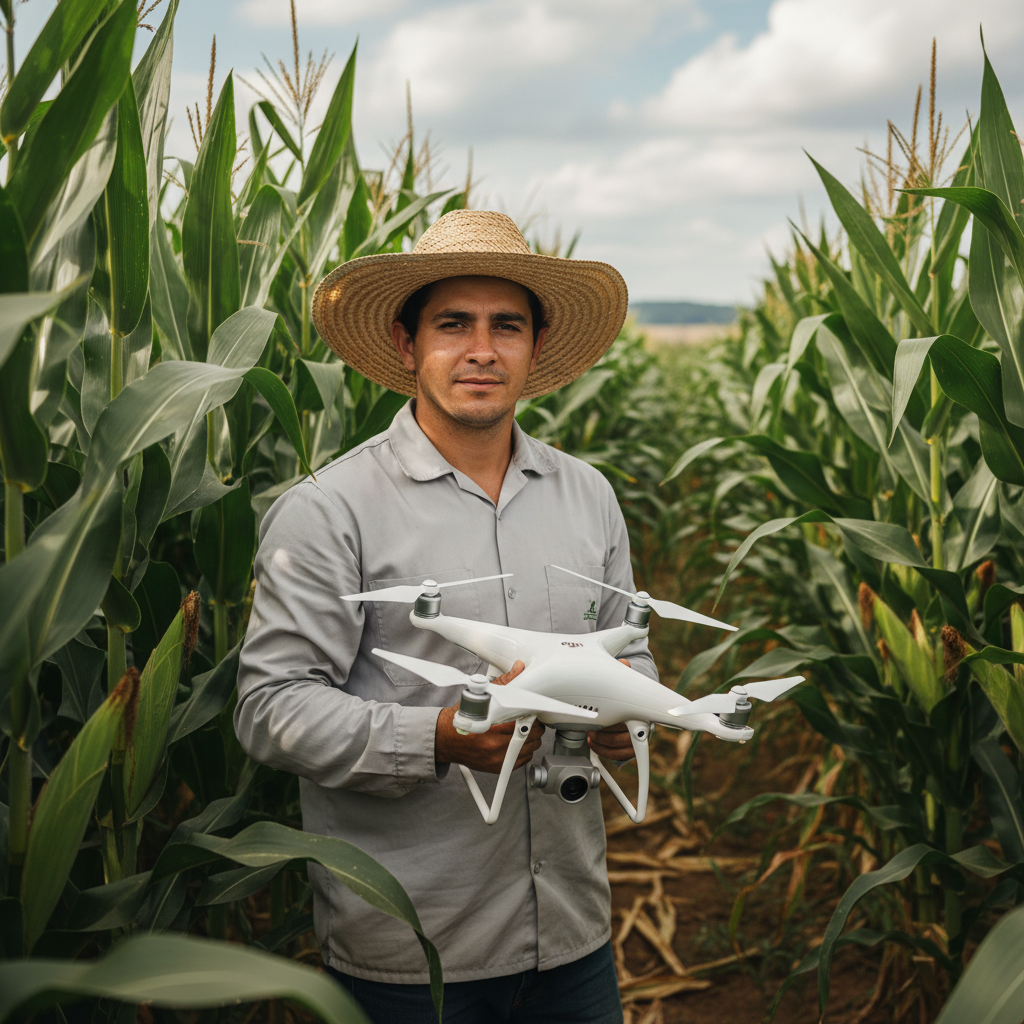
Lucas Fernandes Silva is an agricultural engineer with 12 years of experience in aerial mapping technologies and precision agriculture. ANAC-certified drone pilot since 2018, Lucas has worked on mapping projects across more than 500 rural properties in Brazil, covering areas ranging from small farms to large-scale operations. Specialized in multispectral image processing, vegetation index analysis (NDVI, GNDVI, SAVI), and precision agriculture system implementation. Lucas is passionate about sharing technical knowledge and helping agribusiness professionals optimize their operations through aerial technology.